Understanding the Physical Weight of Anxiety
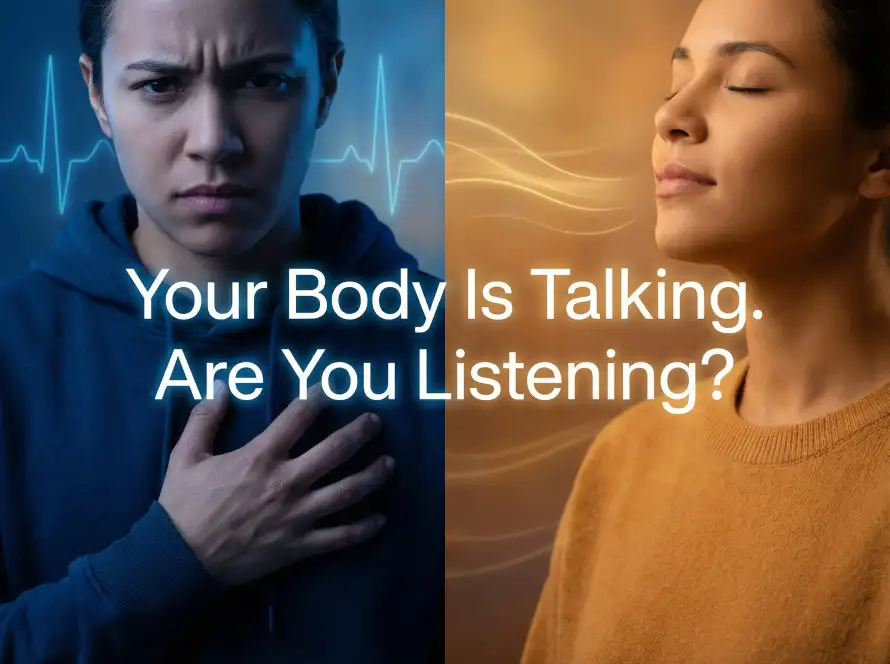
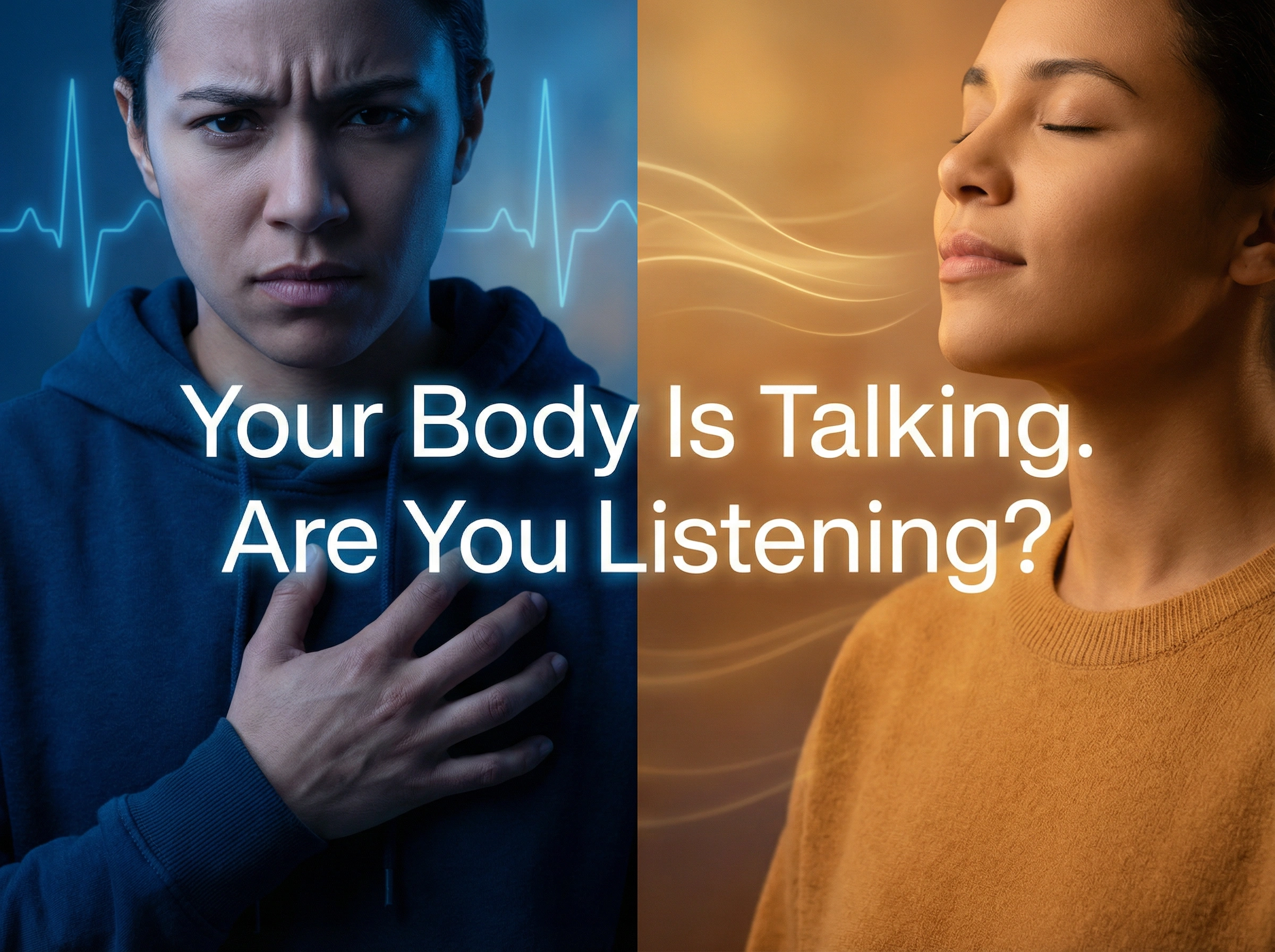
You wake up with your jaw clenched. Your shoulders feel like they’re carrying invisible weights. There’s a knot in your stomach that never quite goes away, and your chest feels tight—like you can’t take a full, satisfying breath.
You’re exhausted, but your body won’t let you relax. Even when nothing is “wrong,” you feel like you’re bracing for impact.
If this sounds familiar, you’re not alone. That constant state of physical tension—the feeling of being perpetually “on edge“—is one of the most common and misunderstood experiences of anxiety.
And it’s not just in your head. It’s very real, and it’s happening in your body.
The Mind-Body Connection: Why Anxiety Lives in Your Muscles
When we think about anxiety, we often focus on the mental symptoms: racing thoughts, constant worry, the endless “what if” spirals. But anxiety doesn’t just affect your mind—it fundamentally changes how your body operates.
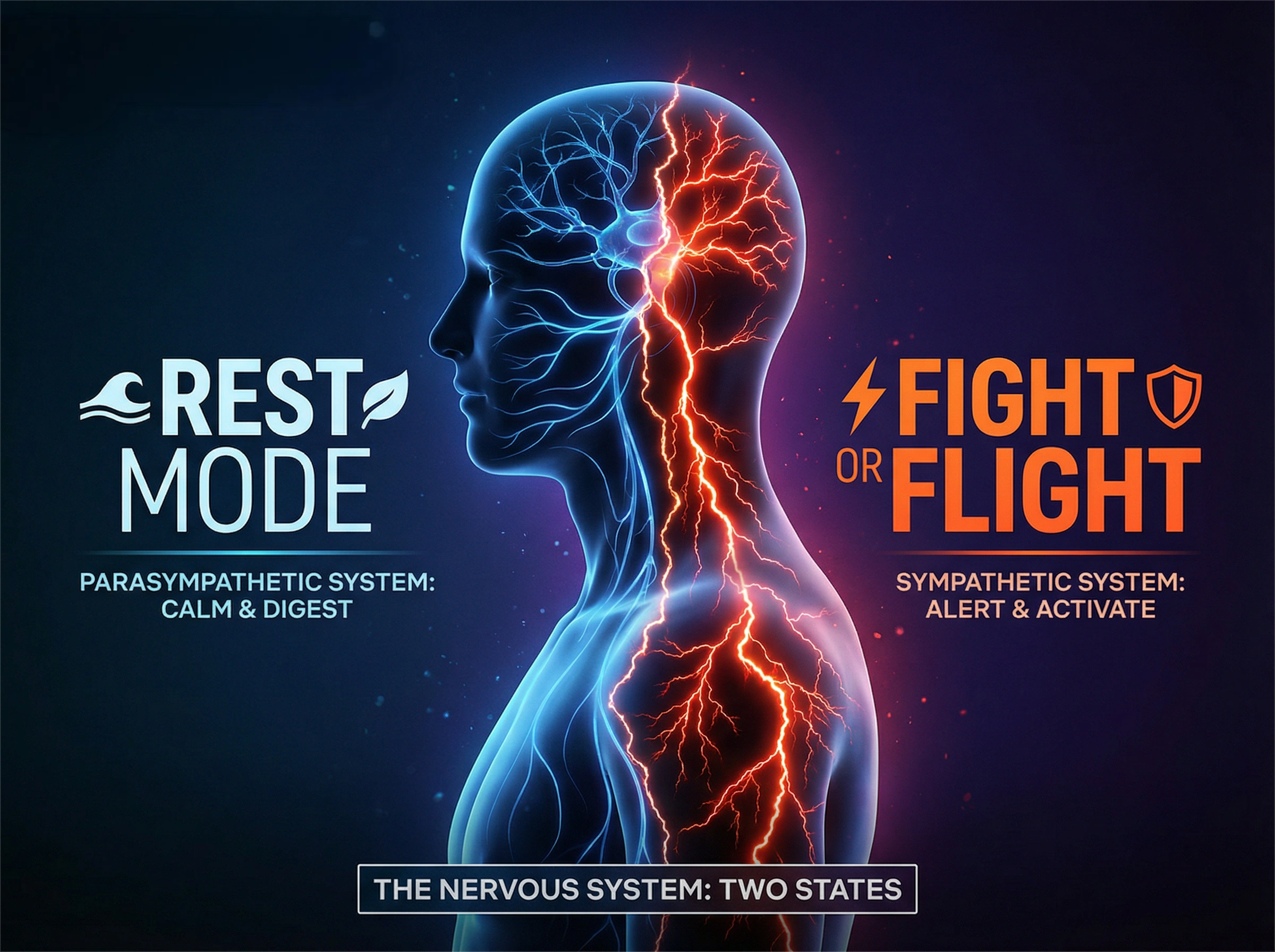
Your nervous system has two main modes: the “rest and digest” state (parasympathetic) and the “fight or flight” state (sympathetic).
When you’re anxious, your body gets stuck in that fight-or-flight mode, even when there’s no immediate danger. Your brain perceives a threat—whether it’s a work deadline, a social situation, or just the general uncertainty of life—and your body responds as if you’re facing something life-threatening.
This means your muscles tense up, ready to spring into action. Your heart rate increases. Your breathing becomes shallow. Stress hormones like cortisol and adrenaline flood your system. And when this happens day after day, week after week, your body forgets how to turn off that alarm system.
Common Physical Manifestations of Chronic Tension
The physical symptoms of anxiety can show up in countless ways, and they’re often so persistent that many people worry something is medically wrong.
Here’s what chronic tension commonly looks like:
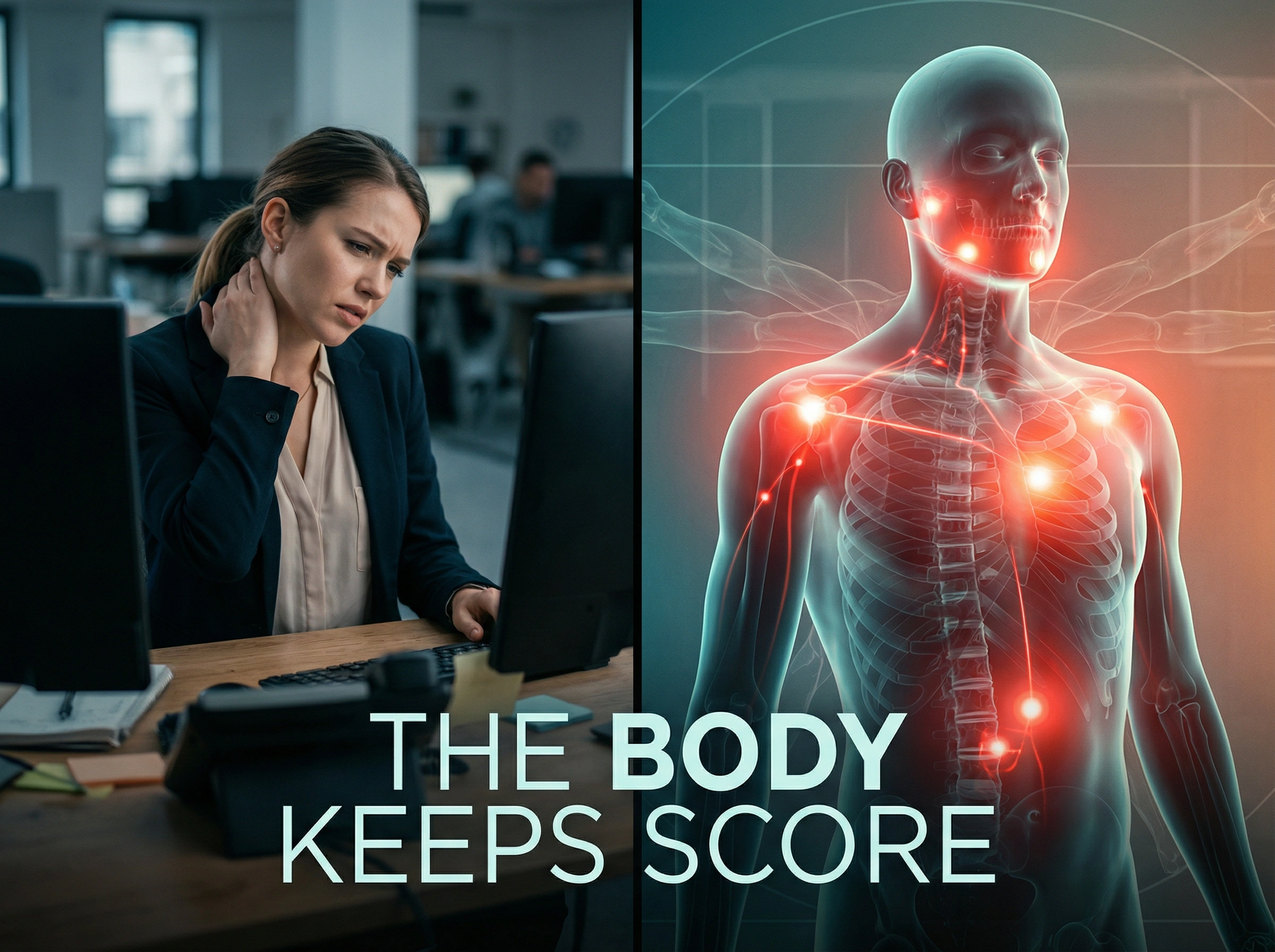
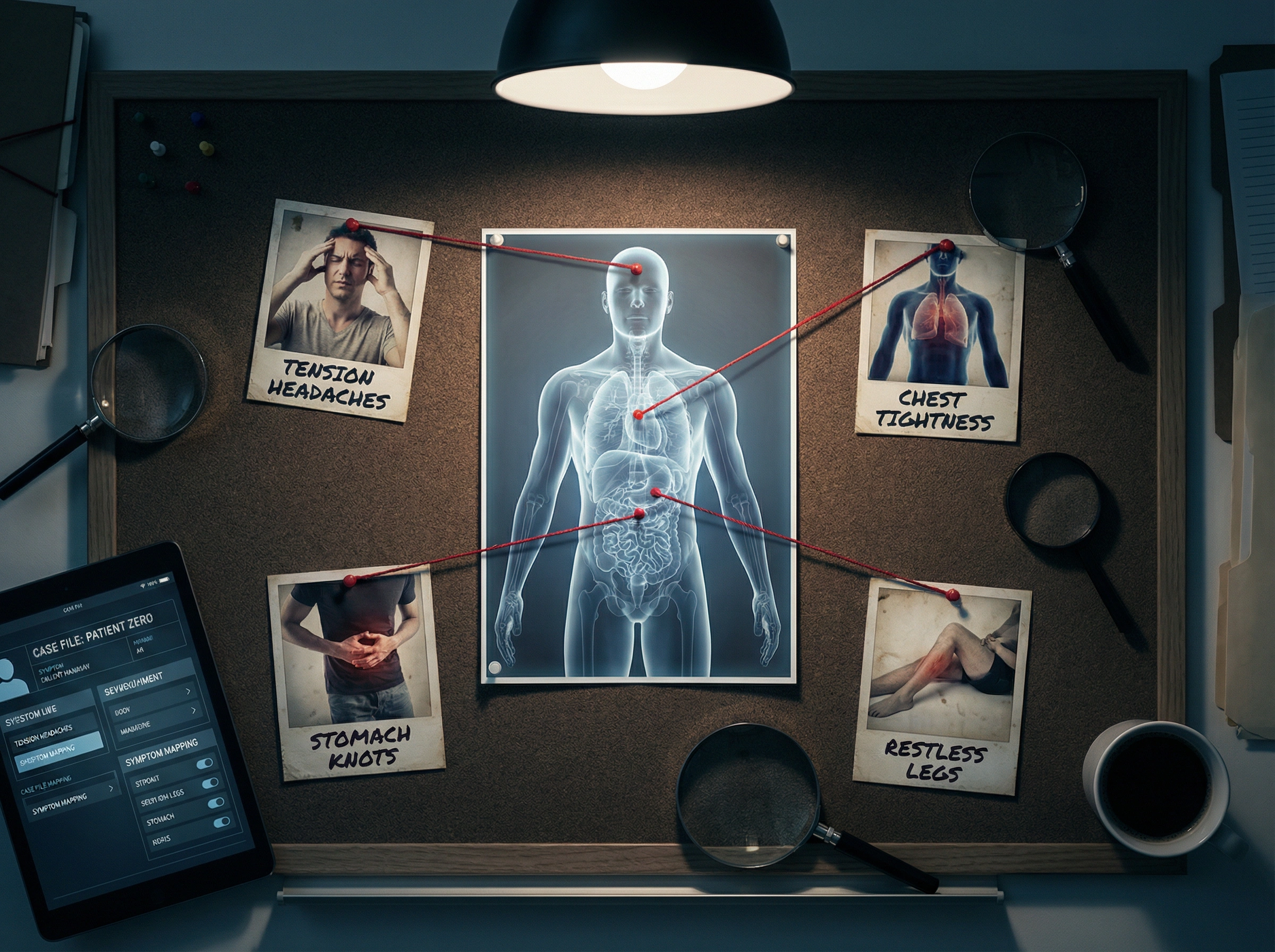
Muscle tightness and pain: Your neck, shoulders, and back bear the brunt of anxiety-related tension. You might experience frequent headaches, jaw pain from clenching or grinding your teeth, or a feeling like your muscles are constantly contracted.
Chest tightness and breathing difficulties: Many people describe feeling like they can’t get enough air, or like there’s a band wrapped around their chest. This can be frightening and often leads to worry about heart problems.
Digestive issues: That “knot” in your stomach isn’t just a metaphor. Anxiety directly affects your digestive system, causing nausea, stomach pain, or changes in appetite and bowel habits.
Restlessness and inability to sit still: You might feel like you need to constantly move, fidget, or pace. Your body feels wired, even when you’re mentally exhausted.
Fatigue despite being “on”: Here’s the paradox—you feel simultaneously exhausted and unable to relax. Your body is burning energy maintaining this constant state of alertness, leaving you depleted.
Why Your Body Won’t “Just Relax”
If you’ve ever been told to “just relax” or “calm down,” you know how frustrating and unhelpful that advice feels. The truth is, when your nervous system is dysregulated, you can’t simply will yourself into relaxation. Your body has learned to stay in protection mode, and it needs help learning a different pattern.
This is especially true if you’ve been living with anxiety for months or years. Your body has essentially been training itself to stay tense, and those neural pathways become deeply ingrained. It’s not a matter of willpower—it’s a physiological pattern that needs to be addressed with the right support and tools.
When Physical Tension Becomes a Daily Reality
Many people live with this constant tension for so long that they forget what it feels like to be truly relaxed. You might think this is just “how you are” or that everyone feels this way. But persistent physical tension that affects your daily life, your sleep, your relationships, or your ability to focus and function is worth addressing.
It makes sense that this feels overwhelming. Your body is working overtime, and that takes a real toll on your quality of life. You deserve to feel comfortable in your own skin, to take a deep breath without that tightness, to wake up without immediately feeling on guard.
Finding Relief: You Don’t Have to Live This Way
The good news is that chronic physical tension related to anxiety is highly treatable. Understanding what’s happening in your body is the first step. From there, a comprehensive evaluation can help identify the specific patterns contributing to your symptoms and create a personalized treatment plan.
At Focused Connections Psychiatry, we understand that anxiety isn’t just a mental health concern—it’s a whole-body experience.
Our approach combines compassionate, individualized care with evidence-based treatment to help you find lasting relief. Whether through medication management, lifestyle modifications, or a combination of approaches, we work with you to help your nervous system find its way back to balance.
You don’t have to keep living in a body that feels like it’s constantly bracing for disaster. If persistent tension and that “on edge” feeling are affecting your daily life, reaching out for professional support is a sign of strength, not weakness. Because you deserve care that truly understands you—and helps you feel like yourself again.
If you’re experiencing persistent physical tension or anxiety symptoms, the team at Focused Connections Psychiatry is here to help. Contact us at (562) 312-1777 today or click here to schedule your free symptom assessment.