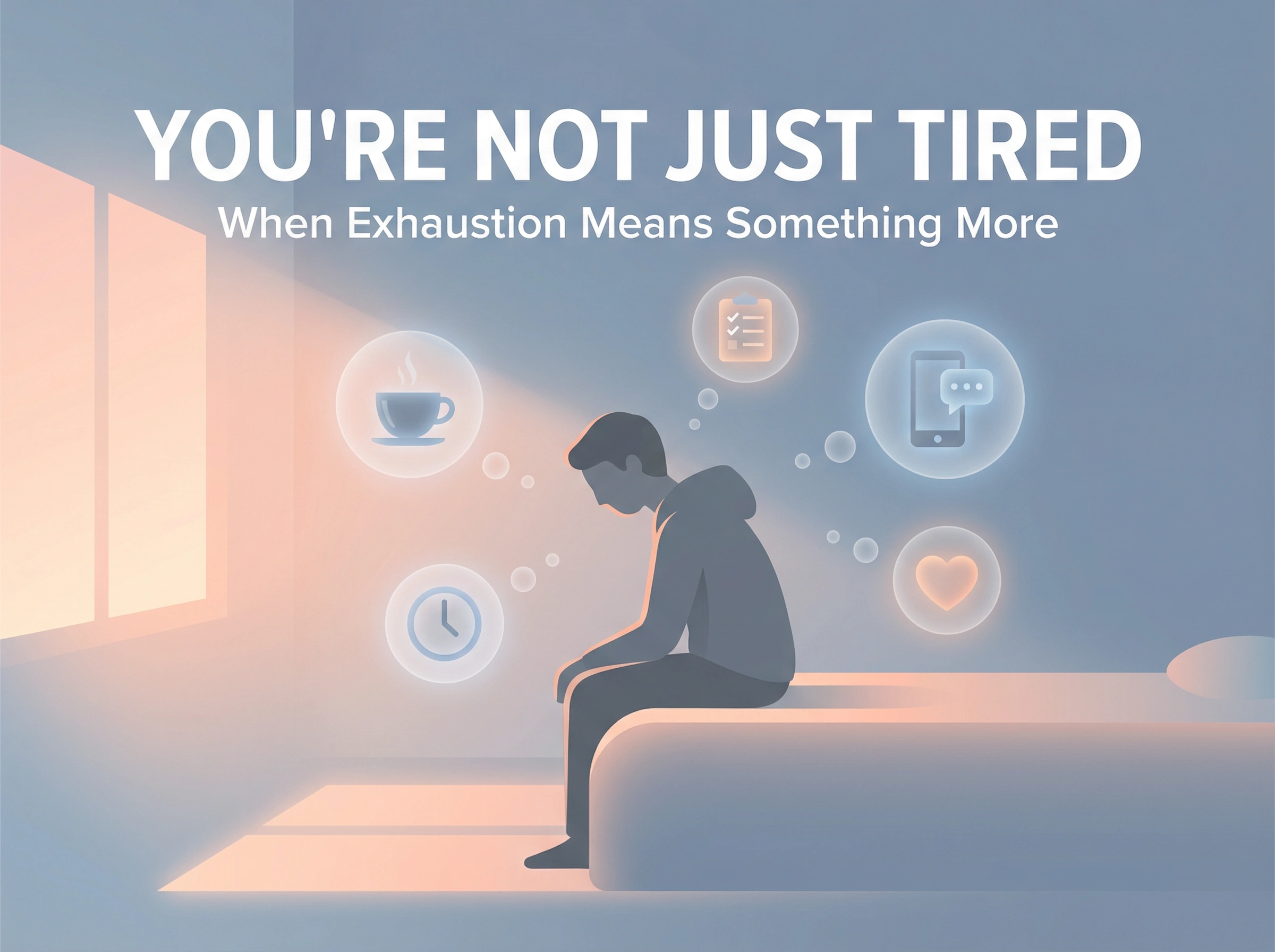
Understanding When Fatigue Becomes More Than Just Tiredness
You wake up after a full night’s sleep, but you’re already tired. The thought of answering emails feels like climbing a mountain. Simple decisions—what to eat for lunch, which task to tackle first—drain you completely. By midday, you’re running on empty, and the evening stretches ahead like an impossible marathon.
If this sounds familiar, you’re not alone. And more importantly, what you’re experiencing might be more than just “being tired.”
The Weight of Invisible Exhaustion
There’s a particular kind of exhaustion that doesn’t show up on the outside. You might look fine to others—you’re still going to work, still managing responsibilities, still showing up. But inside, everything feels heavy. Every task requires twice the effort it used to. Your body feels like it’s moving through thick fog, and your mind can’t seem to find its usual sharpness.
This isn’t the kind of tiredness that a good night’s sleep or a weekend off can fix. It’s deeper, more persistent, and often confusing. You might find yourself wondering: “Why can’t I just push through this like I used to? What’s wrong with me?”
The truth is, nothing is “wrong” with you—but your exhaustion might be trying to tell you something important.
When Exhaustion Is More Than Physical
Many people don’t realize that mental health conditions like depression and anxiety often show up first as physical exhaustion. Your mind and body aren’t separate systems—they’re deeply connected. When your emotional well-being is struggling, your body feels it too.
Depression doesn’t always look like sadness. Sometimes it looks like:
- Feeling drained even after rest
- Losing interest in things that used to energize you
- Difficulty concentrating or making decisions
- A sense that everything requires enormous effort
- Feeling emotionally flat or disconnected
Anxiety can be equally exhausting, though in different ways:
- Constant mental tension that never fully releases
- Racing thoughts that prevent true rest
- Physical symptoms like muscle tension, headaches, or GI issues
- Hypervigilance that keeps your nervous system on high alert
- Difficulty relaxing even when you have downtime
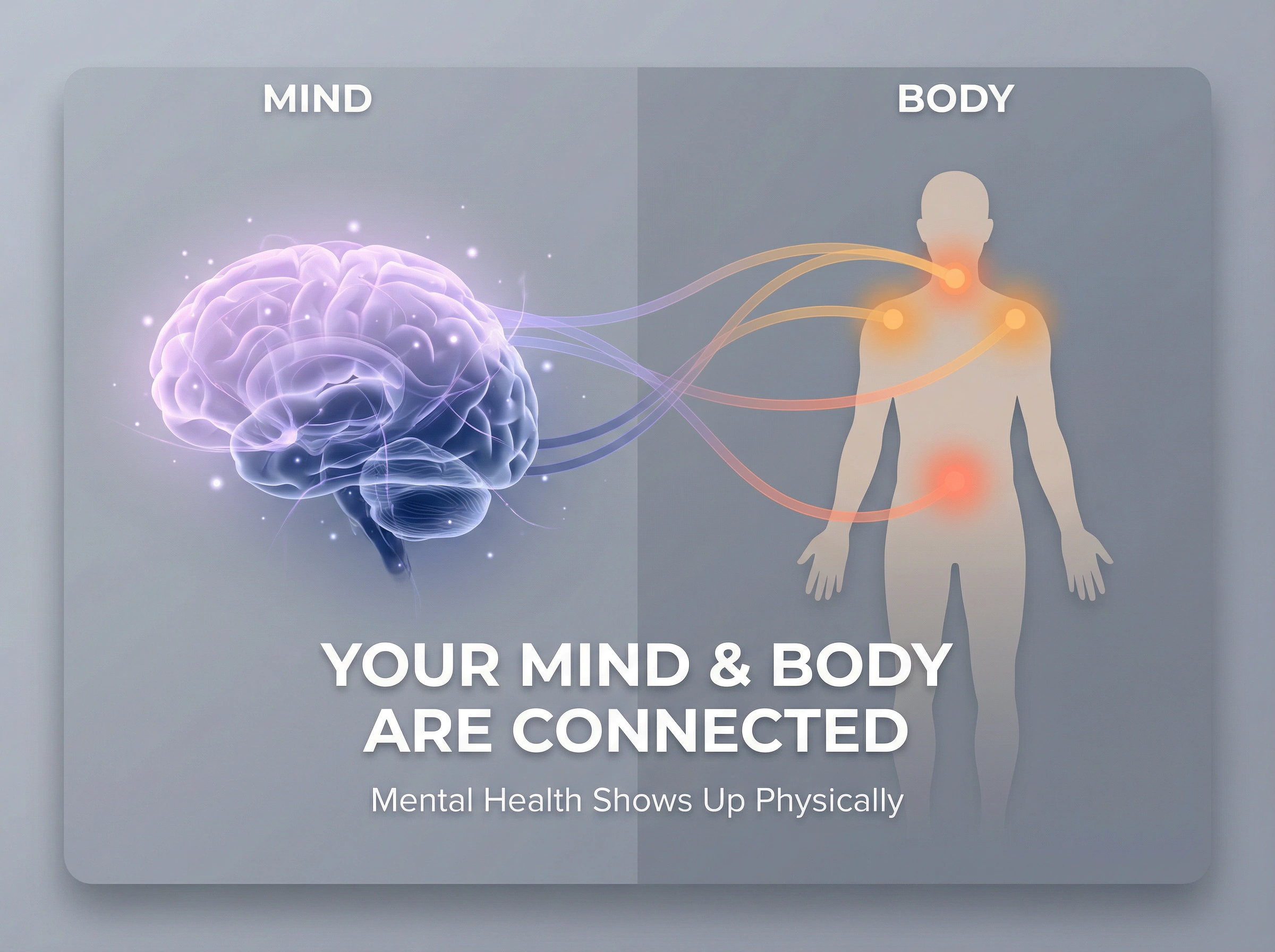
When your brain is constantly managing worry, processing stress, or working against low mood, it’s like running multiple programs in the background of a computer. Everything slows down. Everything takes more energy.
The Cycle That Keeps You Stuck
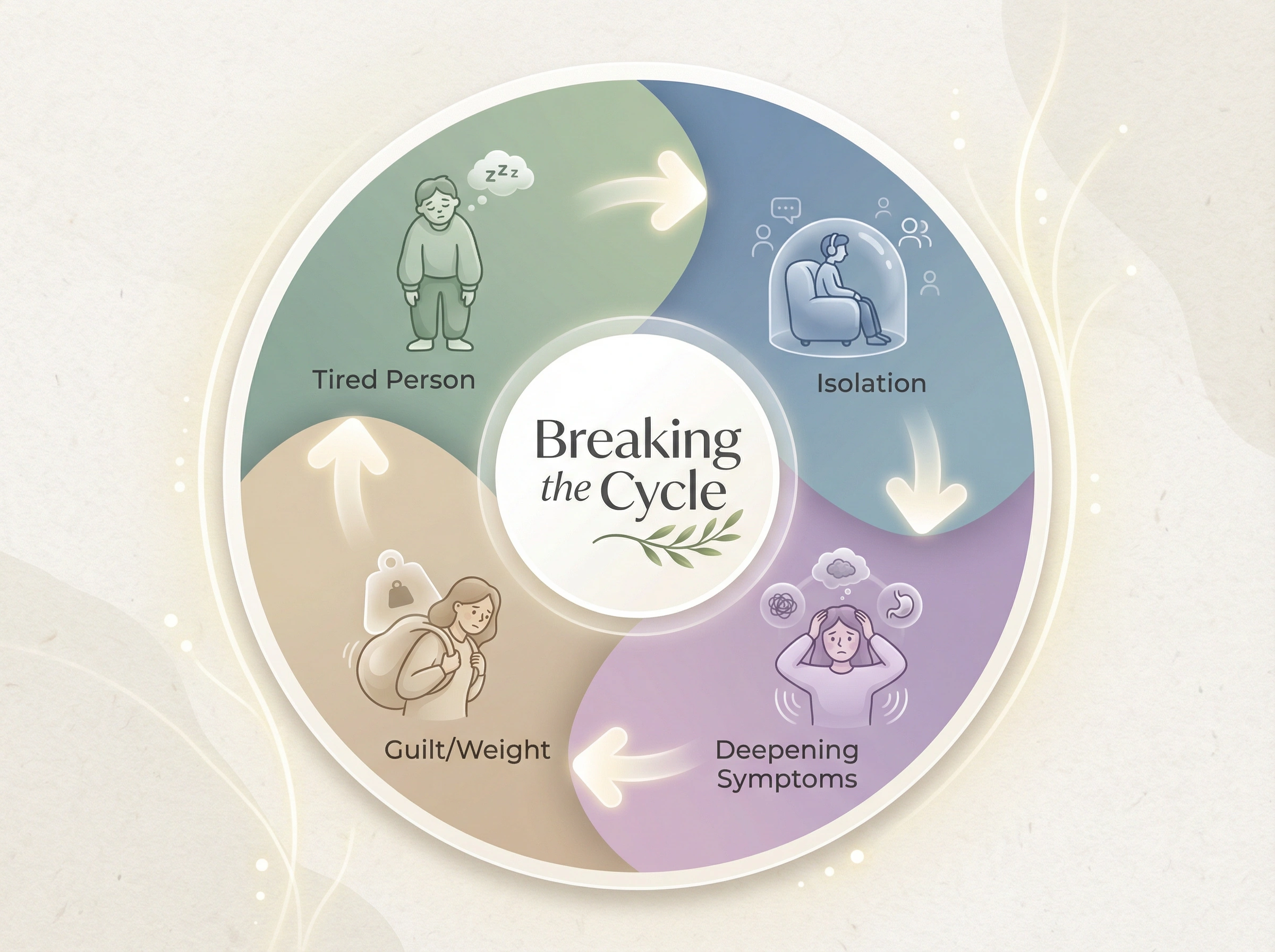
Here’s what makes this type of exhaustion particularly challenging: it creates a cycle that’s hard to break.
You’re exhausted, so you withdraw from activities and people. That isolation deepens feelings of depression or anxiety. The worsening symptoms make you more tired. You feel guilty about not being productive, which adds more emotional weight. And round and round it goes.
You might also find yourself:
- Canceling plans because you “just can’t”
- Avoiding tasks until they pile up and feel overwhelming
- Relying on caffeine or sugar for temporary energy boosts
- Feeling frustrated with yourself for “not handling things better”
- Wondering if you’re just lazy or weak
Let us be clear: you’re neither lazy nor weak. What you’re experiencing is a real, valid response to what’s happening in your mental and emotional health.
When to Consider Professional Support
It makes sense to feel uncertain about whether your exhaustion warrants professional help. Many people worry their symptoms aren’t “serious enough” or that they should be able to handle this on their own.
Here’s a helpful guideline: if your exhaustion is affecting your daily life—your work, relationships, self-care, or overall quality of life—it’s worth discussing with a mental health professional.
Consider reaching out if:
- Your fatigue has lasted for weeks or months
- Rest and lifestyle changes haven’t helped
- You’re struggling to complete normal daily tasks
- You’ve lost interest in things you used to enjoy
- You’re experiencing other symptoms like persistent sadness, worry, or hopelessness
- You’re noticing changes in sleep, appetite, or concentration
What Supportive Care Can Look Like
At Focused Connections Psychiatry, we understand that exhaustion often brings people through our doors before any other symptom does. We see you, and we take your experience seriously.
A comprehensive psychiatric evaluation helps us understand what’s contributing to your exhaustion. Is it depression? Anxiety? Both? Are there other factors like ADHD, sleep disorders, or life stressors playing a role?

Only by understanding the full picture can we create a treatment plan that actually addresses what you’re experiencing.
Treatment might include:
- Medication management to help restore your brain’s natural balance
- Collaborative care that adjusts as your needs change
- Education about what’s happening and why
- Strategies for managing symptoms while treatment takes effect
- Regular follow-up to ensure you’re moving toward feeling better
Many people find that with the right support, their energy begins to return. Tasks feel manageable again. The fog lifts. They start to feel like themselves.
You Don’t Have to Keep Pushing Through
If everything feels exhausting right now, please know: this is your mind and body asking for support, not evidence of personal failure. You deserve care that helps you understand what’s happening and guides you toward genuine relief.
You don’t have to figure this out alone. We’re here to help.
Ready to feel like yourself again? Contact us at (562) 312-1777 today or click here to schedule your free symptom assessment. Because you deserve care that truly understands you.