Understanding the Paradox That Keeps You Isolated
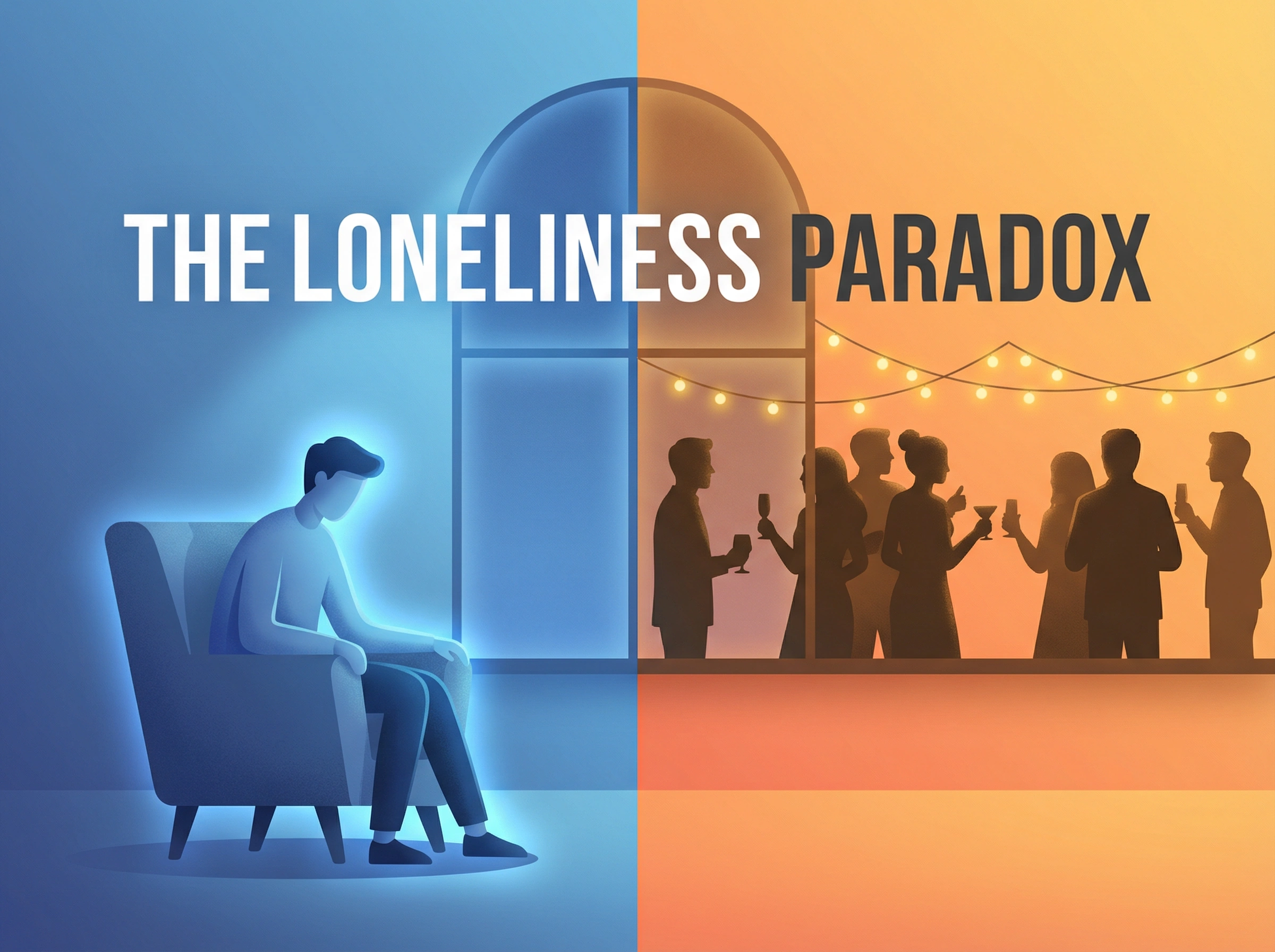
There’s a particular kind of pain that comes with loneliness—especially when you’re the one creating the distance. You scroll through group chat invitations and let them go unanswered.
You see the missed calls from friends and promise yourself you’ll respond “later“. You decline invitations, cancel plans, and retreat into solitude, all while feeling the ache of isolation growing stronger.
If this sounds familiar, you’re not alone in this contradiction. The experience of avoiding people while simultaneously craving connection is more common than you might think, and it’s often rooted in anxiety, past experiences, and protective mechanisms that no longer serve you.
The Anxiety-Avoidance Cycle
At the heart of this paradox often lies anxiety—particularly social anxiety. Your mind creates a narrative that social interactions will be uncomfortable, awkward, or even catastrophic.
You imagine saying the wrong thing, being judged, or not measuring up to others’ expectations. These thoughts feel so real and overwhelming that staying home seems like the safer option.
But here’s what happens: every time you avoid a social situation, you get temporary relief. Your anxiety drops, and your nervous system calms down. This feels like proof that avoidance was the right choice. However, this relief is short-lived.
The next invitation triggers even more anxiety because you haven’t had the chance to challenge those fearful predictions. Over time, the avoidance becomes automatic, and the anxiety grows stronger.
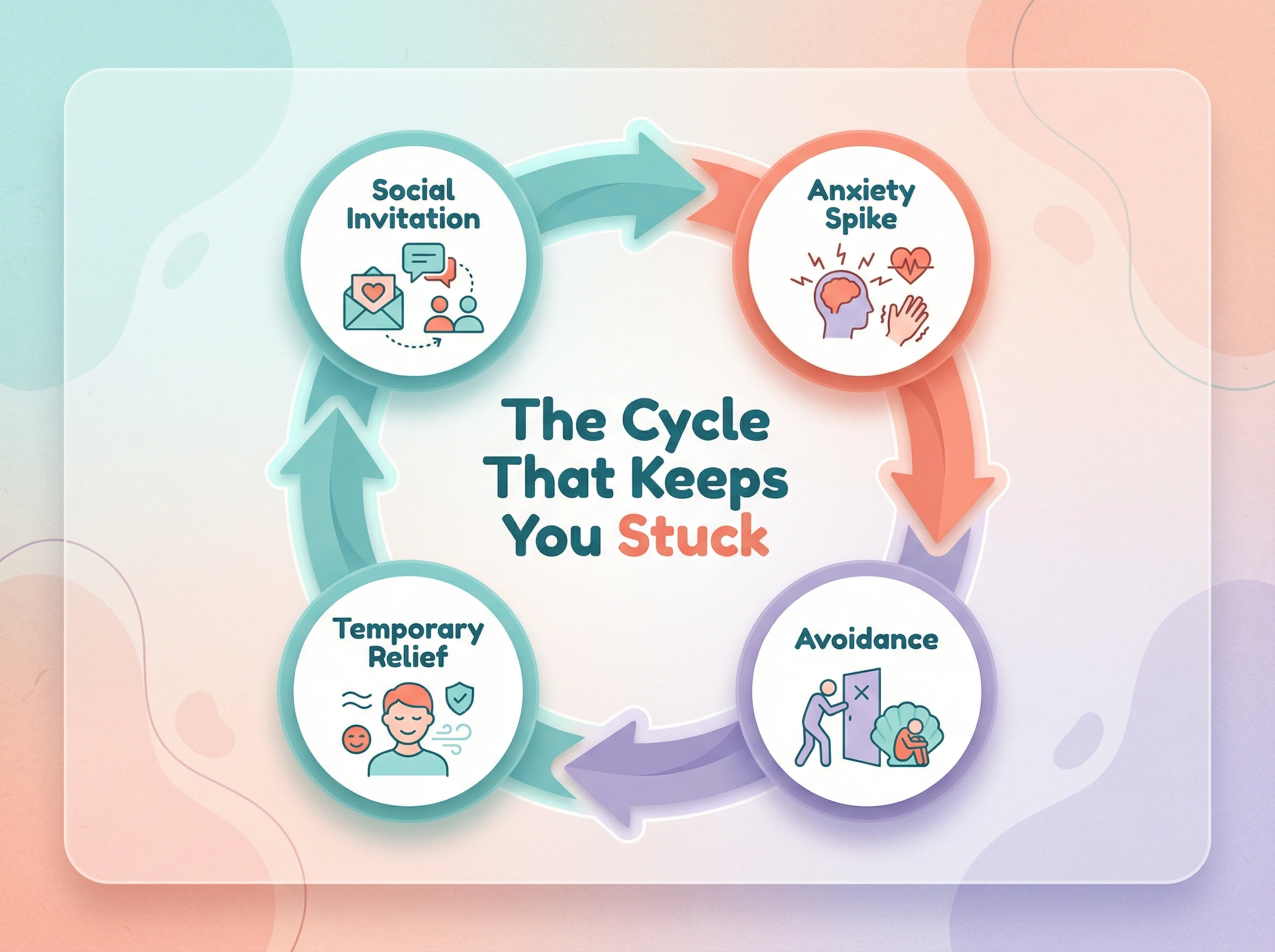
Meanwhile, the loneliness deepens. You watch life happen through social media, feeling increasingly disconnected from the world around you. The gap between where you are and where you want to be widens, and the thought of bridging it becomes even more daunting.
When Past Experiences Shape Present Choices
Sometimes, avoidance isn’t just about current anxiety—it’s about protection. Perhaps you’ve been hurt before. Maybe you experienced rejection, betrayal, or judgment that left lasting wounds. Your mind, trying to keep you safe, whispers: “If you don’t get close to anyone, you can’t get hurt again.”
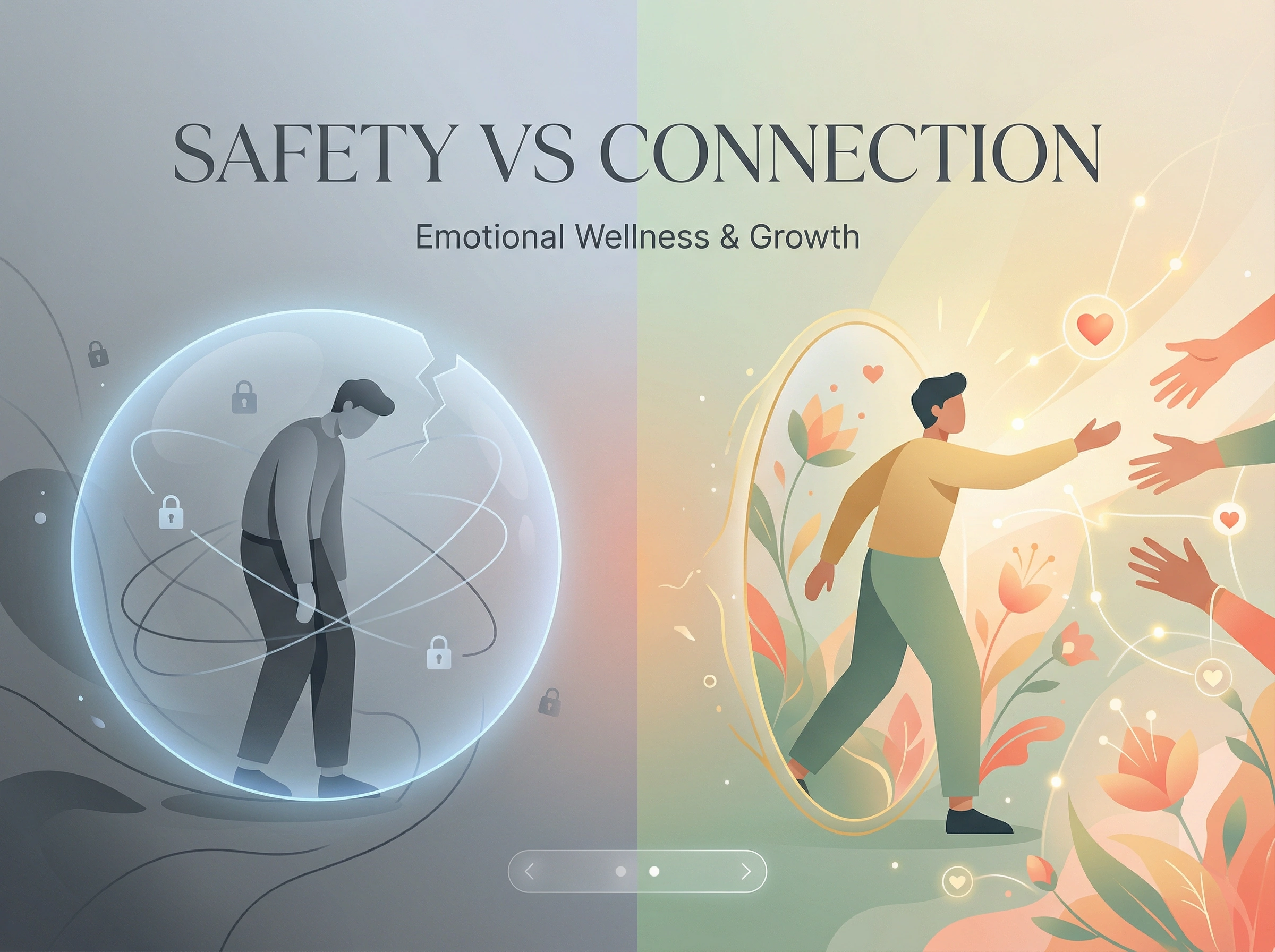
This protective mechanism made sense at one point. It helped you survive a difficult period. But now it’s keeping you from the very connections that could bring meaning, support, and joy to your life. You’re not avoiding people because you don’t want connection—you’re avoiding the vulnerability that connection requires.
The Energy Equation
For some people, especially those dealing with depression or chronic stress, social interaction feels like climbing a mountain when you’re already exhausted. The thought of putting on a smile, making conversation, and being “on” for others requires energy you simply don’t have.
You might think: “I’ll reach out when I feel better.” But isolation often makes you feel worse, creating another cycle. Without social connection, your mood drops further, making the idea of socializing even more overwhelming.
You’re not lazy or antisocial—you’re depleted, and your brain is trying to conserve resources in the only way it knows how.
The Perfectionism Trap
There’s another layer to this paradox: the belief that you need to be “better” before you deserve connection. You tell yourself you’ll reconnect with friends when you’ve achieved more, when you’re happier, when you have your life together, or when you’re more interesting.
This perfectionism sets an impossible standard. You’re essentially saying you need to be perfect to be worthy of love and belonging—a standard you’d never hold anyone else to. Meanwhile, authentic connection happens in the messy middle, not at some imagined finish line.
Breaking the Pattern
Understanding why you avoid people is the first step. The second is recognizing that you don’t have to solve this alone, and you don’t have to solve it all at once.
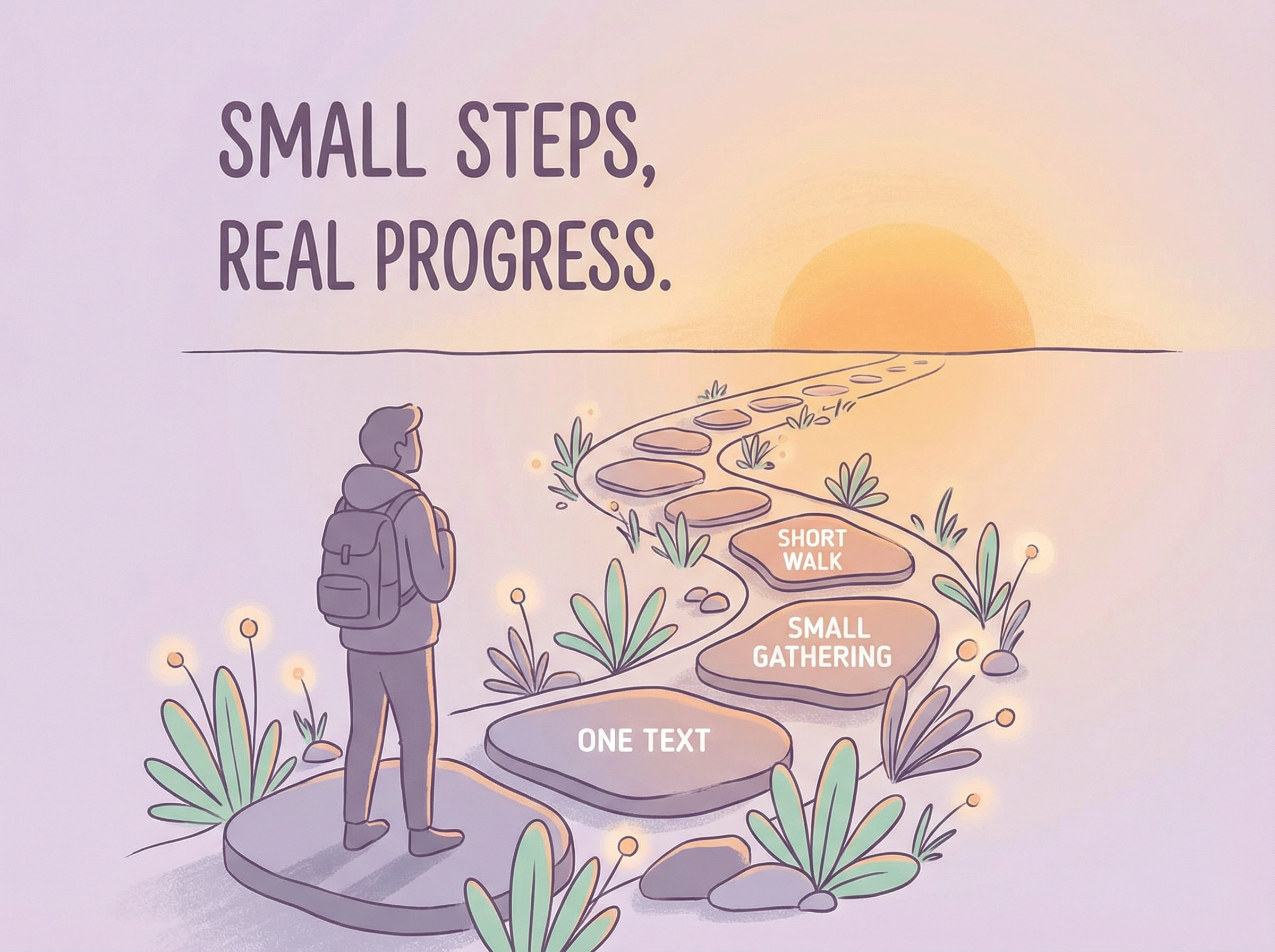
Start small. Connection doesn’t have to mean large social gatherings or lengthy phone calls. It might look like responding to one text message, taking a short walk with a trusted friend, or joining an online community around a shared interest. Small steps challenge the avoidance pattern without overwhelming your system.
Consider what’s underneath the avoidance. Are you dealing with social anxiety that makes interactions feel threatening? Is depression draining your energy and motivation? Are past wounds making vulnerability feel too risky?
Understanding the root cause helps you address the real issue rather than just fighting the symptoms.
When to Seek Professional Support
If you find yourself trapped in this cycle—wanting connection but unable to reach for it—professional support can make a profound difference. At Focused Connections Psychiatry, we understand that social avoidance often signals deeper struggles with anxiety, depression, or past trauma.
These aren’t character flaws or weaknesses; they’re treatable conditions that respond well to compassionate, personalized care. A comprehensive psychiatric evaluation can help identify what’s driving your avoidance patterns.
Whether through therapy, medication management, or a combination of approaches, treatment can help you rebuild your capacity for connection without the overwhelming anxiety or exhaustion that currently holds you back.
You deserve relationships that feel safe, authentic, and nourishing. You deserve to move through the world without the constant weight of loneliness or the exhausting effort of avoidance. That life is possible—and it starts with understanding that your struggle is real, valid, and treatable.
If you’re ready to explore what’s keeping you isolated and find a path back to connection. Contact us at (562) 312-1777 today or click here to schedule your free symptom assessment. You don’t have to navigate this paradox alone.