If you’ve recently been diagnosed with ADHD—or you’re finally putting a name to the struggles you’ve faced for years—you’re probably wondering:
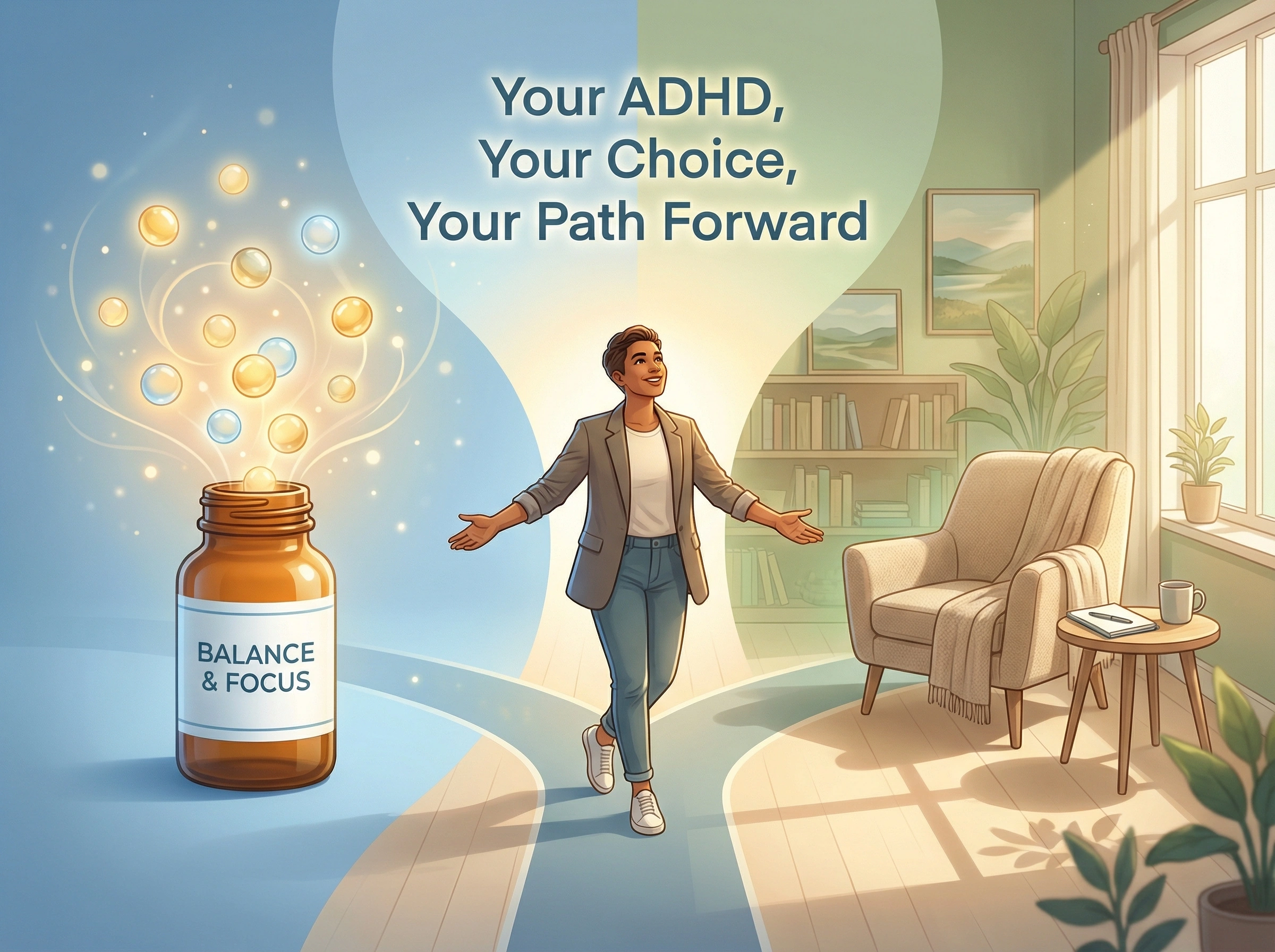
What now? Should you try medication? Therapy? Both? Neither?
It’s one of the most common questions we hear at Focused Connections Psychiatry, and it’s an important one. The truth is, there’s no one-size-fits-all answer. ADHD shows up differently in everyone’s life, and what works beautifully for one person might not be the right fit for another.
The good news? You have options, and understanding them can help you make the choice that truly supports your brain, your life, and your goals.
Understanding Your Options
When it comes to managing ADHD, treatment typically falls into three main approaches: medication, therapy (often called behavioral interventions), or a combination of both. Research consistently shows that for many people, especially those with moderate to severe symptoms, a combination approach tends to yield the best outcomes. But let’s break down each option so you can see what might resonate with you.
Medication: Addressing the Brain’s Chemistry
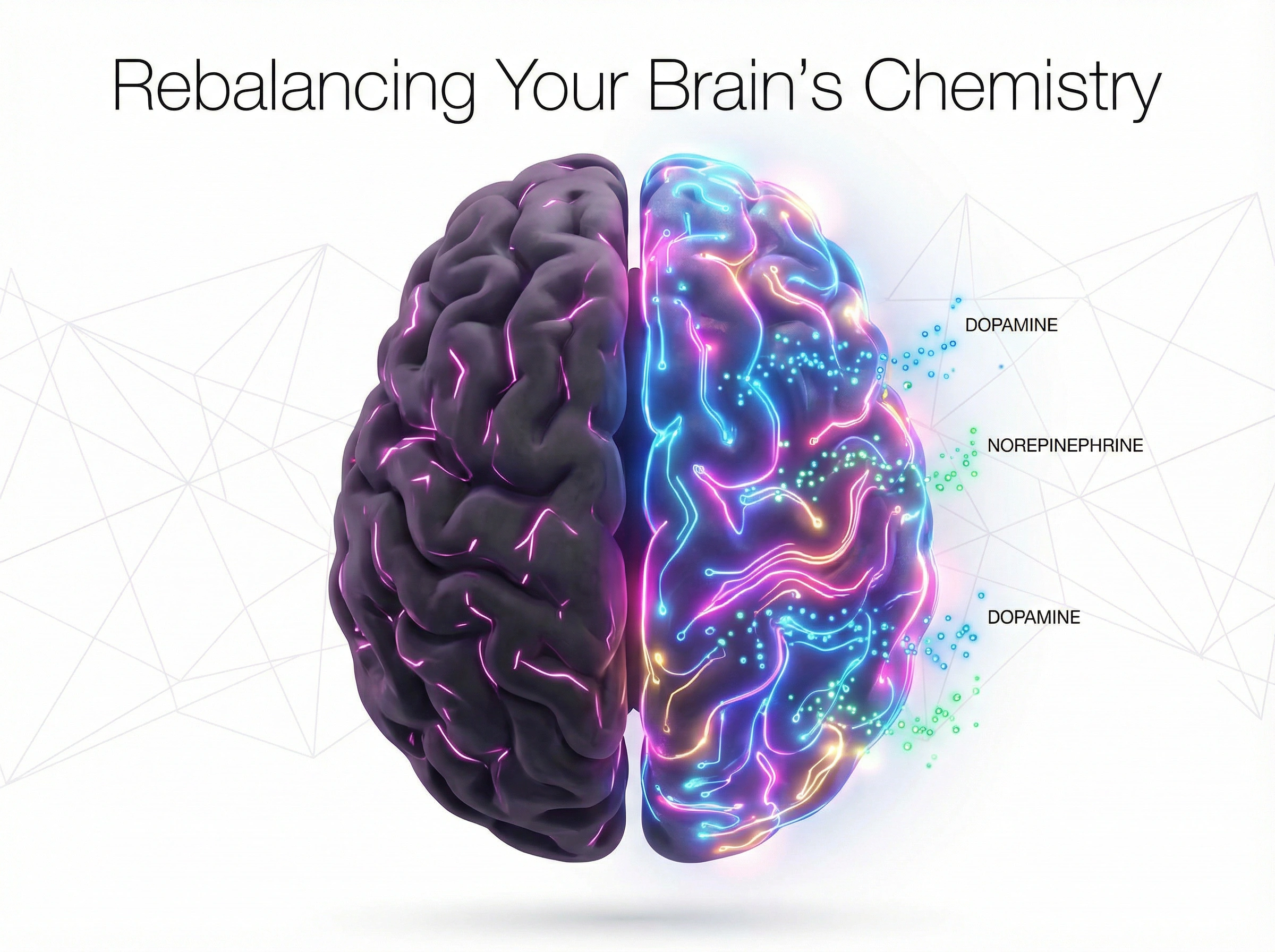
ADHD isn’t about laziness or lack of willpower—it’s a neurodevelopmental condition that affects how your brain regulates attention, impulse control, and executive function. Medications for ADHD work by adjusting the levels of certain neurotransmitters (like dopamine and norepinephrine) that help your brain’s “control center” function more effectively.
What medication can help with:
- Improved focus and concentration during work, school, or daily tasks
- Better impulse control and reduced impulsivity
- Decreased restlessness and hyperactivity
- Enhanced ability to organize, plan, and follow through on tasks
- Reduced forgetfulness and improved working memory
Common types of ADHD medications include:
- Stimulants (like methylphenidate or amphetamine-based medications) — the most commonly prescribed and often highly effective
- Non-stimulants (like atomoxetine or guanfacine) — helpful for those who don’t respond well to stimulants or have certain medical considerations
At Focused Connections Psychiatry, we take medication management seriously. We don’t just hand you a prescription and send you on your way.
We work with you to find the right medication at the right dose, monitor how you’re responding, and make adjustments as needed. We also offer advanced tools like GeneSight genetic testing to help predict which medications might work best for your unique biology.
Is medication right for you? It might be a good fit if you’re experiencing significant impairment in multiple areas of your life—missing deadlines at work, struggling to keep up with daily responsibilities, or finding that your ADHD symptoms are affecting your relationships or self-esteem.
Medication can provide the neurological foundation that makes other strategies actually work.
Therapy: Building Skills and Changing Patterns
While medication addresses the brain chemistry side of ADHD, therapy focuses on the behavioral, emotional, and practical aspects of living with ADHD. Think of it this way: medication can help your brain’s engine run more smoothly, but therapy teaches you how to drive.
What therapy can help with:
- Developing organizational systems that actually fit your ADHD brain
- Learning time management strategies (especially helpful for “time blindness”)
- Building routines and habits that reduce daily chaos
- Processing feelings of shame, frustration, or low self-esteem related to ADHD
- Improving communication skills and relationship patterns
- Creating accountability structures and breaking down overwhelming tasks

Types of therapy that work well for ADHD:
- Cognitive Behavioral Therapy (CBT) — helps you identify and change unhelpful thought patterns and behaviors
- ADHD Coaching — focuses on practical skill-building and accountability
- Family or Couples Therapy — addresses how ADHD affects relationships and helps loved ones understand and support you better
Is therapy right for you? Therapy can be especially valuable if you’re dealing with the emotional aftermath of years of undiagnosed ADHD, if you need help building practical systems, or if medication alone isn’t addressing all your challenges.
It’s also a great option if you’re hesitant about medication or if you have mild symptoms that don’t require pharmaceutical intervention.
The Power of Combination Treatment
Here’s what research and clinical experience tell us: for most people with ADHD, the combination of medication and therapy produces better outcomes than either approach alone.
Medication can give you the neurological bandwidth to actually implement the strategies you learn in therapy, while therapy helps you maximize the benefits of medication and build lasting skills.
Think of it like this: if you broke your leg, you’d probably need both a cast (immediate structural support) and physical therapy (rebuilding strength and function). ADHD treatment works similarly—medication provides the immediate neurological support, while therapy helps you rebuild the skills and confidence that ADHD may have undermined.

Finding Your Path Forward
At Focused Connections Psychiatry, we believe in meeting you where you are. Maybe you’re ready to try medication. Maybe you want to start with therapy and see how far that takes you. Maybe you’re curious about both. All of these are valid starting points.
What matters most is that you’re taking the step to get support. You’re not broken, and you’re not looking for excuses—you’re looking for clarity and tools that actually work with your brain, not against it.
If you’re wondering what approach might be right for you, we’re here to help you figure it out. Through comprehensive evaluation, including tools like our ADHD T.O.V.A. testing, we can get a clear picture of how ADHD is showing up in your life and create a personalized treatment plan that makes sense for you.
This information is for educational purposes and is not a substitute for professional evaluation or treatment. If you’re struggling with ADHD symptoms, reaching out for help is an important and strong step.
Ready to explore your options? Contact Focused Connections Psychiatry today at (562) 312-1777 or click here to schedule your free symptom assessment. Our office is located at 4132 Katella Avenue, Suite 200, Los Alamitos, CA 90720. Your journey toward clarity, confidence, and better outcomes starts here.