Understanding the Cycle That’s Stealing Your Life
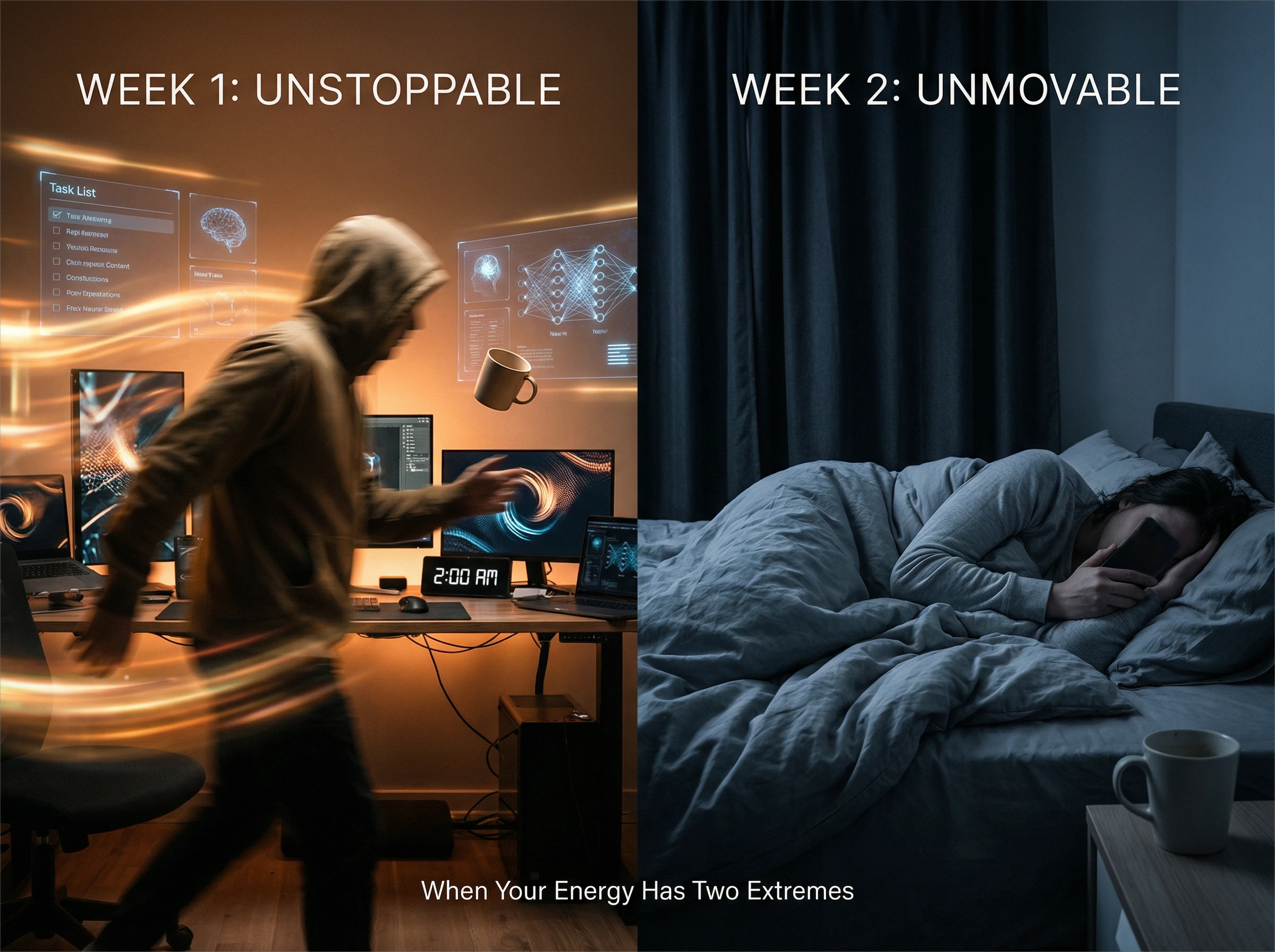
You know the pattern all too well. Last week, you were unstoppable. Ideas flowed like water, your to-do list practically completed itself, and you felt more alive than you had in months.
You stayed up until 2 AM working on projects that suddenly felt urgent and exciting. Sleep? Who needs it when you’re finally firing on all cylinders?
But this week? This week, getting out of bed feels like climbing a mountain. The projects that seemed so important now feel pointless. Your body feels heavy, your mind foggy, and that energetic, capable person from seven days ago feels like a stranger. You’re not lazy—you’re exhausted in a way that sleep doesn’t fix.
If this cycle sounds familiar, you’re not alone. And more importantly, you’re not broken.
The Invisible Rollercoaster
Many people experience these dramatic shifts between periods of high energy and deep lows, often without understanding why. One week, you’re the person everyone admires—productive, social, creative, and confident.
Next, you’re canceling plans, struggling to focus, and wondering what happened to your motivation.
These aren’t just “good days” and “bad days.” The intensity and duration of these cycles suggest something deeper is happening—something that deserves understanding and support, not judgment.
During the “amazing” weeks, you might notice:
- Needing far less sleep but still feeling energized
- Thoughts racing faster than you can capture them
- Taking on multiple projects simultaneously
- Feeling unusually confident or invincible
- Spending money more impulsively than usual
- Talking faster and jumping between topics
- Feeling like you’ve finally found your rhythm
Then comes the crash. During the “can’t move” weeks, you experience:
- Overwhelming fatigue that rest doesn’t relieve
- Loss of interest in things that usually matter to you
- Difficulty concentrating or making decisions
- Feeling emotionally heavy or empty
- Withdrawing from friends and activities
- Sleeping too much or struggling with insomnia
- Questioning why you can’t just “snap out of it”
Why This Happens: Understanding Mood Cycles
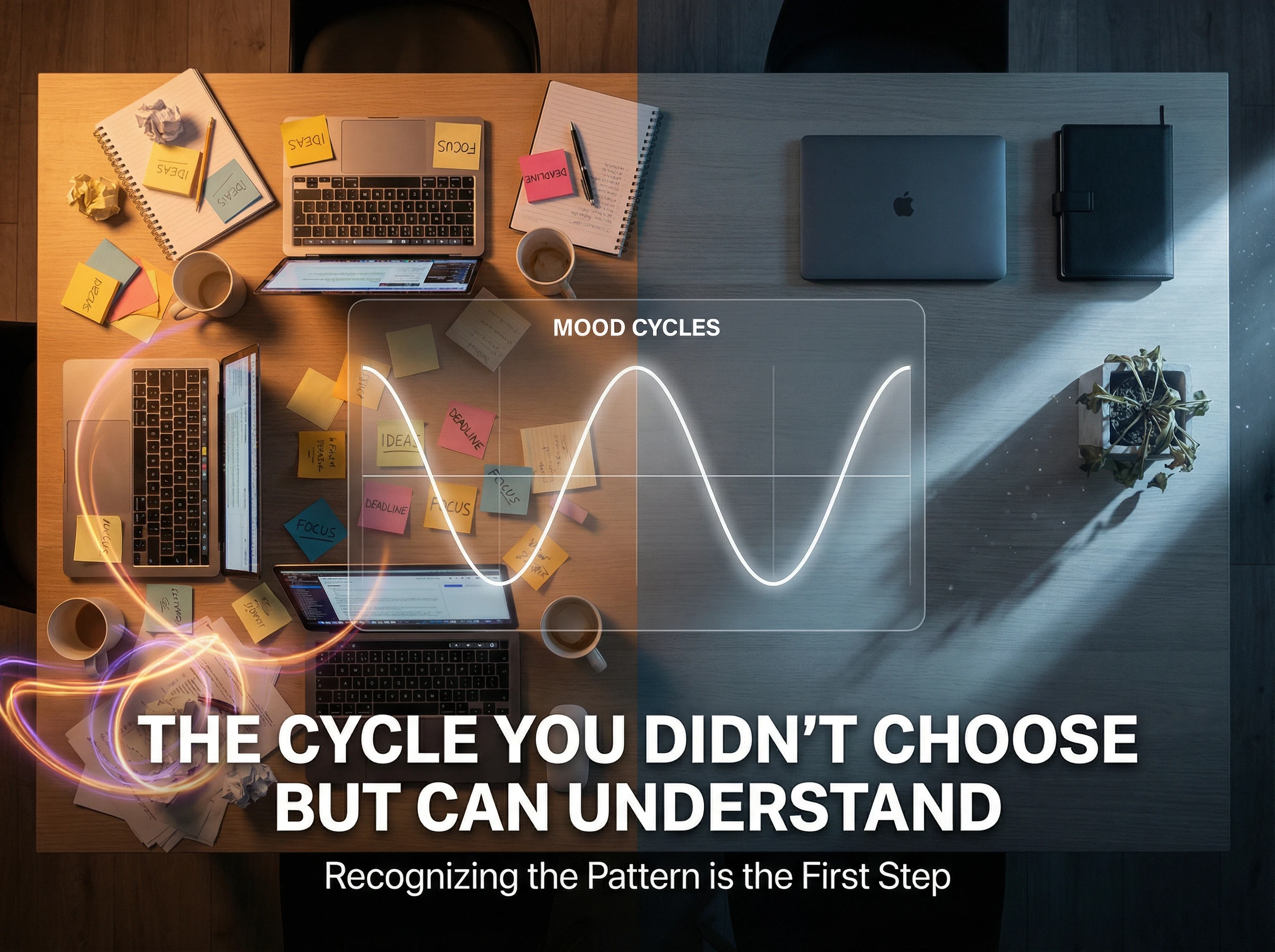
These patterns often reflect underlying mood cycles that go beyond typical stress or life circumstances. Your brain’s chemistry and regulation systems may be creating these fluctuations, causing you to experience extremes that feel beyond your control.
Some people describe it as living on a pendulum—swinging from one extreme to another without a stable middle ground. The elevated periods might feel productive or even enjoyable at first, but they’re often followed by crashes that leave you depleted and confused.
What makes this particularly challenging is that during the high-energy periods, you might not recognize anything is wrong. In fact, you might feel better than ever. It’s only in hindsight—or during the inevitable low—that the pattern becomes clear.
The Hidden Costs
These cycles don’t just affect your energy levels. They impact every area of your life:
Relationships suffer when loved ones can’t predict which version of you they’ll encounter. They might feel confused by your inconsistency or hurt when you withdraw during low periods.
Work becomes unpredictable. You might overcommit during high-energy phases, only to struggle meeting those commitments when your mood shifts.
Self-trust erodes. When you can’t rely on your own consistency, it’s hard to make plans, set goals, or believe in your ability to follow through.

Physical health declines. Irregular sleep patterns, stress, and the physical toll of mood fluctuations can affect your overall wellbeing.
Perhaps most painful is the self-blame. You might tell yourself you’re unreliable, lazy, or lacking willpower—when the truth is, you’re experiencing something that requires professional understanding and support.
There’s a Path Forward
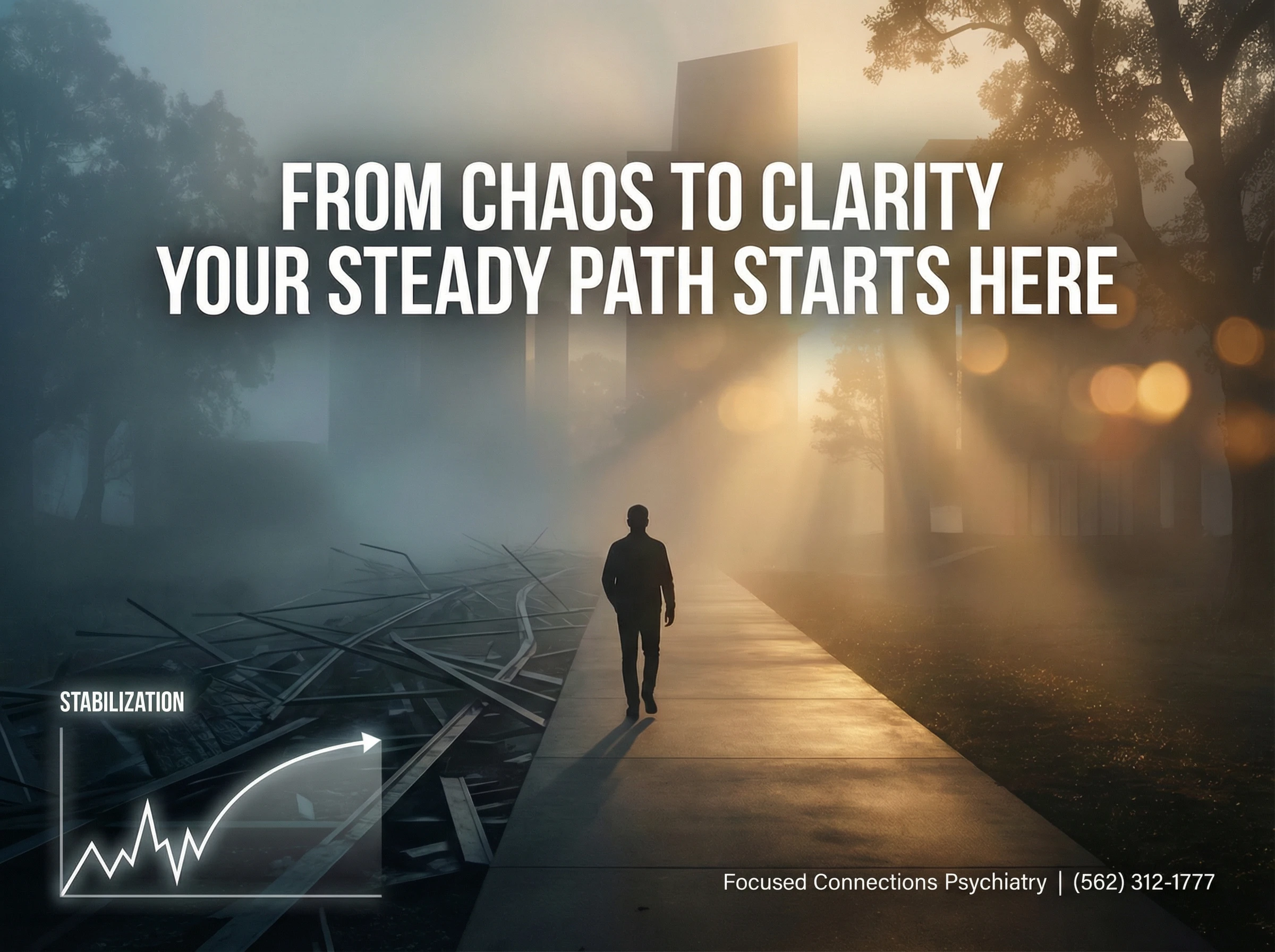
Here’s what you need to know: these patterns are recognizable, understandable, and treatable. You’re not destined to ride this rollercoaster forever.
The first step is recognizing the pattern itself. Many people live with these cycles for years, attributing them to stress, personality, or circumstance, without realizing there’s a deeper explanation.
Professional evaluation can help you understand what’s driving these mood shifts. A comprehensive psychiatric assessment looks at your history, patterns, triggers, and experiences to create a complete picture. This isn’t about labeling you—it’s about understanding you.
With proper support, many people find they can:
- Experience longer periods of stability
- Recognize early warning signs of mood shifts
- Develop strategies to manage transitions
- Make decisions from a more balanced place
- Rebuild trust in themselves and their relationships
- Maintain consistency in work and personal life
You Deserve Stability
If you’re tired of the cycle—tired of feeling amazing one week and unable to move the next—it’s time to seek answers. Your experiences deserve care and understanding, not judgment.
At Focused Connections Psychiatry, we specialize in helping people understand complex mood patterns. We take time to listen to your story, identify your unique patterns, and work collaboratively with you to find stability.
You don’t have to keep riding the rollercoaster. Contact us at (562) 312-1777 today or click here to schedule your free symptom assessment. Because you deserve to feel like yourself—consistently. The journey to stability starts with understanding. Let us help you find your steady ground.