Understanding Persistent Worry
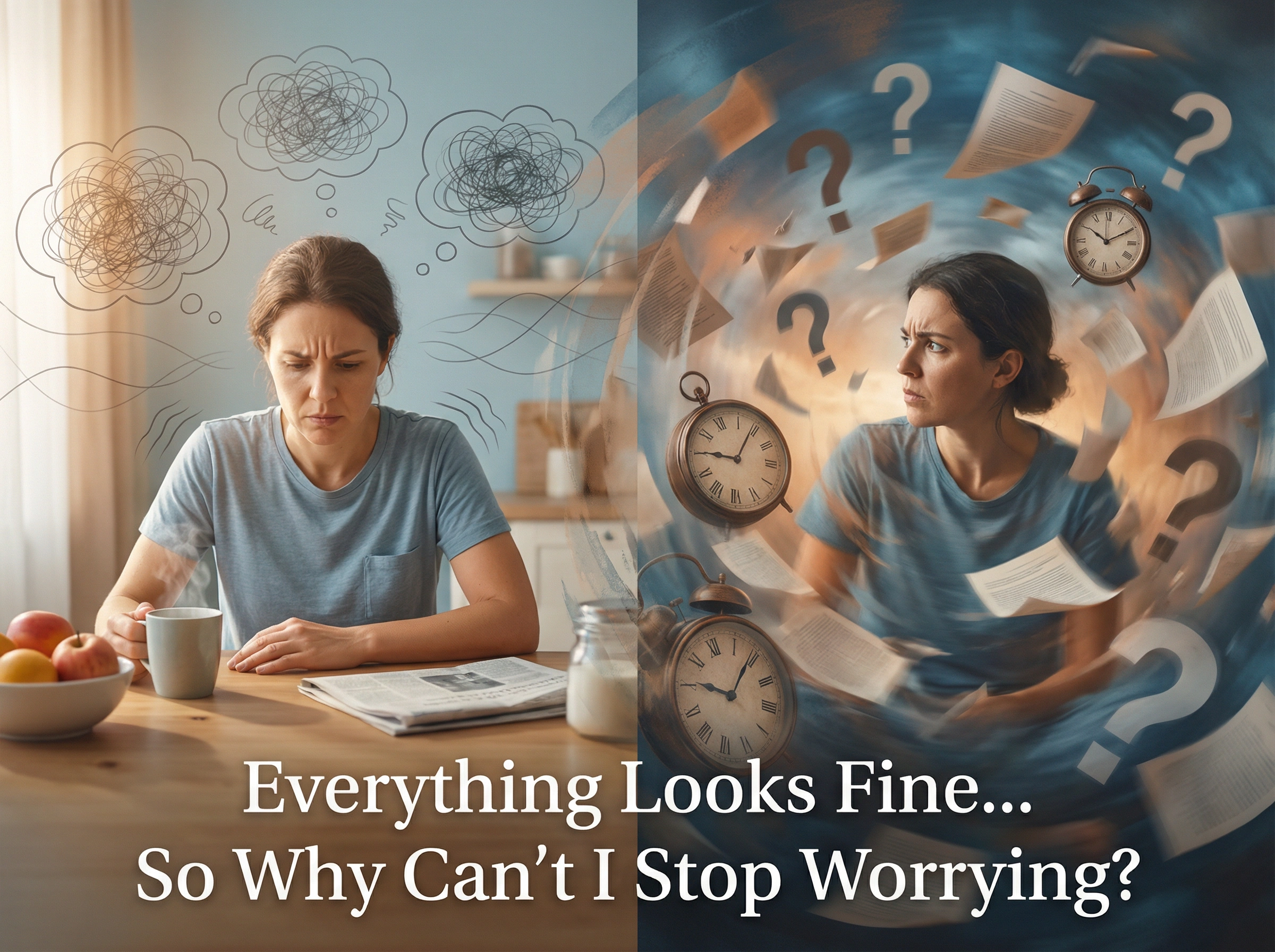
You wake up with a knot in your stomach. Your mind immediately starts racing through your to-do list, replaying yesterday’s conversations, worrying about things that haven’t even happened yet. You look around—nothing is actually wrong in this moment—but the anxiety is there anyway, humming in the background like static you can’t turn off.
If this sounds familiar, you’re not alone. Many people experience persistent anxiety that seems to appear without any clear trigger. It’s one of the most common concerns we hear at Focused Connections Psychiatry: “Why do I feel anxious all the time when there’s no real reason to be?”
The truth is, there is a reason—it’s just not always obvious.
When Anxiety Becomes the Background Noise
Anxiety isn’t always tied to a specific event or stressor. Sometimes it settles in quietly and becomes part of your daily experience. You might notice:
- A constant sense of unease or tension, even during calm moments
- Your mind jumping to worst-case scenarios automatically
- Physical sensations like chest tightness, racing heart, or muscle tension that seem to come out of nowhere
- Difficulty relaxing, even when you’re trying to unwind
- Feeling exhausted from the mental effort of worrying
This type of persistent, free-floating anxiety often indicates that your nervous system has shifted into a heightened state of alert. Your brain is working overtime to protect you from perceived threats—even when there’s no immediate danger present.
Understanding the “Why” Behind Constant Anxiety
Your Brain’s Alarm System Is Overactive
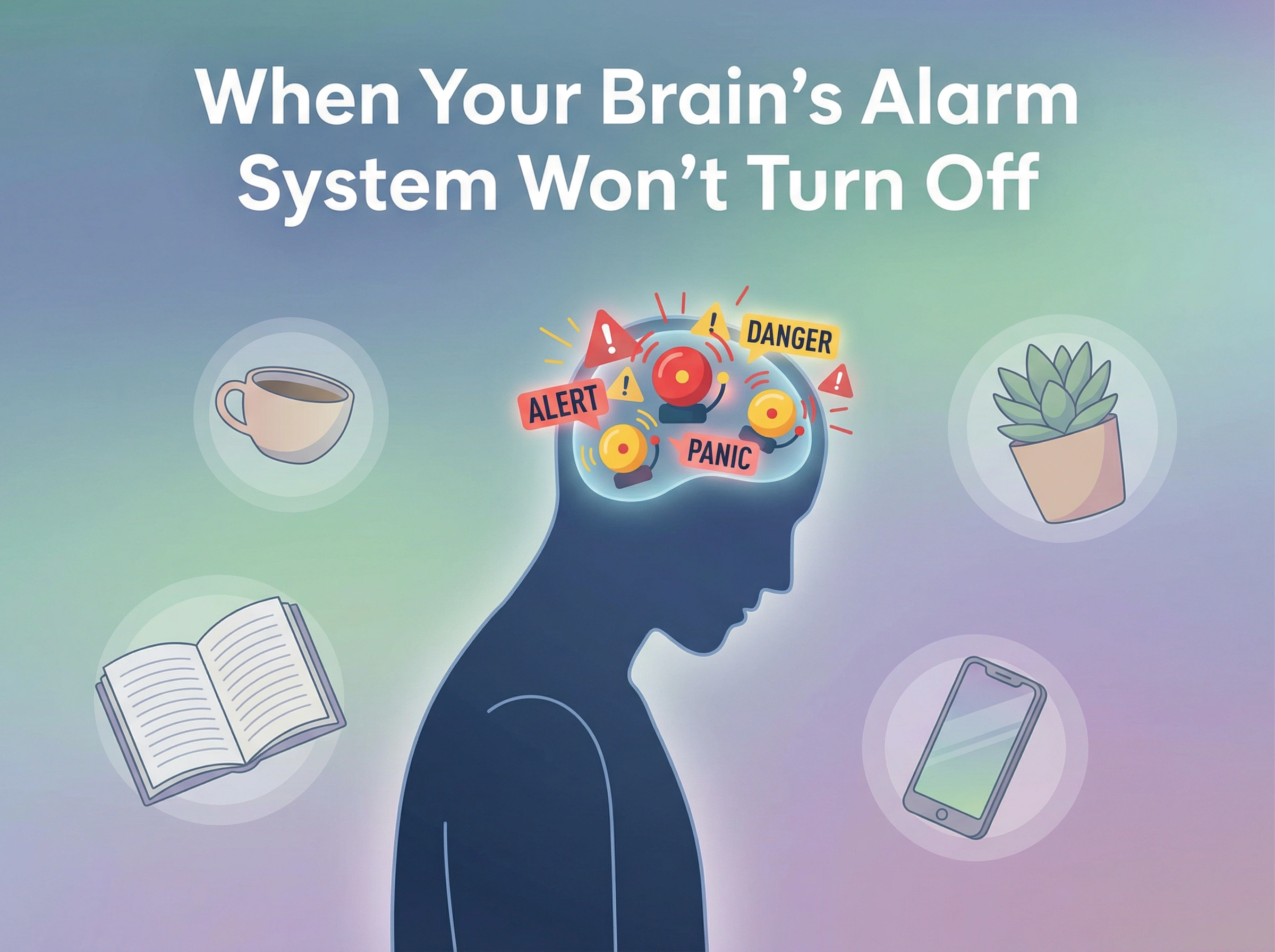
Think of anxiety as your brain’s alarm system. In healthy amounts, it helps you stay safe and prepared. But sometimes, this system becomes overly sensitive, triggering warnings even when there’s no real threat. This can happen for several reasons:
- Chronic stress accumulation: Even if you can’t point to one big stressor, months or years of smaller stresses can build up, keeping your nervous system on high alert.
- Biological factors: Anxiety can run in families and may be influenced by brain chemistry, particularly neurotransmitters like serotonin and GABA that help regulate mood and stress responses.
- Past experiences: Previous difficult experiences—even ones you’ve “moved past“—can sensitize your nervous system to perceive more threats in your environment.
- Lifestyle factors: Poor sleep, caffeine intake, lack of physical activity, and irregular eating patterns can all contribute to baseline anxiety levels.
The Worry Loop
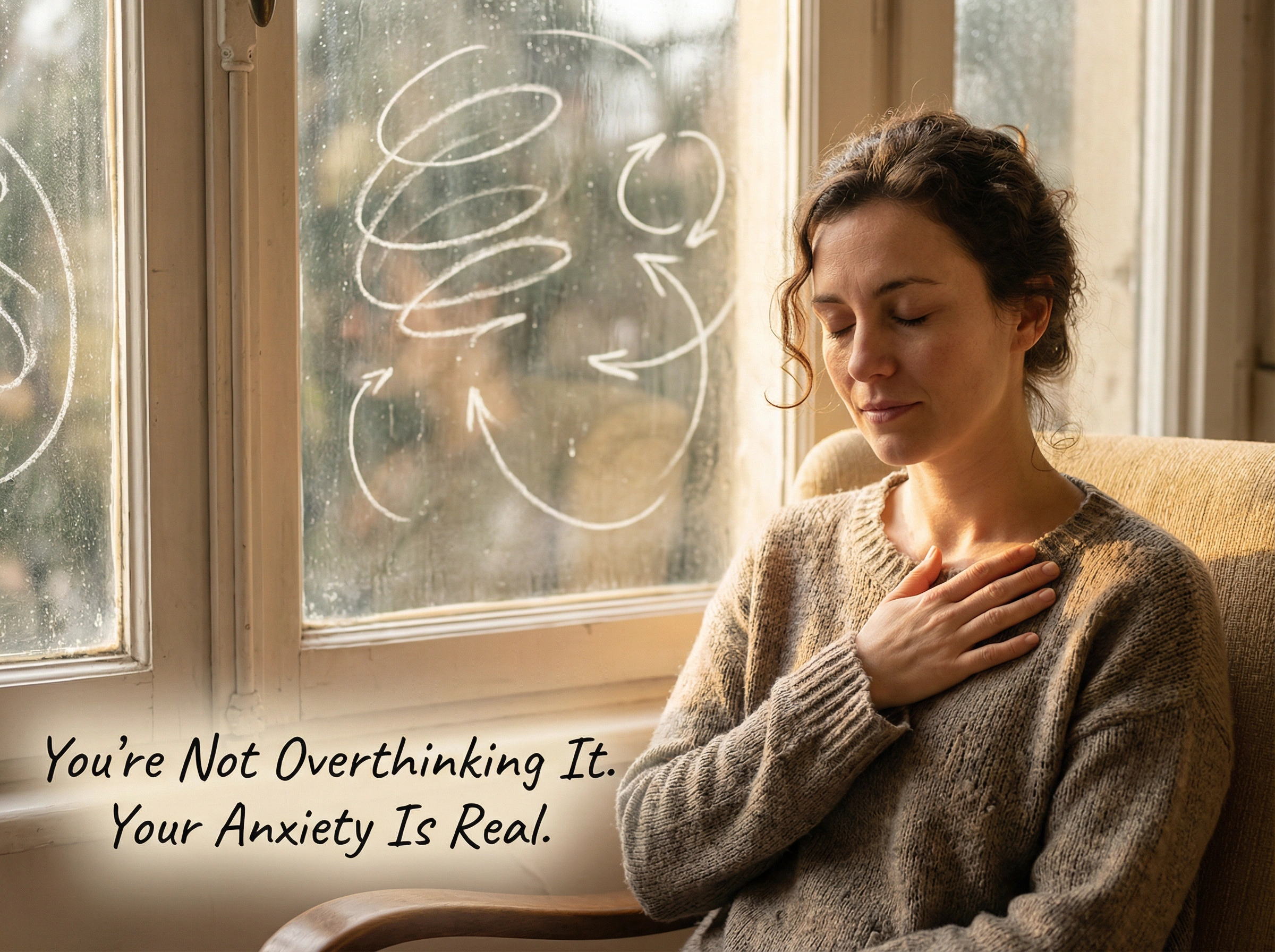
Persistent anxiety often creates its own cycle. You feel anxious, which makes you worry about why you’re anxious, which creates more anxiety. You might find yourself:
- Constantly scanning for what might be wrong
- Overthinking small decisions
- Seeking reassurance from others repeatedly
- Avoiding situations that might trigger more anxiety
This pattern can make the anxiety feel even more confusing and overwhelming because it seems to feed itself.
When “Normal Stress” Becomes Something More
It’s important to understand the difference between everyday stress and an anxiety pattern that may benefit from professional support. Consider these questions:
- Does your anxiety interfere with your daily activities, work, or relationships?
- Do you spend significant time each day worrying or feeling on edge?
- Have you noticed physical symptoms like headaches, digestive issues, or sleep problems?
- Do you avoid certain situations or activities because of anxiety?
- Does it feel like you can’t “turn off” your worried thoughts?
If you answered yes to several of these, what you’re experiencing may be more than just stress—and that’s okay. It doesn’t mean something is wrong with you; it means your nervous system needs support to recalibrate.
You Don’t Have to Figure This Out Alone
One of the most isolating aspects of persistent anxiety is feeling like you should be able to “just relax” or “stop worrying so much.” But anxiety isn’t a choice or a character flaw—it’s a real experience that affects both your mind and body.
At Focused Connections Psychiatry, we understand that anxiety can feel overwhelming, especially when you can’t pinpoint a specific cause. Our approach is to help you:
- Understand what’s happening: Through a comprehensive evaluation, we can help identify the factors contributing to your anxiety and give you clarity about what you’re experiencing.
- Develop a personalized plan: Treatment isn’t one-size-fits-all. We work collaboratively with you to create a plan that might include therapy, medication management, lifestyle adjustments, or a combination of approaches.
- Build lasting tools: Our goal isn’t just symptom relief—it’s helping you develop skills and strategies to manage anxiety long-term.

Taking the First Step
If you’ve been living with constant anxiety, wondering if it will ever get better, we want you to know: relief is possible. Many people find that with the right support, they can significantly reduce their anxiety and feel more like themselves again.
You don’t need to have all the answers before reaching out. You don’t need to wait until things get “bad enough.” If anxiety is affecting your quality of life, that’s reason enough to seek support.
At Focused Connections Psychiatry, we provide compassionate, evidence-based care in a judgment-free environment. We’re here to listen, understand, and walk alongside you toward greater calm and clarity.
Ready to take the next step? Contact us at (562) 312-1777 today or click here to schedule your free symptom assessment. Your journey toward feeling more grounded starts here.
If you’re experiencing thoughts of self-harm or suicide, please reach out to the National Suicide Prevention Lifeline at 988 or go to your nearest emergency room. You deserve immediate support.