What Every Parent Should Know Before the School Calls Again
You’ve lost count of how many times you’ve asked your child to put on their shoes this morning. The backpack is still on the floor. Homework that was “finished” last night is somehow missing three pages.
And yesterday, the teacher sent another email about your child disrupting class—not because they’re being defiant, but because they just can’t seem to sit still or wait their turn.
If this sounds painfully familiar, you’re not alone. And that knot of worry in your stomach—the one asking “Is this normal kid behavior, or is something else going on?”—is completely valid.
When “Just Being a Kid” Might Be Something More
All children are energetic, distractible, and impulsive at times. That’s part of being a kid. But when these behaviors become so persistent and intense that they’re affecting your child’s ability to succeed at school, maintain friendships, or function peacefully at home, it may be time to look deeper.
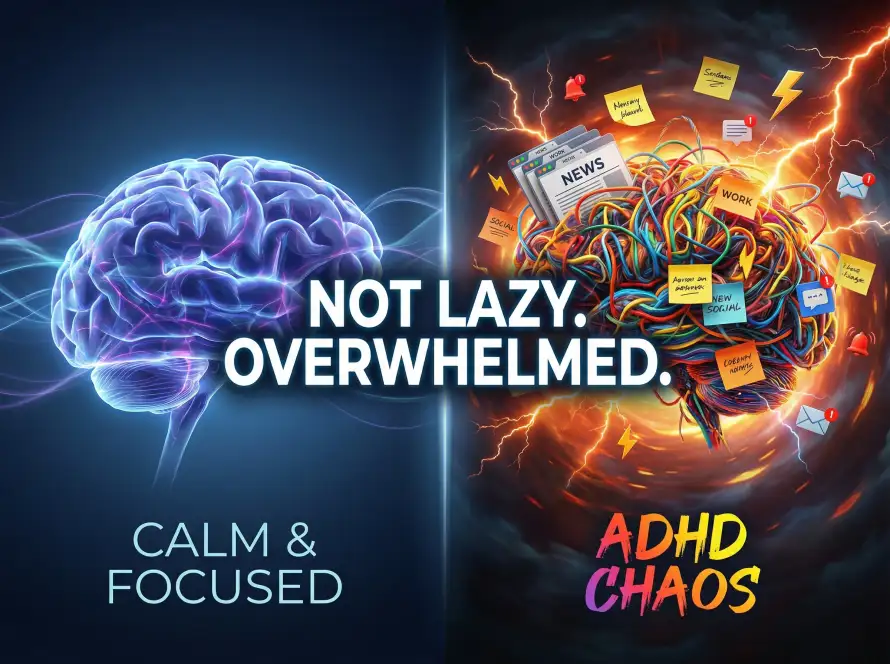
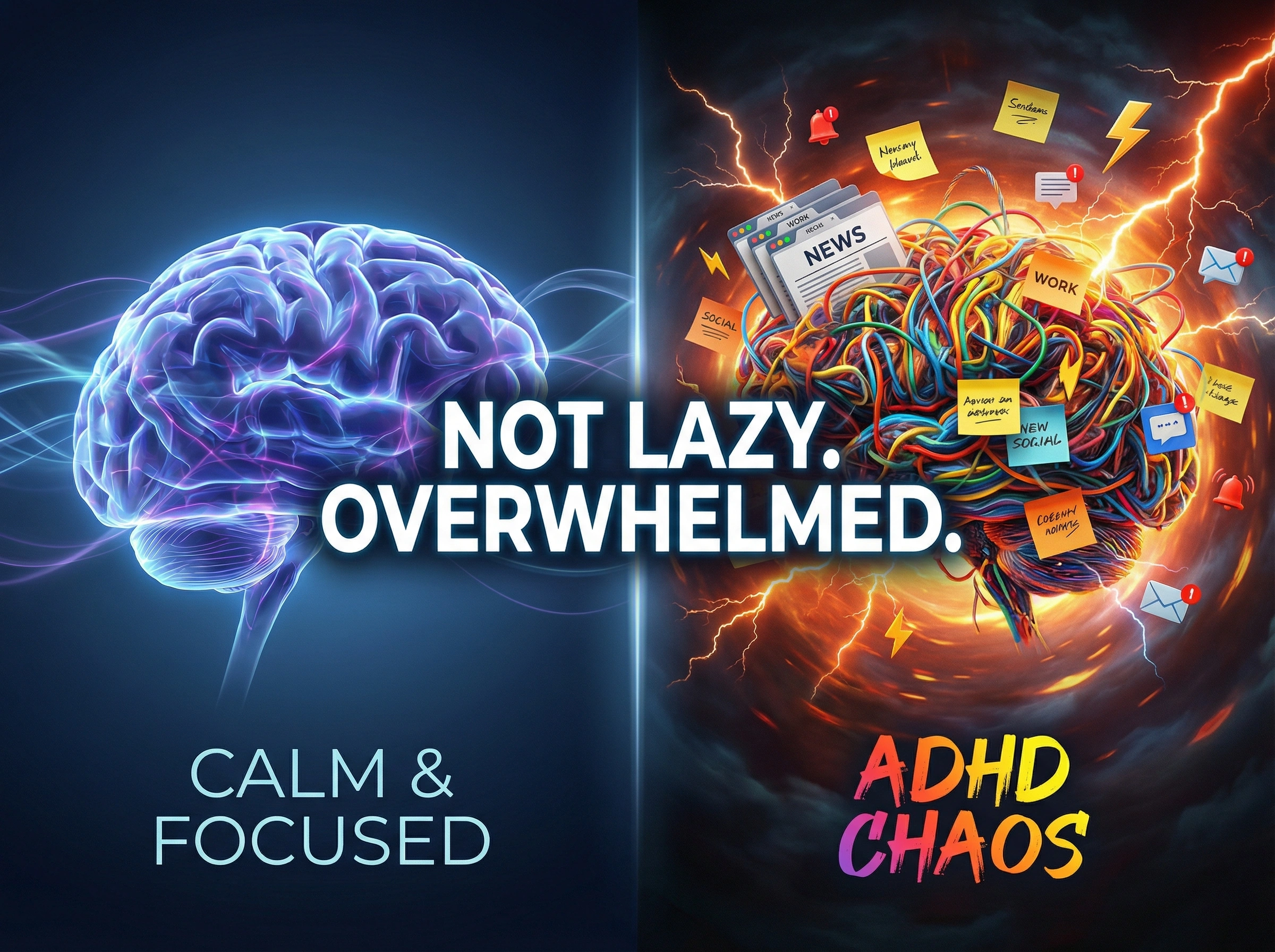
ADHD (Attention-Deficit/Hyperactivity Disorder) is one of the most common neurodevelopmental disorders in children, affecting millions of kids across the United States. It’s not about bad parenting, too much sugar, or lack of discipline. ADHD is a real, brain-based condition that affects how children focus, control impulses, and manage their energy levels.
The challenge? Early signs can be easy to miss or dismiss, especially when every parent around you is saying “Oh, my kid does that too.”
What Early ADHD Signs Actually Look Like in Real Life
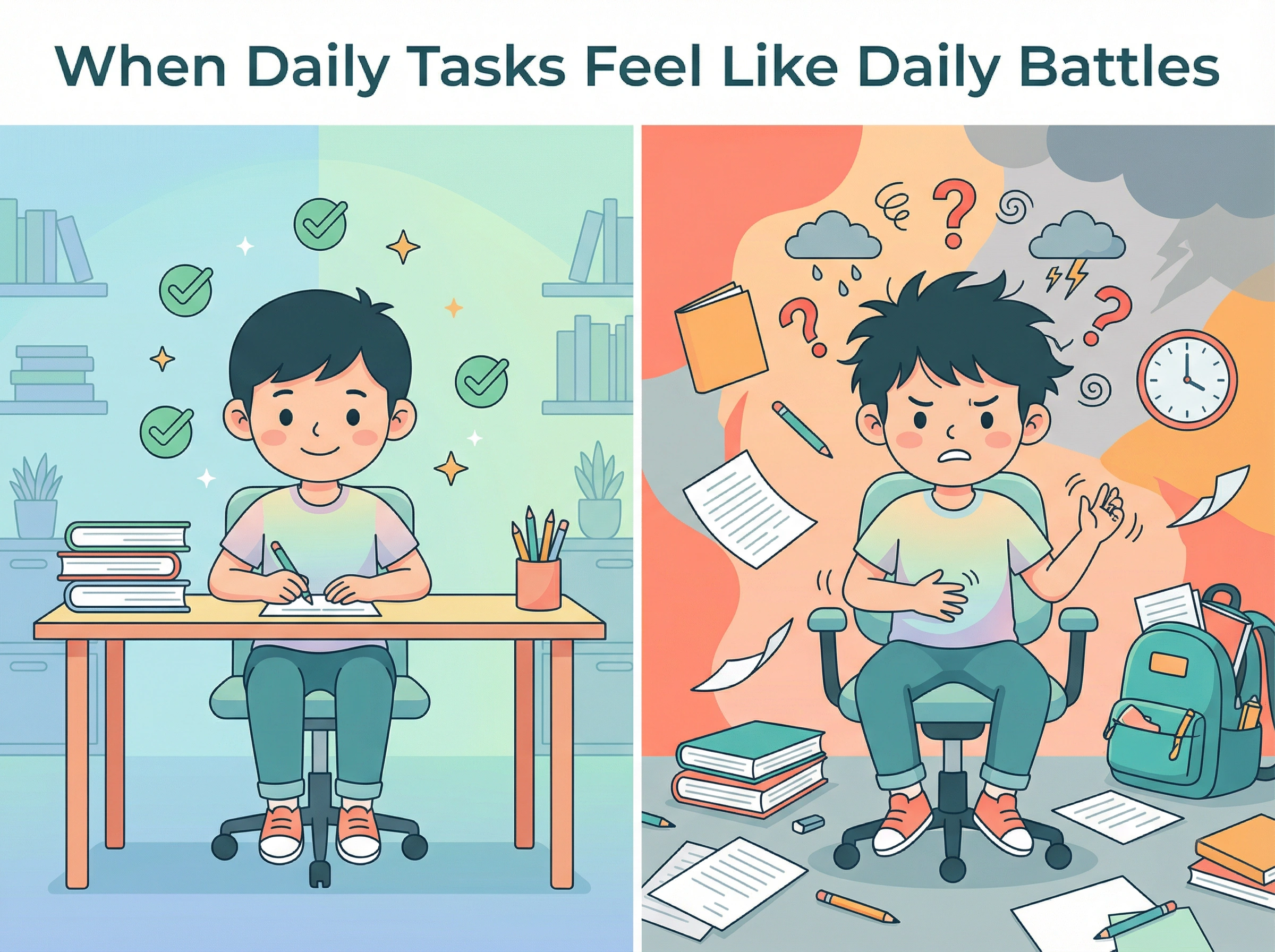
ADHD doesn’t always announce itself with a clear label. Instead, it shows up in the daily struggles that leave both you and your child feeling frustrated and exhausted.
At home, you might notice:
- Your child starts multiple activities but rarely finishes any of them
- Simple instructions need to be repeated five, six, seven times
- They lose things constantly—jackets, lunchboxes, homework, permission slips
- Sitting through a family meal feels like an impossible task
- They interrupt conversations constantly, unable to wait for their turn to speak
- Emotional reactions seem bigger and more intense than the situation warrants
At school, teachers may report:
- Difficulty staying seated or remaining quiet during lessons
- Trouble following multi-step directions
- Incomplete assignments, even when your child clearly understands the material
- Blurting out answers before questions are finished
- Difficulty organizing materials and keeping track of belongings
- Frequent conflicts with peers due to impulsive behavior or not picking up on social cues
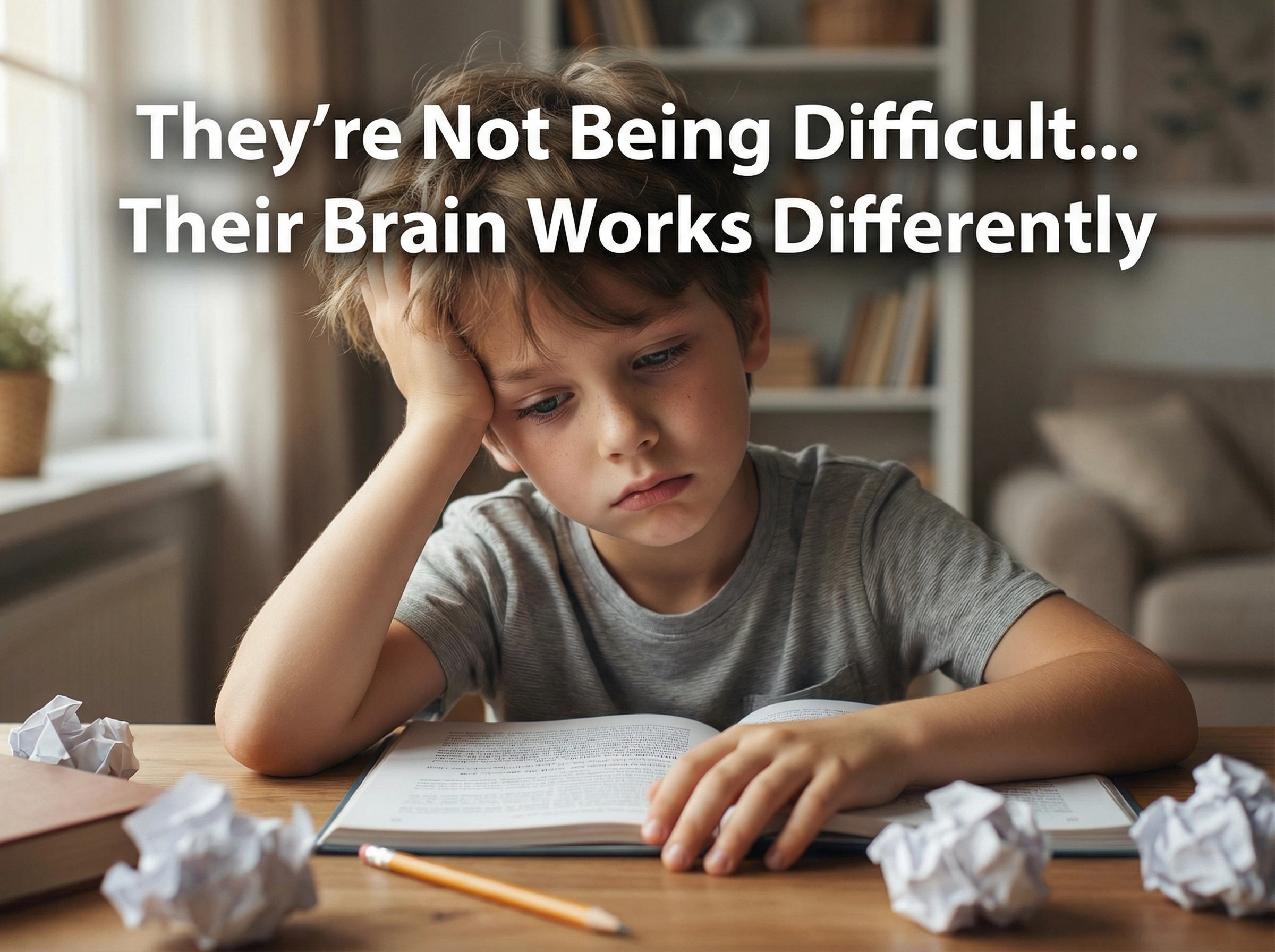
The homework battle becomes a nightly ordeal. What should take 20 minutes stretches into two hours of tears, frustration, and power struggles—not because your child is being difficult, but because their brain is working against them.
The Three Faces of ADHD in Children
ADHD isn’t one-size-fits-all. It presents in three main ways, and understanding these differences is crucial:
Predominantly Inattentive: These children are often described as “daydreamers.” They’re not hyperactive or disruptive, which means they’re frequently overlooked. They struggle with focus, organization, and following through on tasks. They may seem to be listening but aren’t absorbing what’s being said.
Predominantly Hyperactive-Impulsive: These are the kids who can’t sit still, fidget constantly, talk excessively, and act without thinking. They’re often the ones getting in trouble at school, not out of defiance, but because their bodies and impulses are hard to control.
Combined Presentation: This is the most common type, where children show significant symptoms of both inattention and hyperactivity-impulsivity.
Why Early Recognition Matters
Here’s what many parents don’t realize: untreated ADHD doesn’t just affect grades. It affects your child’s self-esteem, their relationships, and their belief in their own abilities.
Children with undiagnosed ADHD often internalize their struggles. They start believing they’re “stupid,” “bad,” or “broken” because they can’t do things that seem easy for other kids. They may develop anxiety or depression as they repeatedly experience failure and criticism.
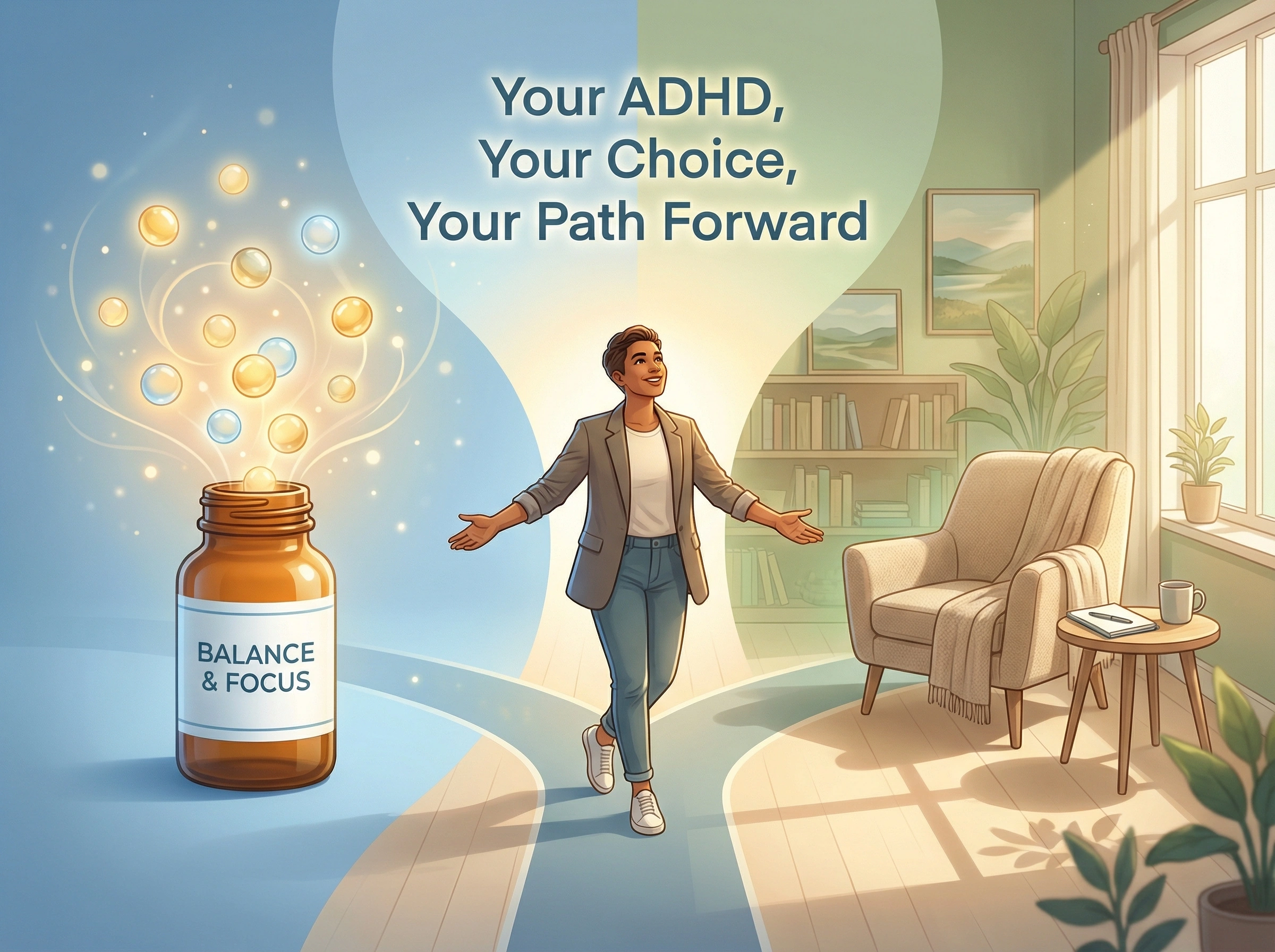
Early identification and support can change this trajectory completely. With proper evaluation and treatment—which may include behavioral strategies, skills training, and sometimes medication—children with ADHD can thrive academically, socially, and emotionally.
What to Do If You’re Concerned
If you’re reading this and thinking “This sounds like my child,” here are your next steps:
Document what you’re seeing. Keep notes about specific behaviors, when they occur, and how often. This information will be invaluable during an evaluation.
Talk to your child’s teacher. Ask whether they’re seeing similar patterns at school. ADHD symptoms must be present in multiple settings—not just at home or just at school.
Seek a professional evaluation. Only a licensed mental health professional can diagnose ADHD. At Focused Connections Psychiatry, we conduct comprehensive evaluations that look at the whole picture—your child’s history, behavior patterns, and any other factors that might be contributing to their struggles.

Remember: seeking clarity is not giving up on your child. It’s the opposite. It’s giving them the tools, understanding, and support they need to succeed.
You’re Not Alone in This
The path from “something feels off” to “we have a plan” can feel overwhelming. But you don’t have to navigate it alone. If your child is struggling and you’re wondering whether ADHD might be part of the picture, reaching out for a professional evaluation is a strong, responsible, and loving step forward.
This information is for educational purposes and is not a substitute for professional evaluation or treatment. If you’re concerned about your child’s development or behavior, please consult with a qualified mental health professional.
Ready to get clarity? Contact Focused Connections Psychiatry today at (562) 312-1777 or click here to schedule your free symptom assessment and discover the support you deserve. Our office is located at 4132 Katella Avenue, Suite 200, Los Alamitos, CA 90720.
Our team is here to help your child—and your family—find the path forward.