You’re the person everyone thinks “has it all together.” You’ve built a successful career, you manage your responsibilities, and from the outside, you look like you’re thriving.
But behind the scenes? You’re exhausted from the constant effort it takes to appear “normal.” You’re working twice as hard as everyone else just to keep up, and you’re terrified someone will discover that you’re barely holding it together.
This is what ADHD masking looks like in high-functioning adults—and it’s far more common than most people realize.
What Is ADHD Masking?
ADHD masking is the practice of hiding or compensating for ADHD symptoms to fit in with social and professional expectations. It’s the mental and emotional labor of appearing organized, focused, and “together” when your brain is actually working overtime just to manage basic tasks that seem effortless for others.
Many high-functioning adults with ADHD have spent years—sometimes decades—developing elaborate systems and strategies to hide their struggles. They’ve learned to overcompensate, to work longer hours, to triple-check everything, and to present a polished exterior that conceals the chaos they feel inside.
The problem? Masking is exhausting. And it often prevents people from recognizing they have ADHD in the first place, delaying the clarity and support they desperately need.
What Masking Looks Like in Daily Life
If you’re a high-functioning adult masking ADHD, you might recognize yourself in these patterns:

You’re the “Last-Minute Hero”
You consistently deliver quality work, but only after intense, anxiety-fueled all-nighters. While colleagues assume you’re just a procrastinator, you’re actually struggling with task initiation and time blindness. The deadline pressure is the only thing that activates your focus.
You Over-Prepare for Everything
You arrive early to meetings because you’re terrified of being late. You set multiple alarms, write excessive notes, and create backup plans for your backup plans. What looks like thoroughness is actually a compensation strategy for forgetfulness and time management challenges.
You’re Socially Exhausted
You’ve learned to pause before speaking, to count to three before responding, and to carefully monitor your tendency to interrupt or overshare. Social interactions feel like a performance where you’re constantly self-editing, leaving you drained even after enjoyable conversations.
Your Home Tells a Different Story
Your workspace might be immaculate, but your home is another matter. Piles of mail you “mean to get to,” half-finished projects scattered everywhere, and a closet full of organizational systems you bought but never implemented. The energy you spend maintaining your professional image leaves nothing for your personal space.
You’re a Master of Crisis Management
You’re brilliant in emergencies and high-pressure situations, but you struggle with routine tasks. Paying bills on time feels impossible, but you can solve complex problems at work with ease. Your brain craves stimulation, and mundane responsibilities simply don’t provide it.
The Hidden Cost of Masking
The effort required to mask ADHD symptoms takes a serious toll:
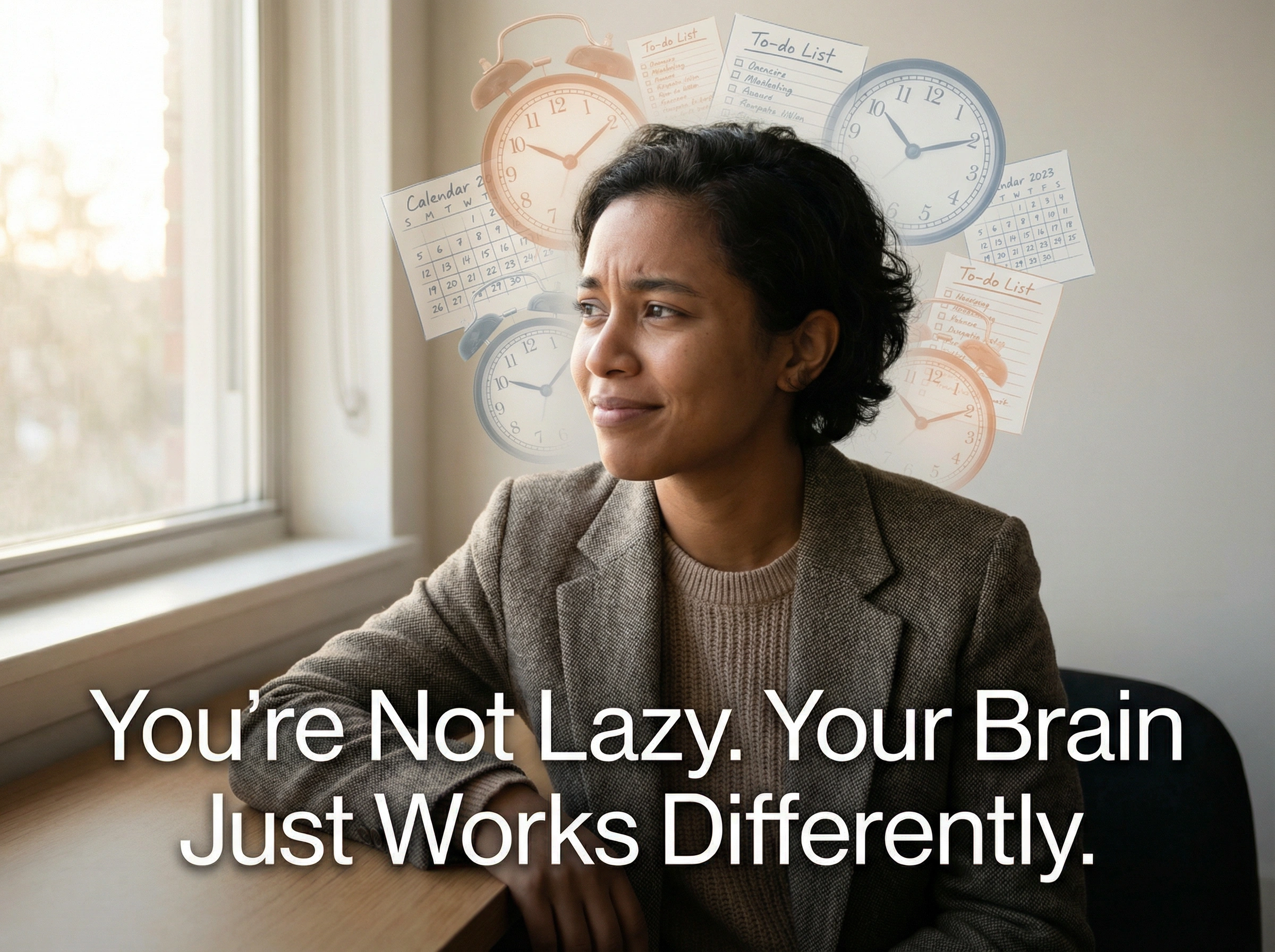
Mental and Physical Exhaustion: Constantly monitoring and adjusting your behavior is cognitively draining. Many people describe feeling like they’re “running on empty” by the end of each day.
Anxiety and Depression: The fear of being “found out” and the shame of struggling with things that seem easy for others can lead to significant anxiety and depressive symptoms. ADHD often overlaps with these conditions, making the burden even heavier.
Imposter Syndrome: When you’re working three times as hard to achieve the same results as your peers, it’s easy to feel like a fraud. You might attribute your success to luck rather than recognizing your genuine capabilities.
Delayed Diagnosis: Because you’ve learned to compensate so well, healthcare providers—and even you—might not recognize ADHD as the underlying issue. You might be told you’re “just stressed” or “too hard on yourself,” when in reality, there’s a neurological explanation for your struggles.
Relationship Strain: The energy spent masking at work often means you have nothing left for your personal relationships. Partners and family members may see a different, more dysregulated version of you—the one who finally drops the mask at home.
Why High-Functioning Adults Often Go Undiagnosed
Many high-functioning adults with ADHD were never diagnosed as children because they were “smart enough” to get by. They might have been labeled as “daydreamers,” “too talkative,” or “not living up to their potential,” but because they weren’t failing classes or causing major disruptions, ADHD was never considered.
As adults, they’ve developed sophisticated coping mechanisms that hide their symptoms from others—and sometimes from themselves. They might think, “I can’t have ADHD—I have a graduate degree” or “I’m successful at my job, so it must just be stress.”
But ADHD isn’t about intelligence or capability. It’s about how your brain processes information, manages attention, and regulates executive functions. You can be brilliant and accomplished and still have ADHD.

There’s a Path Forward
If this article resonates with you, it’s worth exploring whether ADHD might be the explanation you’ve been searching for. An evaluation can provide clarity about what’s happening in your brain and why certain things feel so much harder for you than they seem to be for others.
At Focused Connections Psychiatry, we understand that ADHD in high-functioning adults often looks different from the textbook descriptions. We take the time to understand your whole story—the strategies you’ve developed, the exhaustion you feel, and the life you want to build.
You’re not broken, and you’re not lazy. There is an explanation, and there is a path forward that doesn’t require you to work three times as hard just to keep up.
This information is for education and support only and is not a substitute for a professional evaluation or treatment. If you’re struggling, reaching out for help is a strong and important step.
Ready to stop masking and start living with clarity? Contact Focused Connections Psychiatry today at (562) 312-1777 or click here to schedule your free symptom assessment and discover the support you deserve. Our office is located at 4132 Katella Avenue, Suite 200, Los Alamitos, CA 90720.