If you’ve ever felt like your partner doesn’t quite understand why you forgot their birthday again, why you interrupt them mid-sentence, or why you seem “checked out” during important conversations—you’re not alone.
ADHD doesn’t just affect focus at work or school. It shows up in your most intimate relationships, often in ways that can feel confusing, hurtful, or frustrating for both partners.
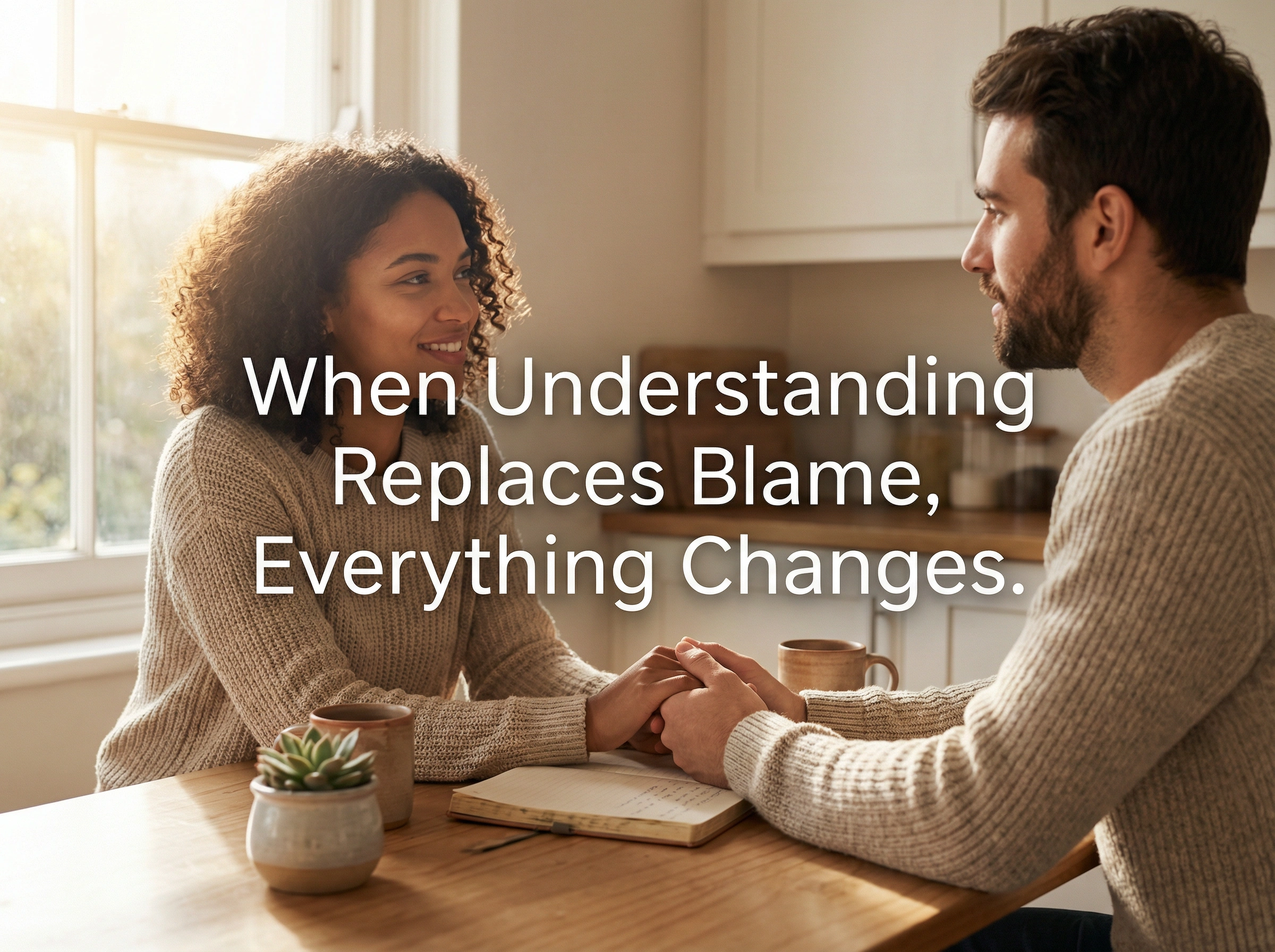
The good news? When both people understand how ADHD affects relationships, everything can shift. Misunderstandings can turn into moments of connection. Frustration can give way to compassion. And with the right strategies and support, couples can build stronger, more resilient partnerships.
How ADHD Shows Up in Relationships
ADHD isn’t just about losing your keys or struggling to finish tasks. In relationships, it can look like:
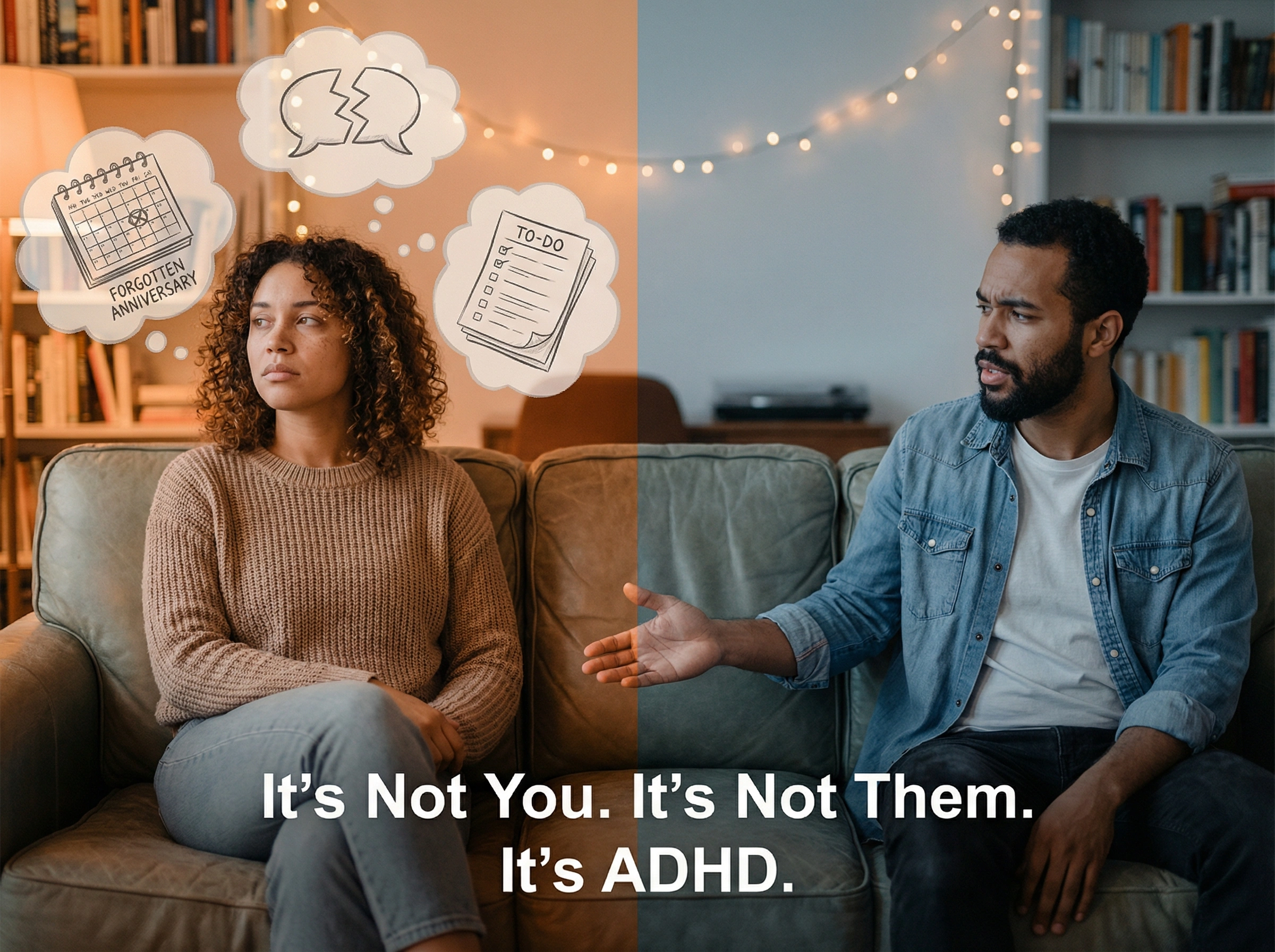
Forgetting important dates or plans. You genuinely meant to remember your anniversary dinner, but time slipped away. Your partner may feel like they’re not a priority, even though that’s far from the truth.
Interrupting or talking over your partner. It’s not that you don’t care what they’re saying—your brain just moves fast, and waiting feels nearly impossible. But to your partner, it can feel like you’re not listening or don’t value their thoughts.
Zoning out during conversations. You’re sitting right there, nodding along, but suddenly you realize you haven’t absorbed a word they’ve said for the past five minutes. Your partner may feel ignored or unimportant.
Emotional intensity. ADHD can come with big feelings—quick frustration, sudden excitement, or emotional overwhelm. Your partner might feel like they’re walking on eggshells or struggling to keep up with your emotional shifts.
Difficulty with follow-through. You promise to take care of something—paying a bill, picking up groceries, scheduling an appointment—and then it completely slips your mind. Your partner may start to feel like they can’t rely on you.
These patterns aren’t character flaws. They’re symptoms of how ADHD affects attention, impulse control, working memory, and emotional regulation. But without understanding that context, it’s easy for partners to take these behaviors personally.
What Your Partner Might Be Feeling
It’s important to recognize that ADHD affects both people in the relationship. Your partner may be experiencing:
Loneliness. Even when you’re physically present, they may feel emotionally disconnected from you.
Resentment. If they’re constantly picking up the slack—remembering appointments, managing household tasks, or repeating themselves—they may start to feel more like a parent than a partner.
Confusion. They might wonder why you can hyperfocus on a video game for hours but can’t seem to focus during a serious conversation with them.
Self-doubt. They may question whether you really care about them or the relationship, especially if forgotten plans and missed moments pile up over time.
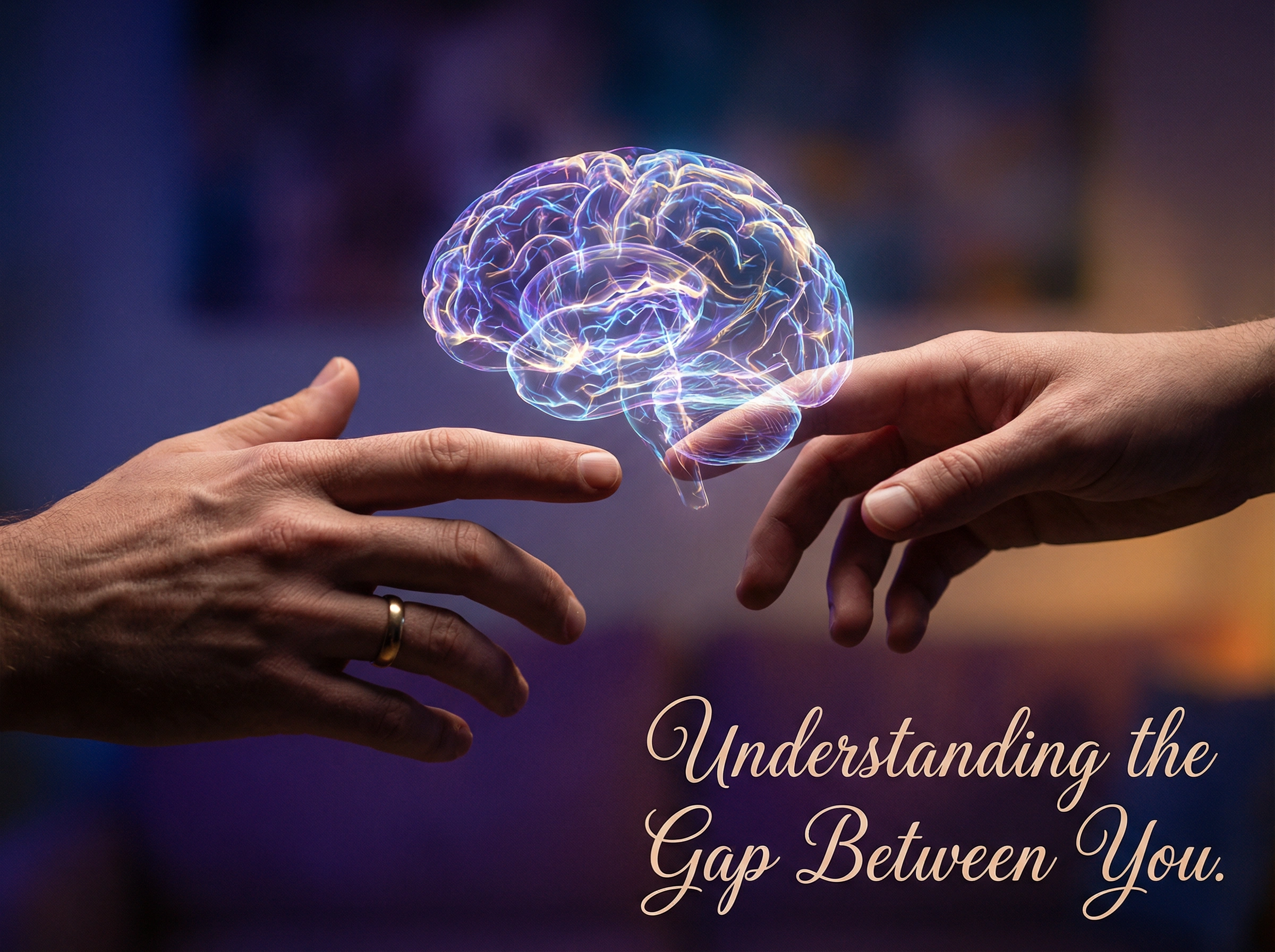
Understanding these feelings doesn’t mean you’re to blame. It means there’s an opportunity to bridge the gap with honesty, education, and teamwork.
What Your Partner Needs to Know About ADHD
If you’re ready to help your partner understand ADHD better, here are some key points to share:
ADHD is real, and it’s neurological. It’s not laziness, selfishness, or a lack of love. ADHD affects the brain’s executive functions—the systems responsible for planning, memory, impulse control, and emotional regulation. According to the National Institute of Mental Health, ADHD is a well-researched neurodevelopmental condition that responds to treatment and support.
Forgetfulness isn’t about priorities. When you forget something important, it’s not because you don’t care. ADHD affects working memory, which means information can slip away even when you’re trying hard to hold onto it.
Interrupting isn’t disrespect. Impulsivity is a core symptom of ADHD. Your brain may fire off thoughts faster than you can manage them, making it hard to wait your turn in conversation.
You’re not ignoring them on purpose. Inattention can make it difficult to stay present, even when you want to. It’s not a reflection of how much you value your partner—it’s a symptom that can be managed with the right strategies and treatment.
ADHD is treatable. With proper evaluation, medication management, therapy, and skills training, many people with ADHD see significant improvements in their relationships and daily functioning.
Building a Stronger Relationship Together

Here are some practical ways couples can work together:
Communicate openly. Talk about how ADHD shows up in your relationship without blame or shame. Use “I feel” statements and listen to each other’s experiences.
Create systems together. Shared calendars, reminder apps, and visual cues can help bridge the gap that ADHD creates with memory and follow-through.
Celebrate small wins. Acknowledge progress, even if it’s imperfect. Growth takes time.
Seek professional support. Working with a psychiatrist or psychiatric nurse practitioner who understands ADHD—like the team at Focused Connections Psychiatry—can provide clarity, treatment options, and a personalized plan that supports both you and your relationship.
You Deserve Support
ADHD doesn’t have to define your relationship. With understanding, compassion, and the right care, you and your partner can move from frustration to connection. If you’re wondering whether ADHD is affecting your relationship, reaching out for an evaluation is a strong and important step.
At Focused Connections Psychiatry, we provide compassionate, evidence-based care that helps you understand your ADHD and build the life—and relationships—you deserve.
This information is for education and support only and is not a substitute for a professional evaluation or treatment. If you’re struggling, reaching out for help is a strong and important step.
Contact Focused Connections Psychiatry today at (562) 312-1777 or click here to schedule your free symptom assessment. Our office is located at 4132 Katella Avenue, Suite 200, Los Alamitos, CA 90720.