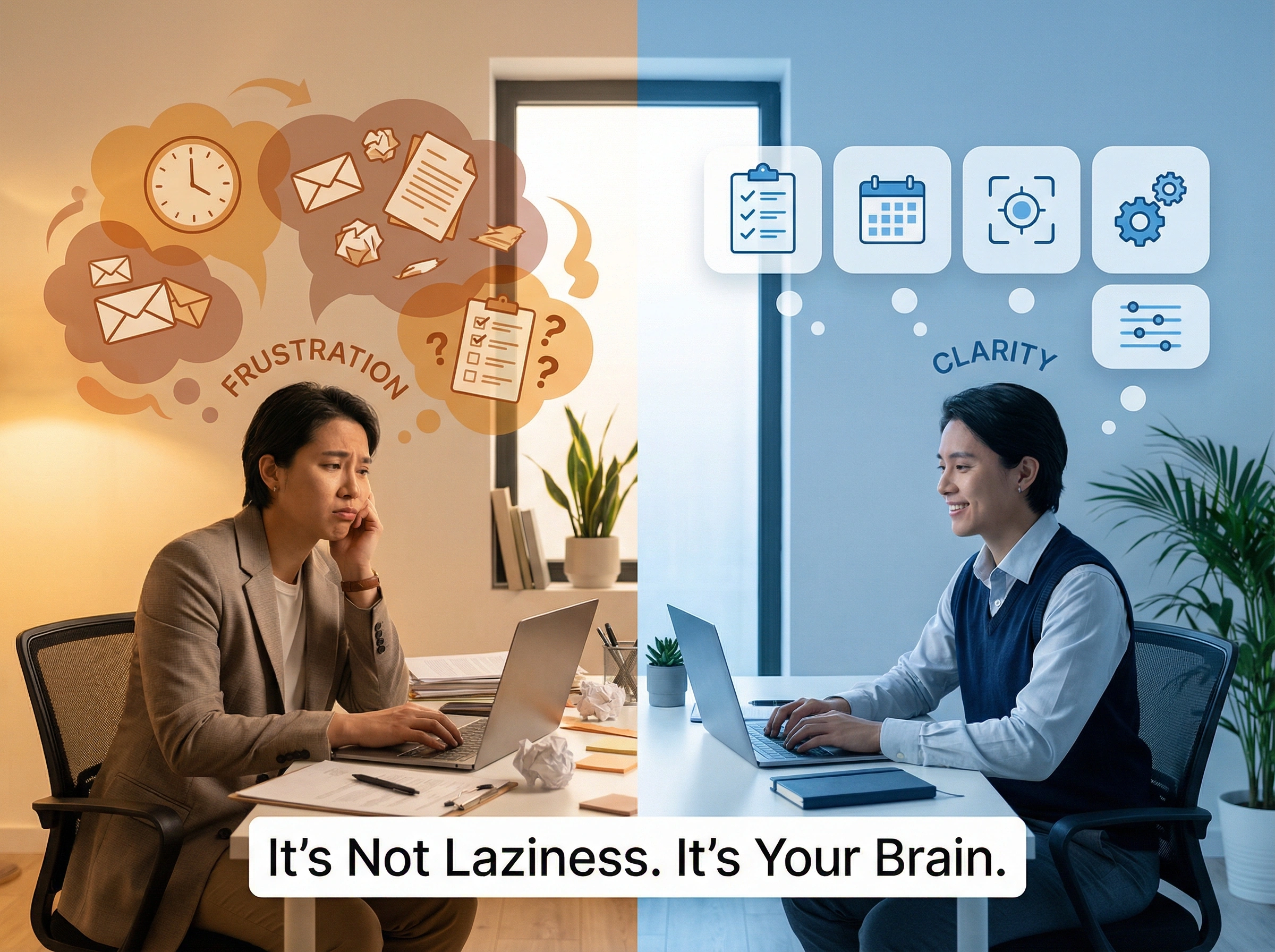
You’ve been staring at that email for twenty minutes. It’s a simple reply—maybe three sentences—but somehow you can’t make yourself start typing. Your to-do list keeps growing, deadlines are approaching, and yet here you are, scrolling through your phone or reorganizing your desk for the third time today. You tell yourself you’re lazy. Undisciplined. That you just need to try harder.
But what if procrastination isn’t a character flaw at all? What if it’s actually a symptom of something deeper happening in your brain?
The Procrastination Trap We All Know Too Well
We’ve all procrastinated at some point. Putting off an unpleasant task or choosing something enjoyable over something boring is perfectly normal human behavior. But there’s a significant difference between occasional procrastination and chronic, paralyzing task avoidance that disrupts your life, damages your self-esteem, and leaves you feeling perpetually behind.
If you find yourself consistently:
- Starting your day with good intentions but ending it having accomplished almost nothing
- Working in frantic, last-minute sprints because you couldn’t start earlier
- Feeling overwhelmed by simple tasks that others seem to handle easily
- Experiencing intense guilt and shame about your inability to “just do it”
- Watching opportunities slip away because you couldn’t complete applications, forms, or projects on time
Then your procrastination might not be about willpower at all. It might be your brain waving a red flag, signaling that something else is going on beneath the surface.
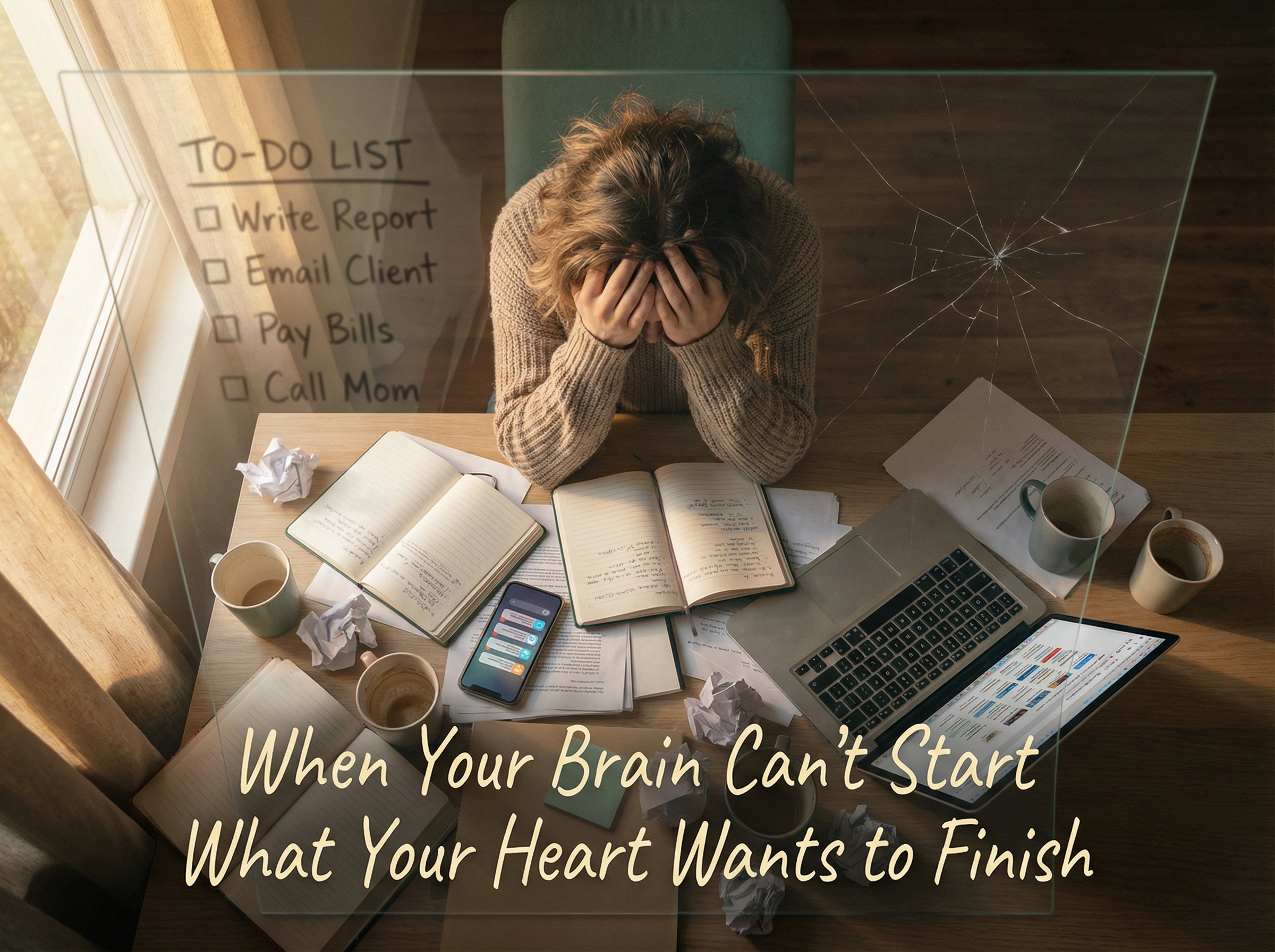
When ADHD Looks Like Procrastination
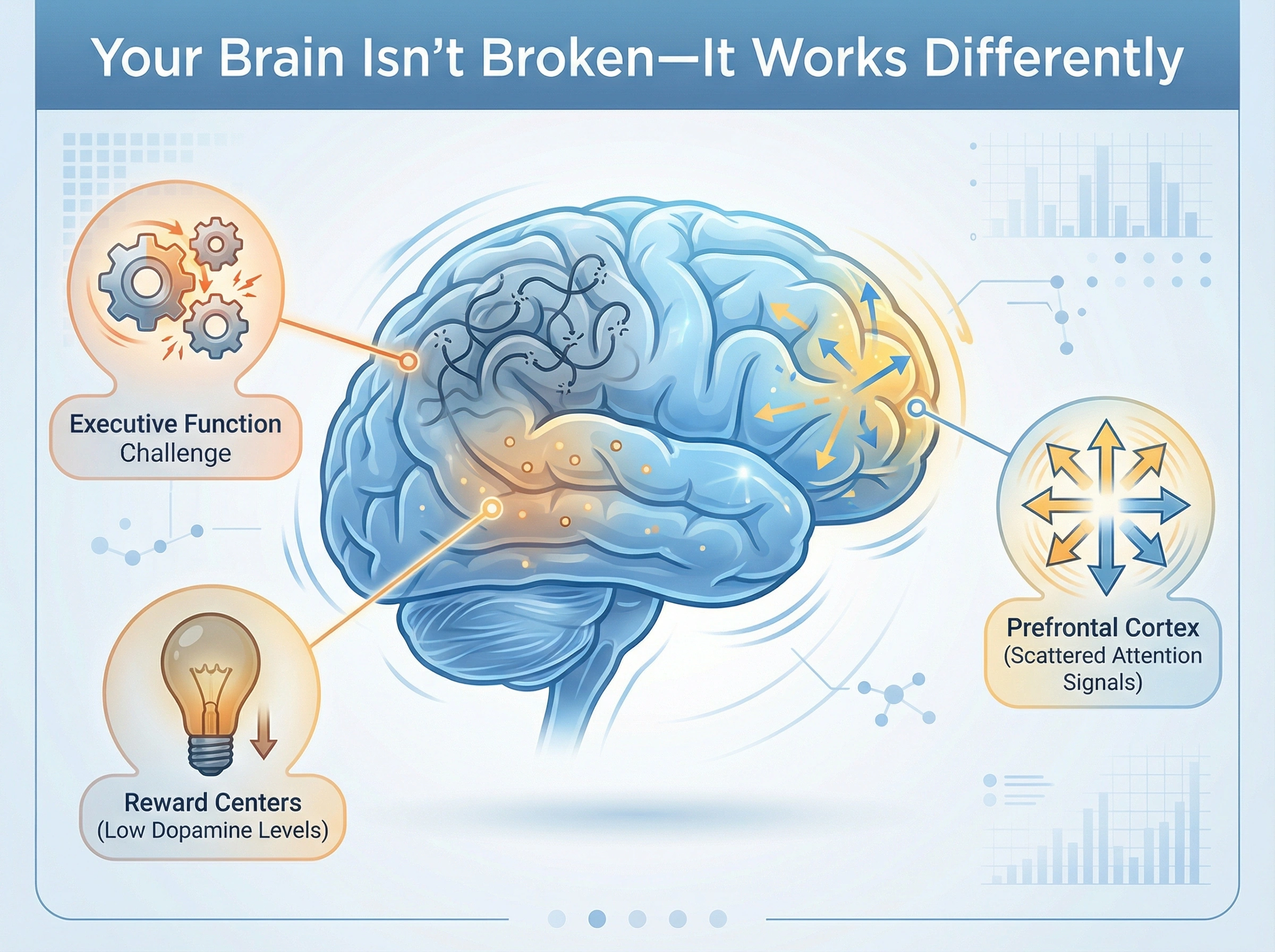
One of the most common—and most misunderstood—causes of chronic procrastination is ADHD (Attention-Deficit/Hyperactivity Disorder). Many people think ADHD is just about being hyperactive or easily distracted, but it’s actually a neurodevelopmental condition that affects executive function: your brain’s ability to plan, organize, initiate tasks, and follow through.
For someone with ADHD, procrastination isn’t a choice. It’s a neurological challenge called “task initiation difficulty.” Even when you desperately want to start something—even when you know the consequences of not starting—your brain struggles to generate the activation energy needed to begin. It’s like trying to push a car uphill while everyone else is driving on flat ground.
People with ADHD often describe feeling “paralyzed” by tasks, especially ones that are:
- Boring or repetitive (like paperwork, emails, or administrative tasks)
- Unclear or overwhelming (large projects without obvious first steps)
- Important but not urgent (things with distant deadlines)
The ADHD brain craves stimulation and novelty. Tasks that don’t provide immediate interest or reward feel almost impossible to start, no matter how much you logically understand their importance. This isn’t laziness—it’s a difference in how your brain processes motivation and reward.
Other Conditions That Masquerade as Procrastination
ADHD isn’t the only condition where procrastination appears as a primary symptom. Depression, anxiety, and even certain learning differences can all manifest as chronic task avoidance.
Depression saps your energy and motivation, making even simple tasks feel insurmountable. When you’re depressed, procrastination often comes with feelings of hopelessness, worthlessness, and a pervasive sense that nothing you do matters anyway.
Anxiety can cause procrastination through a different mechanism: avoidance. If a task triggers worry, fear of failure, or perfectionism, your brain may protect you by helping you avoid it entirely. The temporary relief of not facing the anxiety-inducing task reinforces the procrastination cycle.
Executive function challenges from various causes can make it genuinely difficult to break tasks into steps, estimate how long things will take, or organize your approach—all of which can look like procrastination from the outside.
The Shame Spiral That Makes Everything Worse
Here’s what makes symptom-based procrastination so painful: the shame. When you don’t understand that your procrastination has a neurological basis, you internalize it as a personal failure. You tell yourself you’re lazy, irresponsible, or just not trying hard enough. This shame becomes another heavy weight that makes it even harder to take action.
The truth is, if you could “just do it,” you would. No one chooses to feel anxious, overwhelmed, and behind. No one wants to disappoint themselves and others repeatedly. When procrastination is a symptom, willpower alone isn’t enough—you need the right support, strategies, and sometimes treatment to address what’s actually happening in your brain.

Finding Clarity and Moving Forward
If chronic procrastination has been affecting your work, relationships, or sense of self-worth, it’s worth exploring whether there’s an underlying condition that needs attention. A comprehensive psychiatric evaluation can help identify whether ADHD, depression, anxiety, or another condition is contributing to your struggles.
At Focused Connections Psychiatry, we understand that procrastination is rarely just about “trying harder.” We take the time to understand your whole experience—the patterns, the emotions, the impact on your daily life—to develop a treatment plan that actually addresses the root cause. Whether that involves medication management, skills training, or a combination of approaches, our goal is to help you feel less stuck and more in control.
You’re not broken, and you’re not lazy. There is an explanation for why your brain works the way it does, and there is a path forward. If this sounds familiar, reaching out for an evaluation might be the first step toward finally understanding yourself—and finding strategies that actually work.
This information is for educational purposes and is not a substitute for professional evaluation or treatment. If you’re struggling with chronic procrastination or other symptoms, we encourage you to schedule a consultation with our team.
Ready to understand what’s really behind your procrastination? Contact Focused Connections Psychiatry at (562) 312-1777 or click here to schedule your free symptom assessment. Our office is located at 4132 Katella Avenue, Suite 200, Los Alamitos, CA 90720.