You sit down to tackle your to-do list. The email inbox is overflowing. Your phone buzzes with notifications. Someone’s talking in the next room. The fluorescent lights hum overhead. Your mind jumps from the project deadline to the grocery list to that conversation from yesterday. Within minutes, you’re staring at the screen, frozen. Nothing gets done.
If this sounds familiar, you’re not alone. And here’s what you need to hear: you’re not lazy. Your brain isn’t broken, and you’re not lacking willpower. What you’re experiencing might be ADHD overstimulation — a very real, neurological response that millions of people with ADHD face every single day.
What Is ADHD Overstimulation?
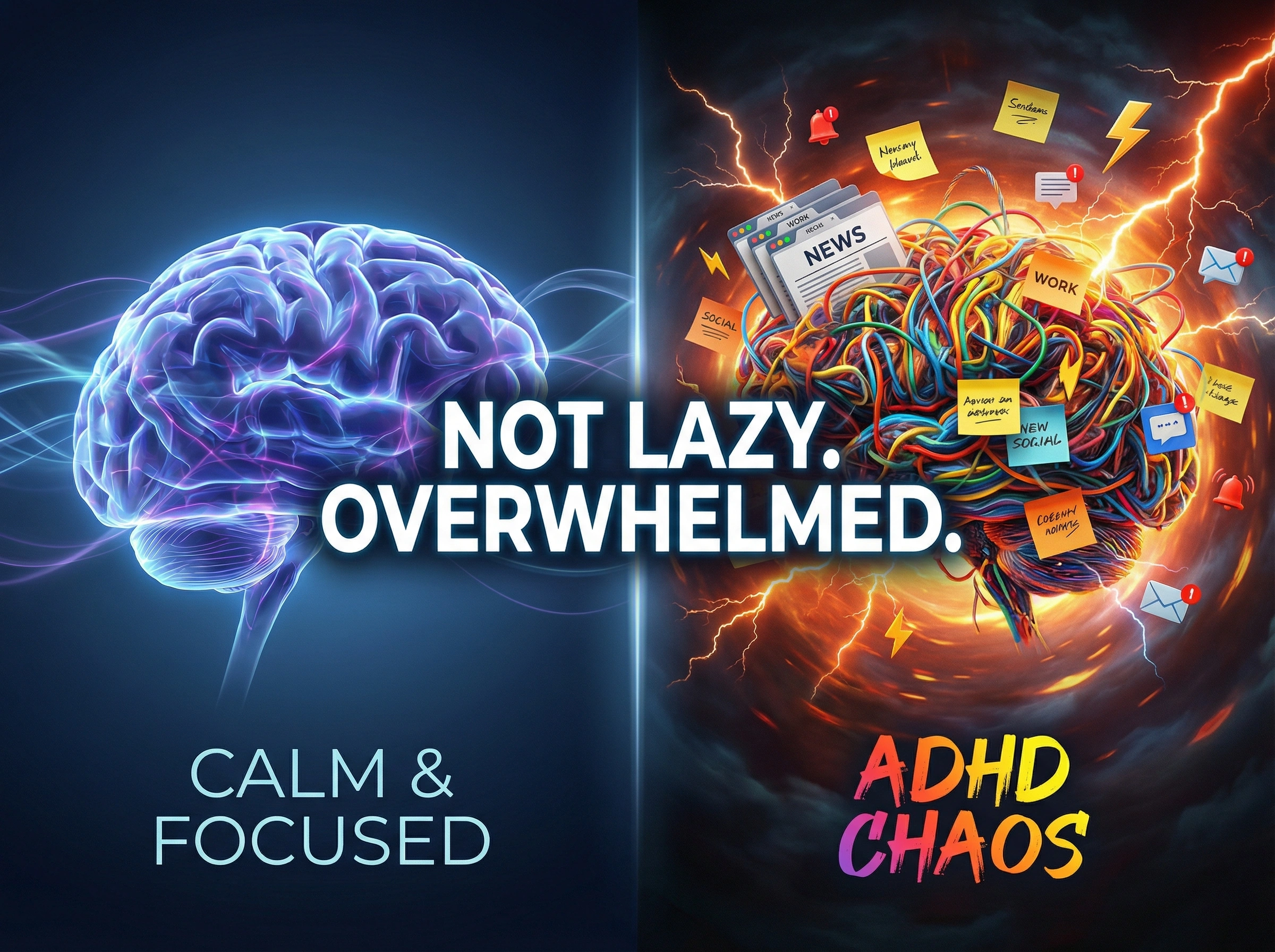
ADHD overstimulation happens when your brain receives more input than it can effectively process. For people with ADHD, the brain’s filtering system — the part that helps sort important information from background noise — doesn’t work the same way it does for others. Everything comes in at once, at the same volume, demanding equal attention.
Think of it like having 50 browser tabs open simultaneously, each one playing a different video. Your brain is trying to process all of it at once, and the result is mental gridlock. You’re not avoiding work because you’re lazy. You’re experiencing cognitive overload, and your brain has essentially hit the pause button to protect itself.

Why Does This Happen?
The ADHD brain processes information differently. Research shows that ADHD involves differences in how neurotransmitters like dopamine and norepinephrine function, affecting attention, focus, and the ability to filter stimuli. While neurotypical brains can naturally tune out irrelevant information — the hum of the air conditioner, background conversations, visual clutter — the ADHD brain struggles to determine what’s “relevant” and what’s not.
This means:
- Sensory input feels more intense. Sounds, lights, textures, and even emotions can feel amplified.
- Task-switching is harder. Moving from one activity to another requires more mental energy.
- Decision fatigue sets in faster. Every choice, no matter how small, drains your cognitive resources.
- Emotional responses are heightened. Frustration, anxiety, and overwhelm can spike quickly when overstimulated.
What Overstimulation Actually Looks Like
ADHD overstimulation doesn’t always look like someone having a meltdown. Often, it’s quiet and internal.
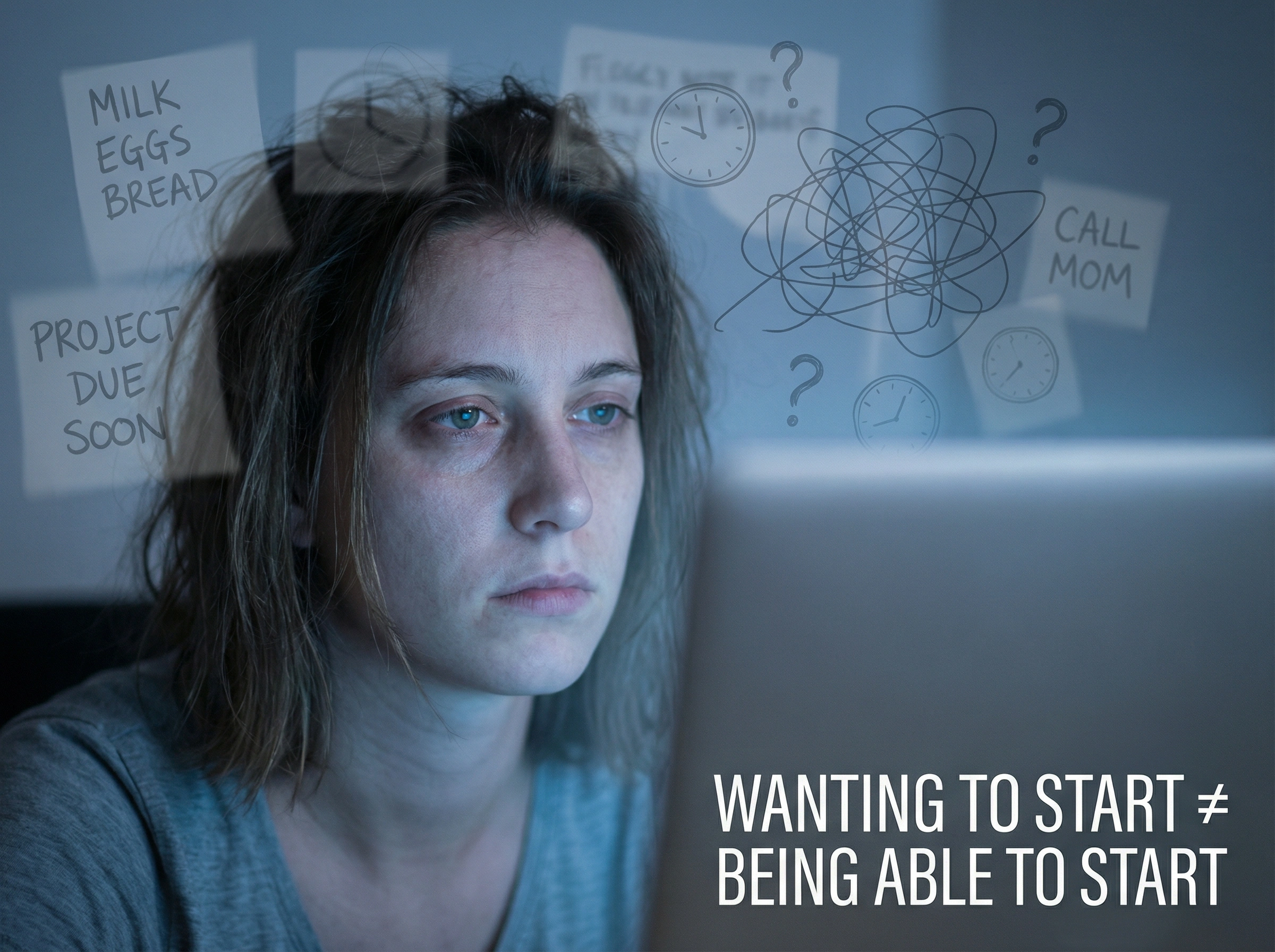
You might experience:
- Task paralysis — staring at your work but unable to start, even though you know what needs to be done
- Irritability or emotional sensitivity — small annoyances feel unbearable
- Physical restlessness — fidgeting, pacing, or feeling like you need to move but don’t know where to go
- Mental fog — thoughts feel jumbled, and you can’t seem to think clearly
- Avoidance behaviors — scrolling social media, cleaning, or doing anything except the task at hand
- Exhaustion — feeling drained even though you “haven’t done anything”
If you’ve ever felt guilty for “wasting” a day when you genuinely wanted to be productive, overstimulation might be the hidden culprit.
The Shame Cycle
Here’s where it gets even harder. When overstimulation leads to task paralysis or avoidance, shame often follows. You might think:
- “Everyone else can handle this. Why can’t I?”
- “I’m just making excuses.”
- “If I really cared, I’d push through.”
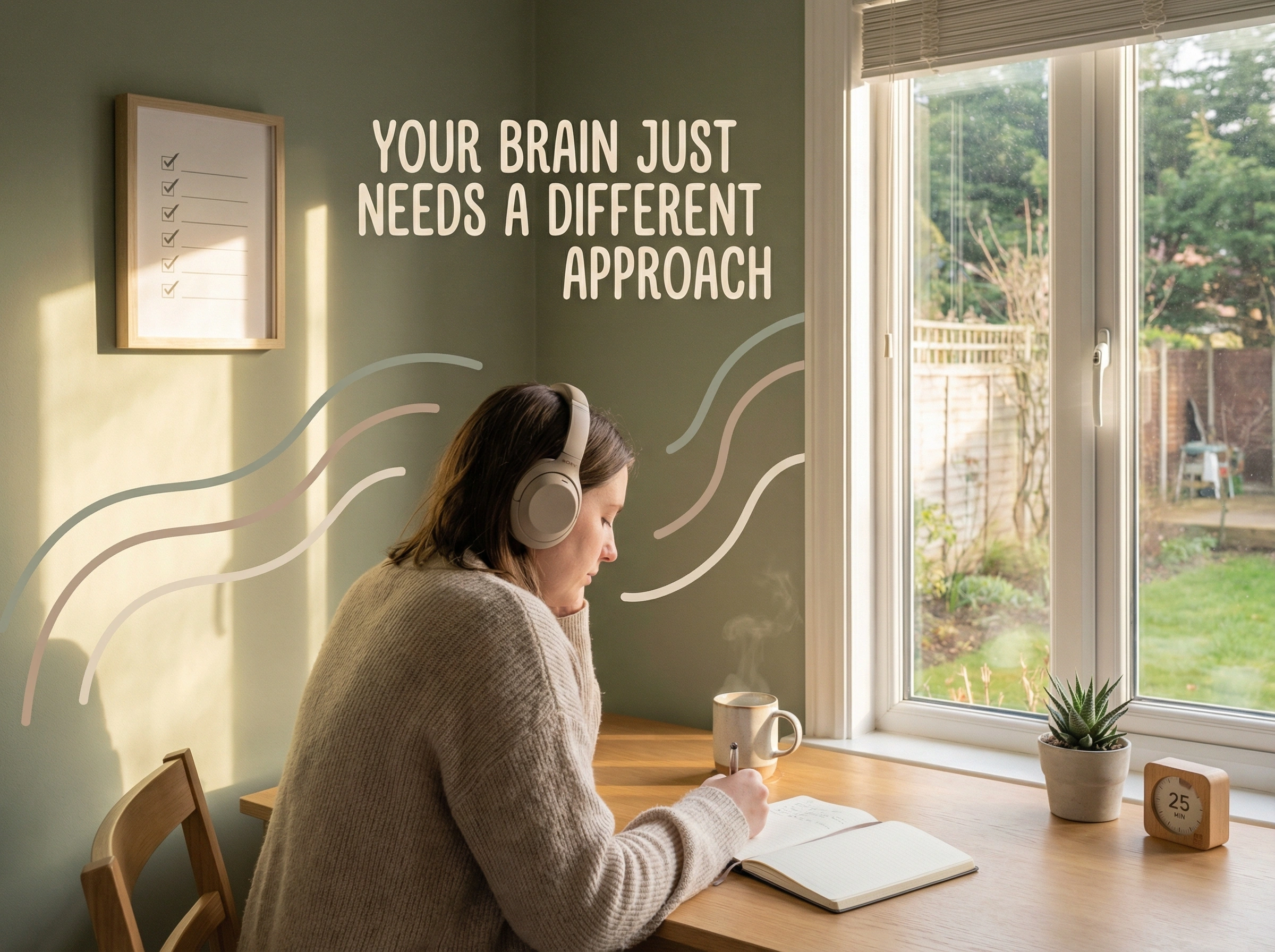
But pushing through overstimulation is like trying to run a marathon with a sprained ankle. It’s not about effort or desire — it’s about your brain needing a different approach. The shame only adds another layer of stress, making the overstimulation worse and creating a cycle that’s hard to break.
Breaking the Cycle: What Actually Helps
Understanding that overstimulation is a real, neurological experience — not a character flaw — is the first step. From there, strategies that work with your ADHD brain, not against it, can make a meaningful difference:
Reduce sensory input. Noise-canceling headphones, dimmer lighting, or a quieter workspace can lower the baseline stimulation your brain is processing.
Break tasks into micro-steps. Instead of “write report,” try “open document” or “write one sentence.” Smaller steps reduce decision fatigue.
Build in movement breaks. Physical activity can help regulate your nervous system and reset your focus.
Limit choices. Decision fatigue is real. Simplify where you can — meal prep, capsule wardrobes, and routines reduce daily cognitive load.
Practice self-compassion. Recognize when you’re overstimulated and give yourself permission to step back, reset, and try again.
When to Seek Professional Support
If overstimulation is affecting your work, relationships, or daily functioning, it may be time to talk with a mental health professional. At Focused Connections Psychiatry, we understand that ADHD isn’t about laziness or lack of discipline — it’s about how your brain processes the world.
Through comprehensive evaluations, personalized treatment plans, and evidence-based tools like medication management and skills training, we help you find clarity and build strategies that actually work for your unique brain.
You don’t have to figure this out alone. If you’re struggling with focus, overwhelm, or patterns that feel impossible to break, reaching out for help is a sign of strength, not weakness.
This information is for education and support only and is not a substitute for a professional evaluation or treatment. If you’re struggling, reaching out for help is a strong and important step.
Ready to understand your brain better? Contact Focused Connections Psychiatry at (562) 312-1777 or click here to schedule your free symptom assessment. Our office is located at 4132 Katella Avenue, Suite 200, Los Alamitos, CA 90720.