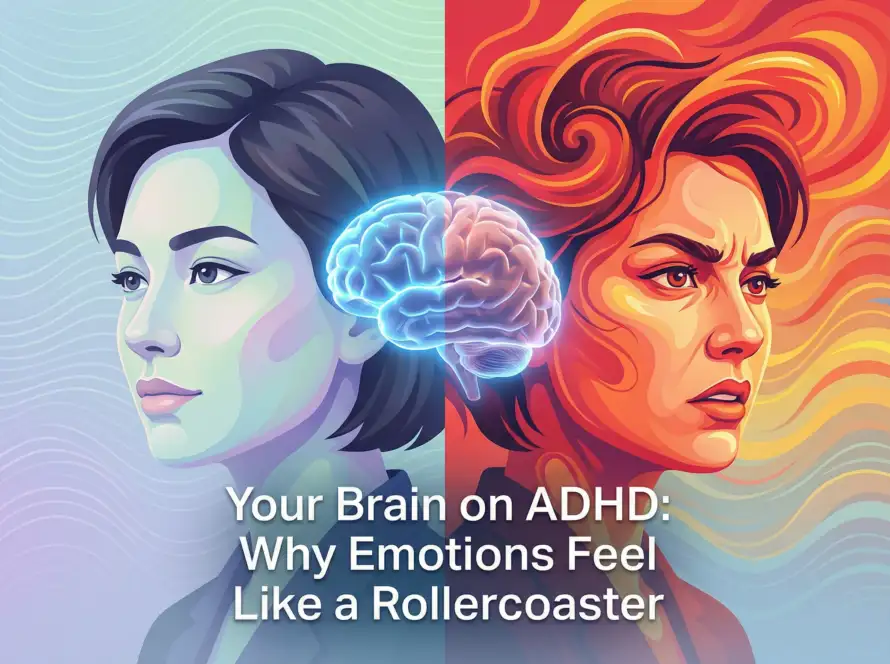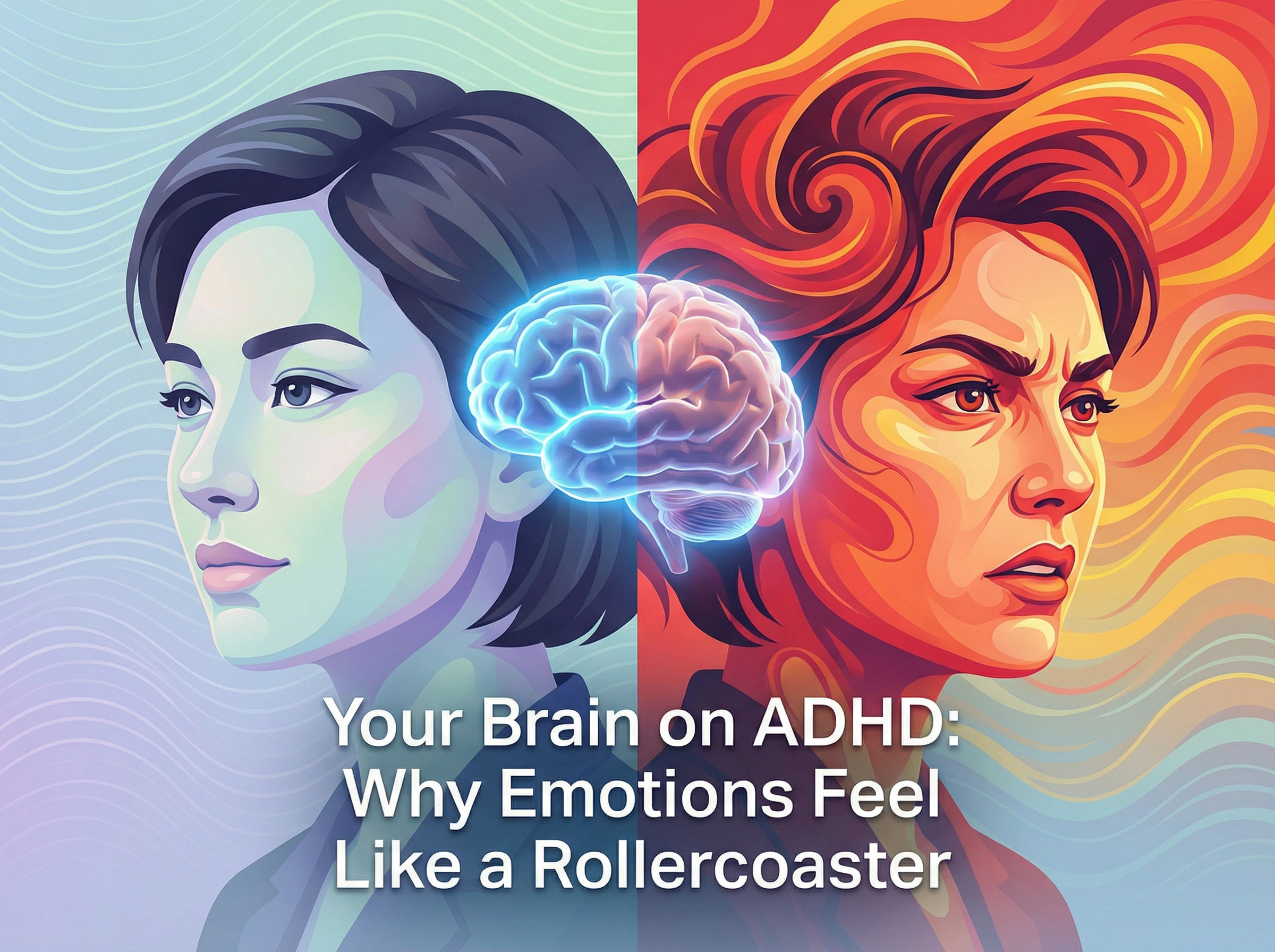
You’re standing in front of your closet, already running late, staring at your clothes like they’re written in a foreign language.
Twenty minutes later, you’re still there—paralyzed by what should be a simple choice. Or maybe you’re at the grocery store, overwhelmed by cereal options, your brain suddenly feeling like it’s running through mud. Sound familiar?
If you have ADHD, you already know that decision-making isn’t just harder—it can feel completely paralyzing. What others breeze through in seconds can leave you stuck for hours, drowning in a sea of “what ifs” and second-guessing.
But here’s what you need to know: this isn’t a character flaw, and you’re not overthinking things on purpose. There’s a real, brain-based reason why decisions feel so exhausting when you have ADHD.
The Hidden Struggle: Decision Fatigue on Overdrive
For most people, making decisions uses mental energy, but the process is relatively smooth. For someone with ADHD, every decision—no matter how small—can feel like climbing a mountain. This happens because ADHD affects the executive function systems in your brain, particularly in the prefrontal cortex, which is responsible for planning, prioritizing, and making choices.
When your brain’s executive function is compromised, you’re essentially trying to make decisions without the proper tools. It’s like trying to organize a filing system when someone keeps shuffling all the papers. You can see all the options, but you can’t efficiently sort through them, weigh the pros and cons, or commit to a choice with confidence.
Why “Just Pick One” Doesn’t Work
Here’s what’s actually happening in your ADHD brain when you’re trying to make a decision:
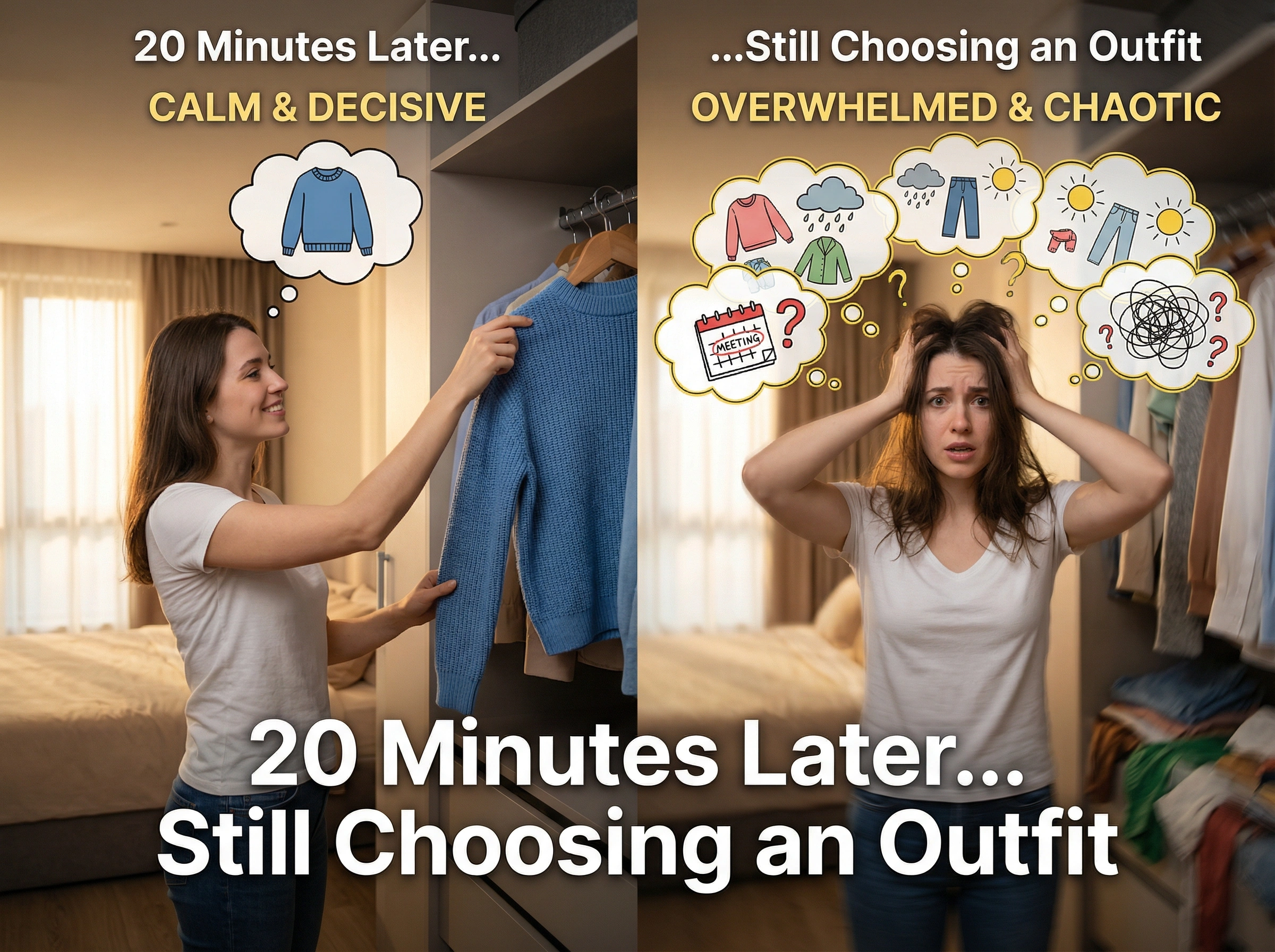
Analysis Paralysis Amplified: Your brain doesn’t just consider the immediate choice—it spirals into every possible outcome, consequence, and hypothetical scenario. Choosing a restaurant becomes a complex calculation involving drive time, parking availability, menu options, whether you’ll regret not choosing the other place, and what everyone else might prefer.
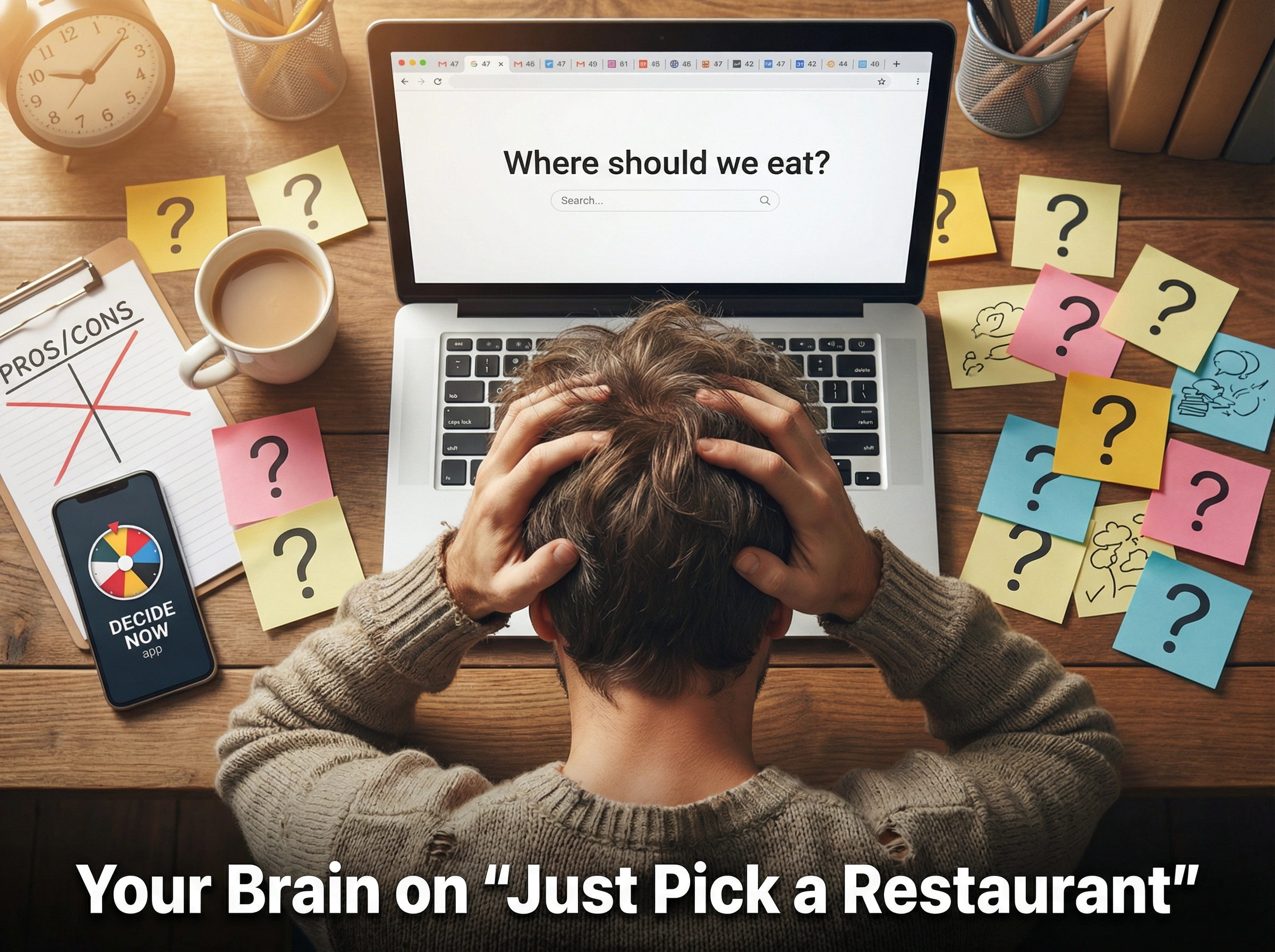
Working Memory Overload: ADHD affects working memory, which is like your brain’s sticky note system. When you’re trying to compare options, you might forget what you were comparing in the first place. You read reviews of Product A, then by the time you get to Product C, you’ve forgotten the key features of Product A.
Difficulty Prioritizing: Without clear prioritization, every decision feels equally important. Choosing what to wear carries the same mental weight as deciding on a career change. Your brain doesn’t naturally filter “big decisions” from “small decisions,” so everything feels urgent and overwhelming.
Fear of the Wrong Choice: Many people with ADHD have experienced negative consequences from impulsive decisions in the past. This can create an overcorrection—becoming so afraid of making the “wrong” choice that you can’t make any choice at all.
The Real-Life Impact
This decision-making struggle isn’t just inconvenient—it affects every area of your life:

At Work: You might miss deadlines not because you’re lazy, but because you spent three hours deciding which task to start with. Emails pile up because responding requires too many micro-decisions about tone, length, and content.
In Relationships: Planning a date night becomes a source of stress instead of joy. Your partner asks what you want for dinner, and you genuinely can’t decide, leading to frustration on both sides.
Daily Routines: Morning routines take twice as long because every step involves a decision. What to eat, what to wear, which route to take—each one drains your mental battery before your day even begins.
Financial Decisions: You might impulsively buy something you don’t need, then spend hours agonizing over a necessary purchase, unable to commit either way.
What Actually Helps
Understanding what’s happening is the first step. Here’s what can make a real difference:
Reduce Decision Points: Simplify your life where possible. Meal prep on Sundays. Create a “uniform” of clothes you like. Automate bills and subscriptions. Every decision you eliminate preserves mental energy for the ones that truly matter.
Use External Structure: Timers, lists, and decision-making frameworks can replace the internal structure your brain struggles to provide. Give yourself a time limit for minor decisions—set a timer for five minutes and commit to whatever you’ve chosen when it goes off.

Recognize Decision Fatigue: Your decision-making ability depletes throughout the day. Schedule important decisions for when your brain is freshest, typically in the morning.
Seek Professional Support: This is where proper ADHD treatment makes a profound difference. Medication can significantly improve executive function, making decisions feel less overwhelming. At Focused Connections Psychiatry, we use evidence-based tools like ADHD T.O.V.A. testing to ensure accurate diagnosis and personalized treatment plans that address these real-world challenges.
You’re Not Broken—Your Brain Just Works Differently
If decision-making feels impossibly hard, you’re not being dramatic, and you’re not alone. This is a real symptom of ADHD that affects millions of people. The good news? With the right support, strategies, and treatment, you can develop systems that work with your brain instead of against it.
You deserve care that understands how ADHD actually shows up in your daily life—not just in textbook symptoms, but in the real moments that leave you feeling stuck and frustrated.
This information is for education and support only and is not a substitute for a professional evaluation or treatment. If you’re struggling with decision-making or other ADHD symptoms, reaching out for help is a strong and important step.
At Focused Connections Psychiatry, we provide compassionate, individualized ADHD care that addresses your whole experience—not just a checklist of symptoms. Contact us at (562) 312-1777 or click here to schedule your free symptom assessment to learn how we can help you find clarity and confidence.