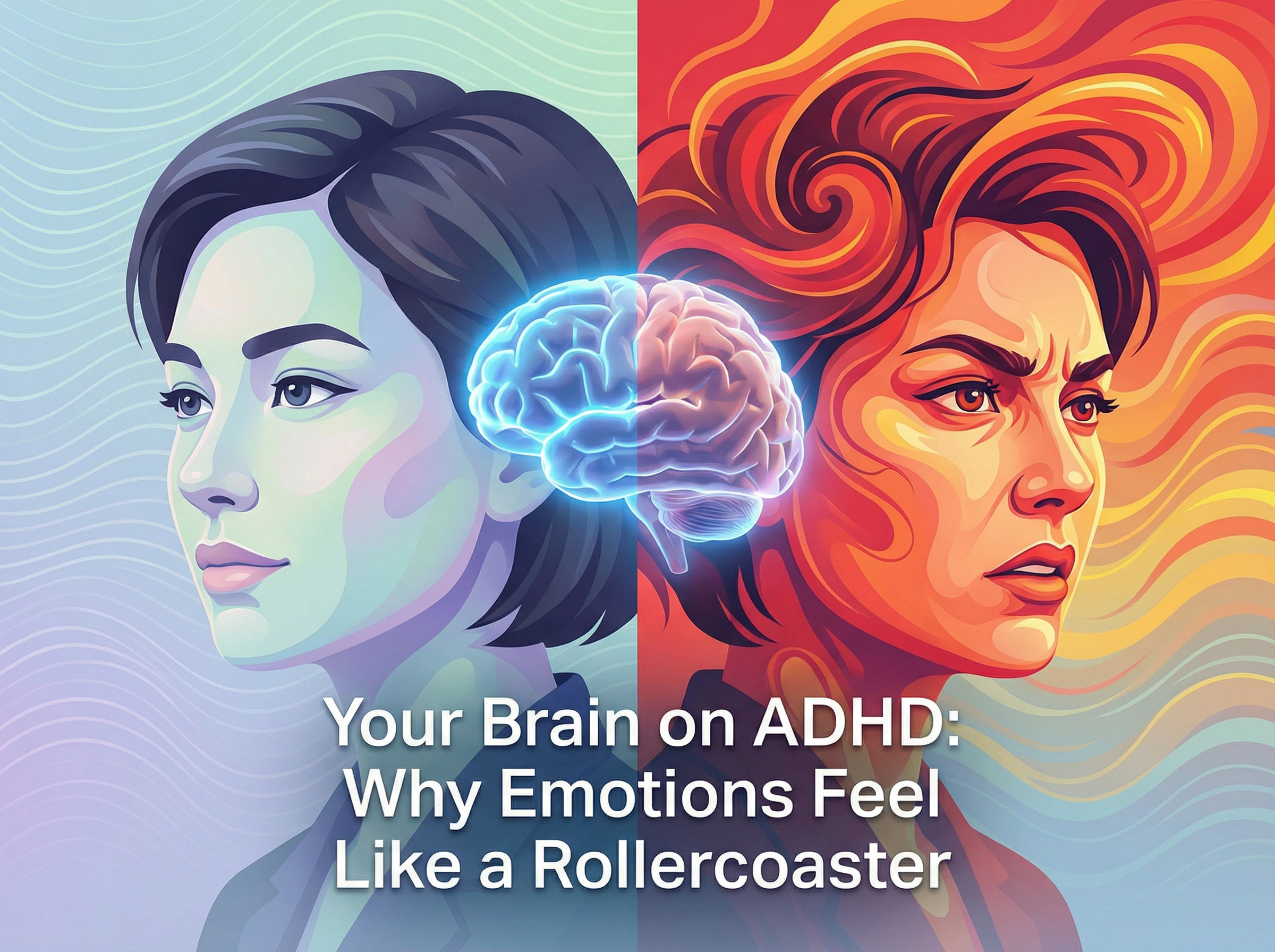
You’re sitting in a quiet room, trying to focus on one simple task. But inside your head? It’s anything but quiet.
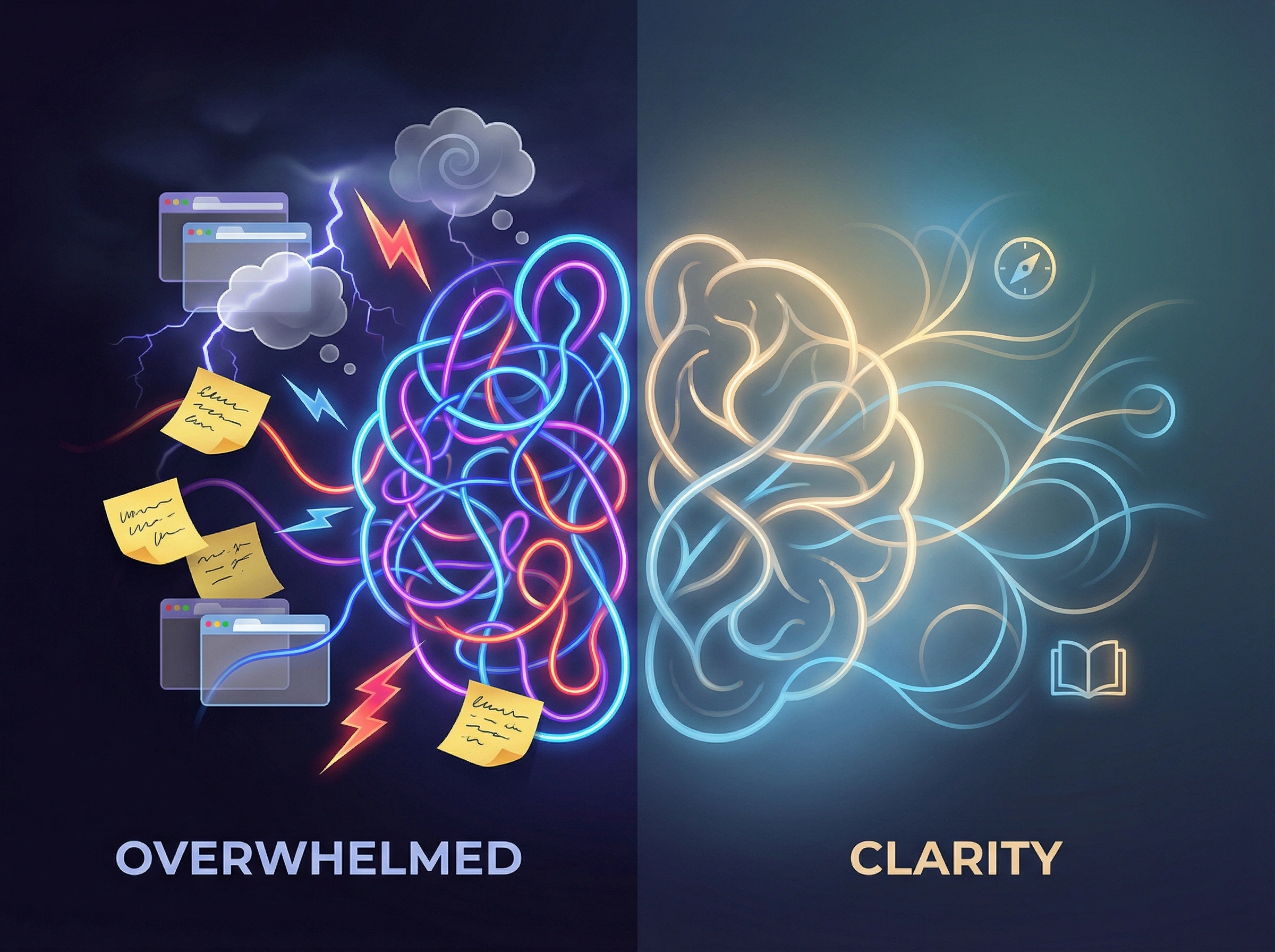
There’s a mental to-do list scrolling endlessly. A conversation from three days ago is replaying on loop. Worries about tomorrow mix with regrets from yesterday. Random song lyrics. That thing you forgot to do last week. All of it is happening at once, competing for your attention, making it nearly impossible to land on a single thought long enough to actually do anything.
If this sounds familiar, you’re not alone. And no — you’re not “overthinking” your way into this experience. When your brain feels “too loud,” there’s often a real, neurological explanation behind it.
What Does a “Loud Brain” Actually Feel Like?
People describe it in different ways:
- “My brain never shuts off, even when I’m exhausted.”
- “It’s like having 47 browser tabs open at once, and they’re all buffering.”
- “I can’t hear myself think because there’s too much noise inside my head.”
- “I feel mentally exhausted, but I haven’t actually accomplished anything.”

This isn’t just stress or a busy schedule. It’s a persistent, overwhelming sense that your mind is working against you instead of with you. You might feel restless, irritable, or completely drained by the end of the day — not because you did too much, but because your brain never stopped processing.
Why Does This Happen?
A brain that feels “too loud” is often struggling with executive function — the set of mental skills that help you plan, focus, organize, and regulate your thoughts and emotions. When executive function isn’t working smoothly, your brain has trouble filtering out distractions, prioritizing tasks, or quieting the mental chatter.
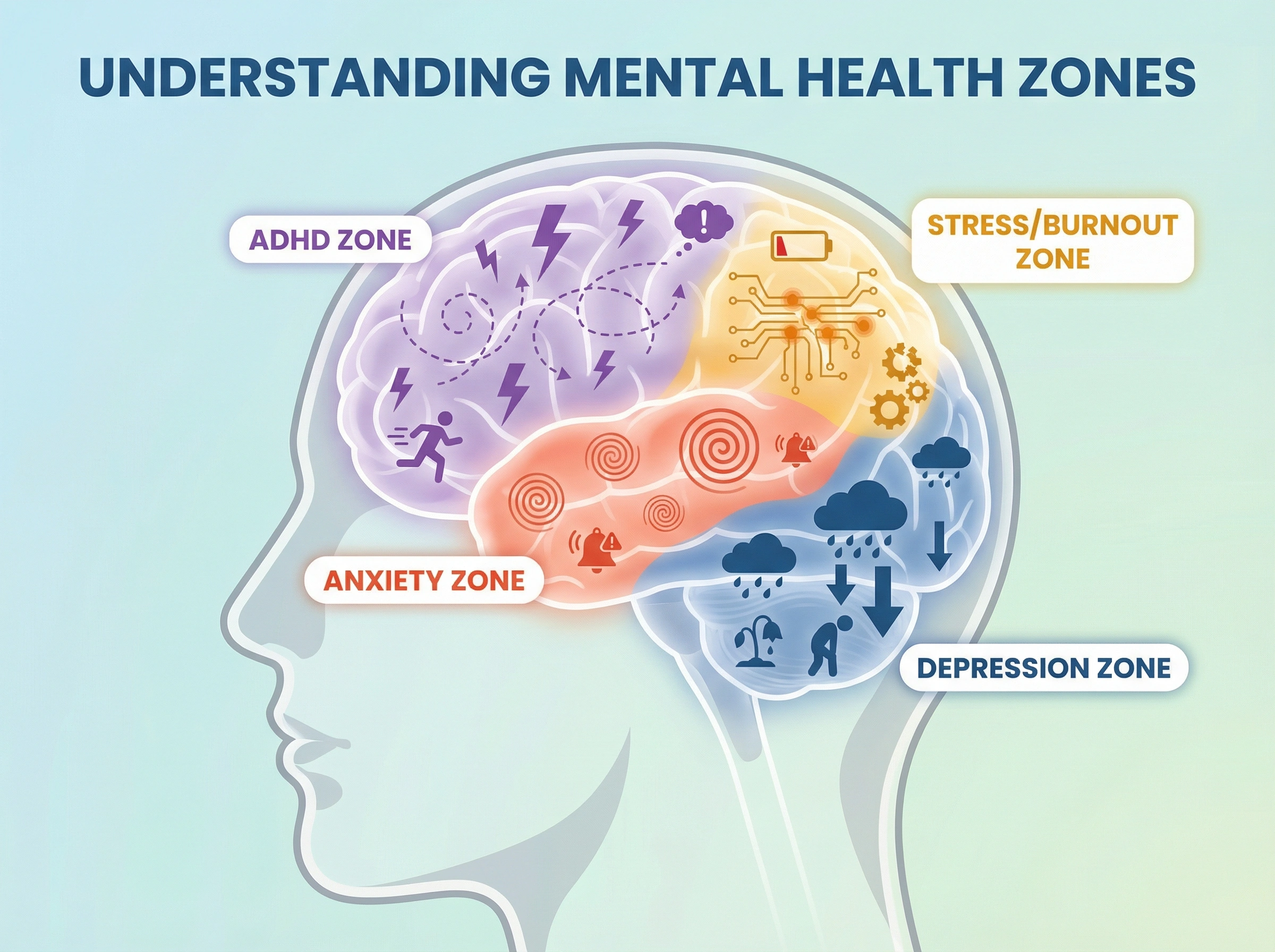
Several conditions can contribute to this experience:
ADHD (Attention-Deficit/Hyperactivity Disorder)
ADHD isn’t just about being hyperactive or easily distracted. For many people, especially adults, it shows up as a constant mental restlessness. Your brain jumps from thought to thought without your permission. You might start one task, get pulled into three others, and finish none of them — not because you don’t care, but because your brain struggles to regulate attention and filter out internal “noise.”
People with ADHD often describe their minds as never truly quiet. Even during downtime, thoughts race. Even when they’re tired, their brain won’t settle. This isn’t a character flaw or a lack of discipline — it’s how the ADHD brain is wired.
Anxiety Disorders
Anxiety can make your brain feel like it’s stuck in overdrive. Worries spiral. “What if” scenarios multiply. Your mind rehearses conversations that haven’t happened yet or replays ones that already did, searching for mistakes or threats. This hypervigilance keeps your nervous system activated, making it nearly impossible to experience true mental rest.
Depression
While depression is often associated with low energy and numbness, it can also create a kind of mental heaviness — intrusive negative thoughts, rumination, and a mind that won’t stop cycling through self-critical narratives. The brain feels “loud” in a different way: weighed down, stuck, and exhausting.
Stress and Burnout
Chronic stress keeps your brain in a state of high alert. When you’re constantly juggling responsibilities, your mind never gets a chance to downshift. Over time, this can lead to burnout — where even simple decisions feel overwhelming because your mental bandwidth is completely maxed out.
The Emotional Toll of a “Loud Brain”
Living with a brain that won’t quiet down takes a toll. You might feel:
- Exhausted — even after a full night’s sleep, because your mind never truly rested.
- Frustrated — because you want to focus, but your brain won’t cooperate.
- Ashamed — because others seem to manage just fine, and you wonder, “Why can’t I just get it together?”
- Isolated — because it’s hard to explain what’s happening inside your head to people who don’t experience it.
You’re not broken. You’re not lazy. And you’re definitely not alone.
What Can Help?
The good news? A “loud brain” is not something you just have to live with. With the right support and strategies, you can find relief.
Professional symptom assessment is an important first step. If ADHD, anxiety, depression, or another condition is contributing to your experience, a proper diagnosis opens the door to effective treatment. At Focused Connections Psychiatry, we take the time to understand the whole picture — not just symptoms, but how they show up in your daily life.
Treatment is personalized. For some, medication can help regulate brain activity and quiet the mental noise. For others, therapy, skills training, and lifestyle adjustments make the biggest difference. Often, it’s a combination of approaches tailored to you.
You don’t need to have it all figured out before reaching out. Many people wait months or even years, hoping things will improve on their own. But clarity starts with a conversation.

You Deserve a Quieter Mind
If your brain feels “too loud,” it makes sense that you’re struggling. This isn’t about trying harder or “just relaxing.” It’s about understanding what’s happening in your brain and getting the right support to help it work with you, not against you.
You deserve to feel calm. You deserve to focus. You deserve care that truly understands what you’re going through.
At Focused Connections Psychiatry, we’re here to help. Whether you’re just starting to wonder if something’s going on or you’re ready to take the next step, our team provides compassionate, evidence-based care designed around your needs.
This information is for educational purposes and is not a substitute for professional evaluation or treatment. If you’re struggling, reaching out for help is a strong and important step.
Ready for clarity? Contact Focused Connections Psychiatry today at (562) 312-1777 or click here to schedule your free symptom assessment today.