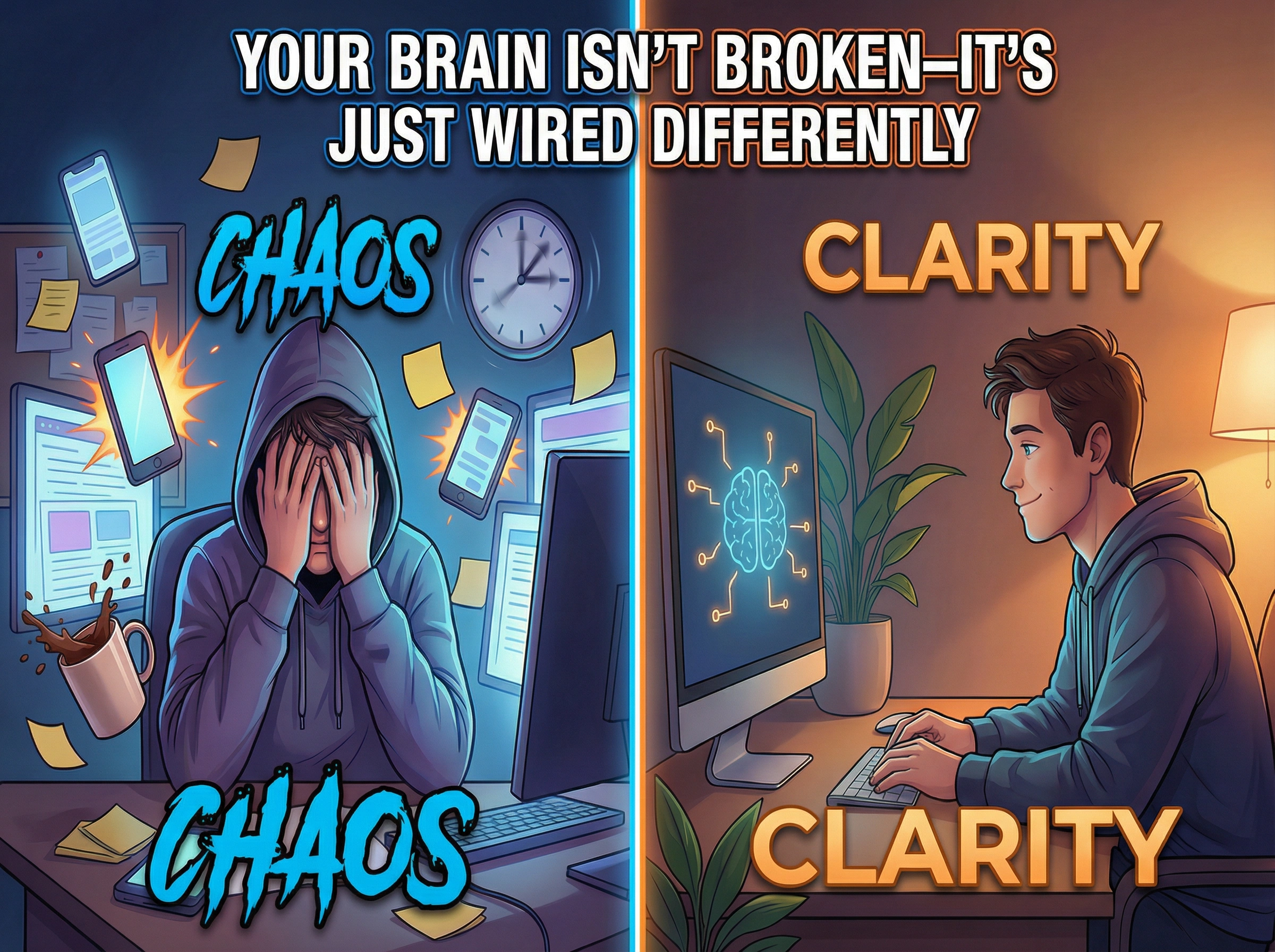
You’ve built a successful career. You show up on time (mostly). From the outside, you look like you have it all together.
But inside? It feels like you’re running on a hamster wheel that never stops, constantly compensating for something you can’t quite name. If you’ve ever wondered why everything feels harder for you than it seems for everyone else, you might be masking ADHD without even realizing it.
What Does “Masking” ADHD Actually Mean?
Masking is when you’ve developed elaborate strategies to hide ADHD symptoms—often without knowing that’s what you’re doing. You’ve spent years building workarounds, staying up late to finish what others complete in hours, or relying on excessive caffeine and last-minute panic to get things done.
Many adults, especially those who were labeled “smart but inconsistent” in school, have become experts at hiding their struggles. The problem? Masking is exhausting. And the longer you do it, the more it costs you in stress, relationships, and missed opportunities.
Sign #1: You’re a “Last-Minute Legend” (But You Hate It)
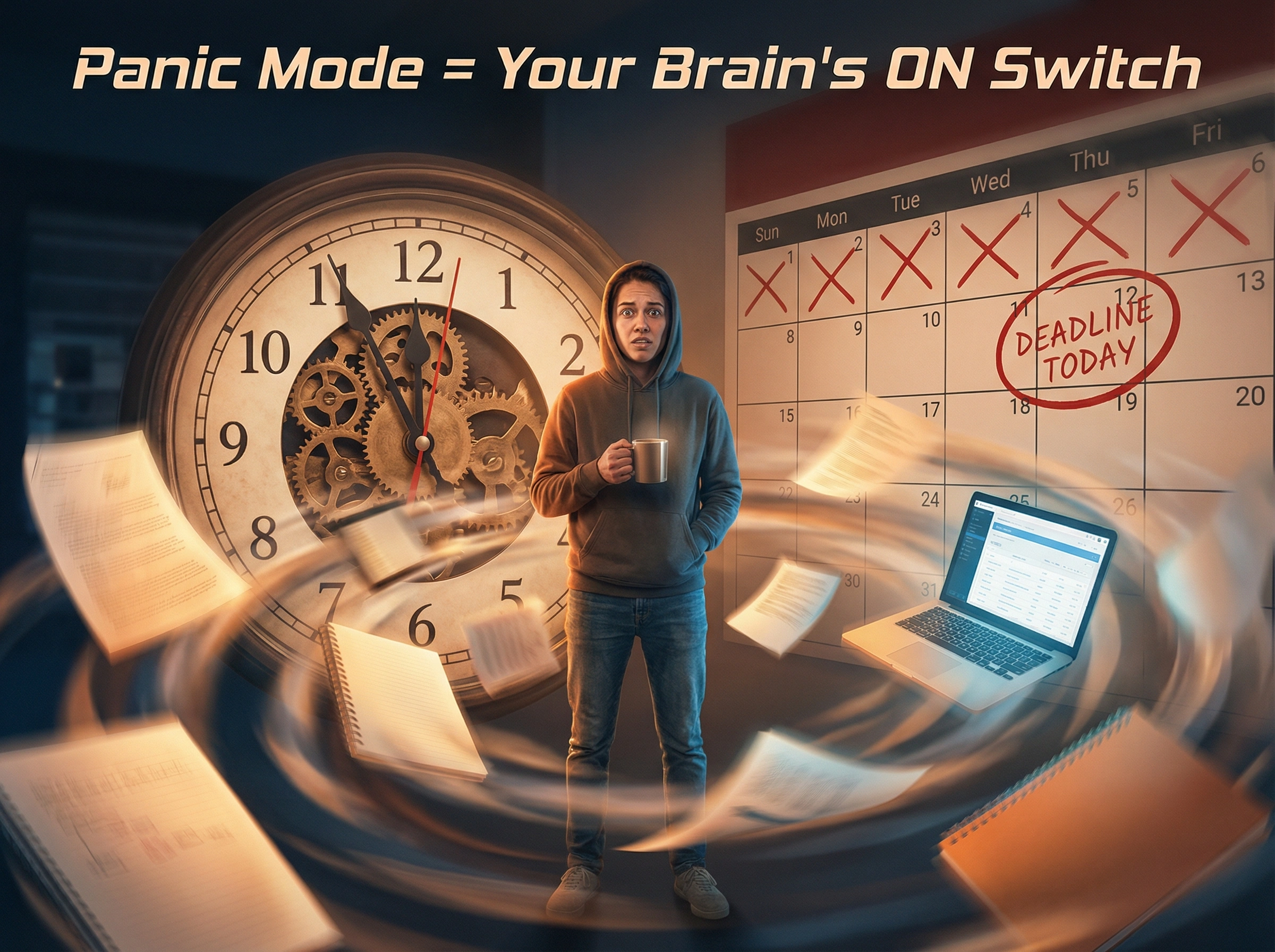
You know the drill. The project is due Friday. You’ve known about it for three weeks. But somehow, you don’t actually start until Thursday night at 11 PM—fueled by panic, energy drinks, and the crushing weight of a deadline.
People might call you a procrastinator. You might call yourself lazy. But here’s the truth: many people with ADHD struggle with something called “time blindness.” Your brain doesn’t register urgency until the deadline is breathing down your neck. That last-minute adrenaline rush? It’s not a character flaw—it’s your brain finally getting the stimulation it needs to focus.
Sign #2: Your To-Do List Is a Graveyard of Good Intentions
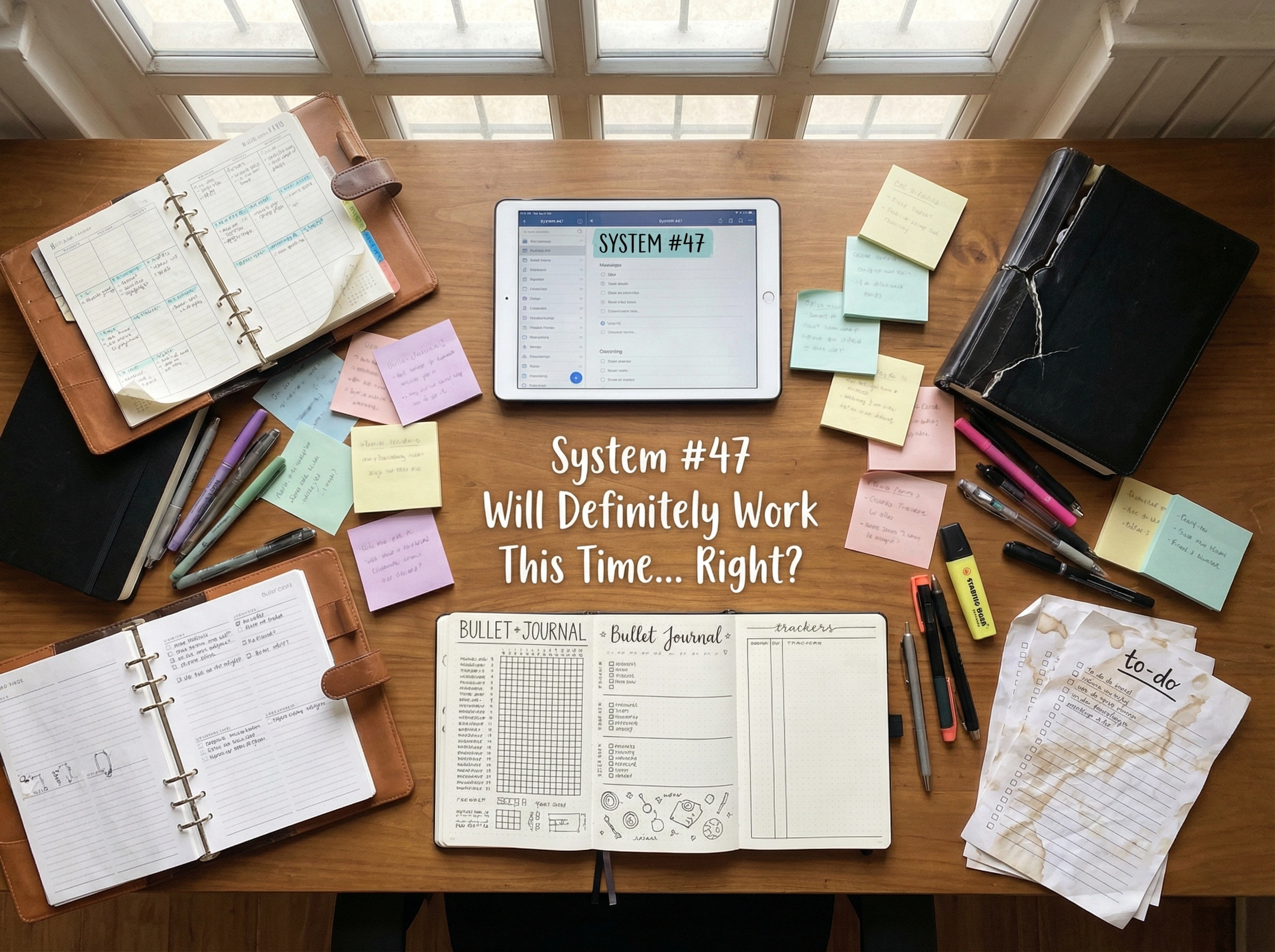
You start every week with a beautiful, color-coded to-do list. You’re going to be organized this time. You’re going to get it all done.
By Wednesday, the list is abandoned, buried under sticky notes, half-finished tasks, and the guilt of knowing you’ve let yourself down again.
Adults masking ADHD often have dozens of productivity systems they’ve tried and abandoned. The issue isn’t that you’re not trying hard enough—it’s that traditional organizational methods weren’t designed for ADHD brains. When tasks feel boring, unclear, or overwhelming, your brain struggles to initiate them, no matter how important they are.
Sign #3: You’re Either “All In” or “Can’t Even Start”
There’s no middle ground for you. Either you’re hyperfocused—losing track of time, forgetting to eat, completely absorbed in something that interests you—or you’re staring at a simple task for hours, unable to make yourself begin.
This “all or nothing” pattern is classic ADHD. Your brain craves novelty and stimulation. When something is new, challenging, or deeply interesting, you can focus intensely. But routine tasks, paperwork, or anything that feels mundane? It’s like trying to push a boulder uphill.
Friends and colleagues might not understand how you can spend six hours building a website for fun but can’t seem to answer three emails. That’s because ADHD doesn’t mean you can’t focus—it means you can’t always control what you focus on.
Sign #4: You’ve Perfected the Art of “Winging It”
You rarely feel prepared. You’ve learned to think on your feet, improvise in meetings, and charm your way through situations where you probably should have done more planning.
And it works—until it doesn’t.
Masking often means relying on intelligence, charisma, or quick thinking to compensate for disorganization or forgetfulness. You might be brilliant at problem-solving in the moment, but the constant mental juggling act is draining. You’re working twice as hard as everyone else just to keep up.
Sign #5: Small Tasks Feel Impossibly Big
Scheduling a doctor’s appointment. Filling out a form. Calling to dispute a bill. These tasks sit on your list for weeks, sometimes months.
It’s not that you don’t care. It’s that your brain perceives these “boring” administrative tasks as monumental obstacles. This is executive dysfunction—a core feature of ADHD that affects your ability to plan, initiate, and complete tasks, especially ones that offer no immediate reward or interest.
Meanwhile, you might tackle a complex project at work with ease. The inconsistency makes you feel like a fraud.

Sign #6: You’re Constantly Losing Things (And It’s Embarrassing)
Keys. Phone. Wallet. That important document you just had five minutes ago.
You’ve developed elaborate systems to cope—always putting your keys in the same spot, using tile trackers, setting a dozen phone alarms. But despite your best efforts, things still slip through the cracks.
For adults masking ADHD, the shame around forgetfulness can be intense. You’re not careless or irresponsible—your brain processes and stores information differently, making it harder to keep track of details in the moment.
Sign #7: You Feel Like You’re Constantly Letting People Down
Missed texts. Forgotten birthdays. Canceled plans because you’re too overwhelmed. Late arrivals that you can’t fully explain.
The guilt is crushing. You care deeply about the people in your life, but your actions don’t always reflect that. You might avoid social situations or relationships altogether because you’re tired of disappointing others—and yourself.
You’re Not Broken—There’s an Explanation
If these signs feel painfully familiar, you’re not alone. Millions of adults live with undiagnosed ADHD, spending years believing they’re just not trying hard enough.
But here’s the truth: ADHD is real, it’s treatable, and getting clarity can change everything.
At Focused Connections Psychiatry, we understand that ADHD in adults often looks different than the textbook descriptions. We take the time to understand your whole story—the patterns, the struggles, and the strengths you’ve developed along the way. Through comprehensive evaluation, including tools like ADHD T.O.V.A. testing, we help you get the answers and support you deserve.
You don’t have to keep running on empty. If this sounds like you, reaching out for an evaluation is a strong and important step.
This information is for education and support only and is not a substitute for a professional evaluation or treatment. If you’re struggling, we’re here to help.
Ready to stop masking and start living? Contact Focused Connections Psychiatry at (562) 312-1777 or click here to schedule your free symptom assessment today.