When Energy Shifts Signal Something Deeper
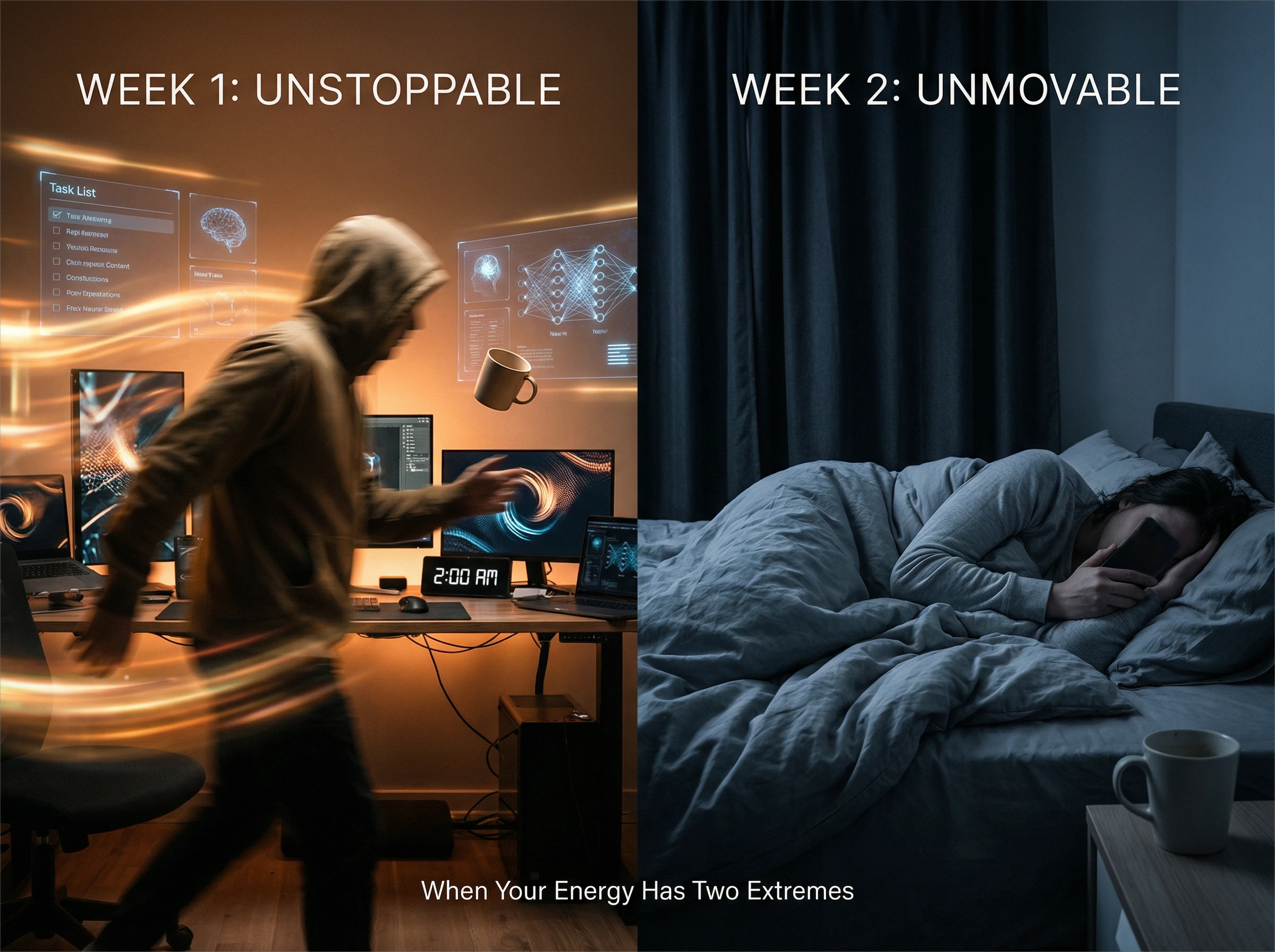
You’ve been calling them “mood swings” for months—maybe even years. One week you’re unstoppable, brimming with ideas, sleeping just four hours and feeling like you could conquer the world.
The next, you can barely drag yourself out of bed, and the projects that excited you days ago now feel impossibly heavy.
Your friends might joke that you’re “just moody”. You might tell yourself it’s stress, or caffeine, or the phases of the moon. But deep down, you’re starting to wonder: Is this normal? Or is something else going on?
Here’s the truth many people don’t realize: what you’re experiencing might not be ordinary mood swings at all. For some, these patterns of energy highs and emotional lows are actually signs of something more complex—something that deserves understanding, not dismissal.
The Difference Between Moody and Something More
Everyone has good days and bad days. That’s part of being human. But there’s a significant difference between reacting to life’s ups and downs and experiencing internal shifts that seem to have a life of their own.

Typical mood changes are usually:
- Tied to circumstances: You feel down after a disappointment or energized after good news
- Short-lived: They pass within hours or a day
- Manageable: You can still function relatively normally
But when mood and energy patterns start following their own rhythm—independent of what’s happening around you—that’s when it’s worth paying closer attention.
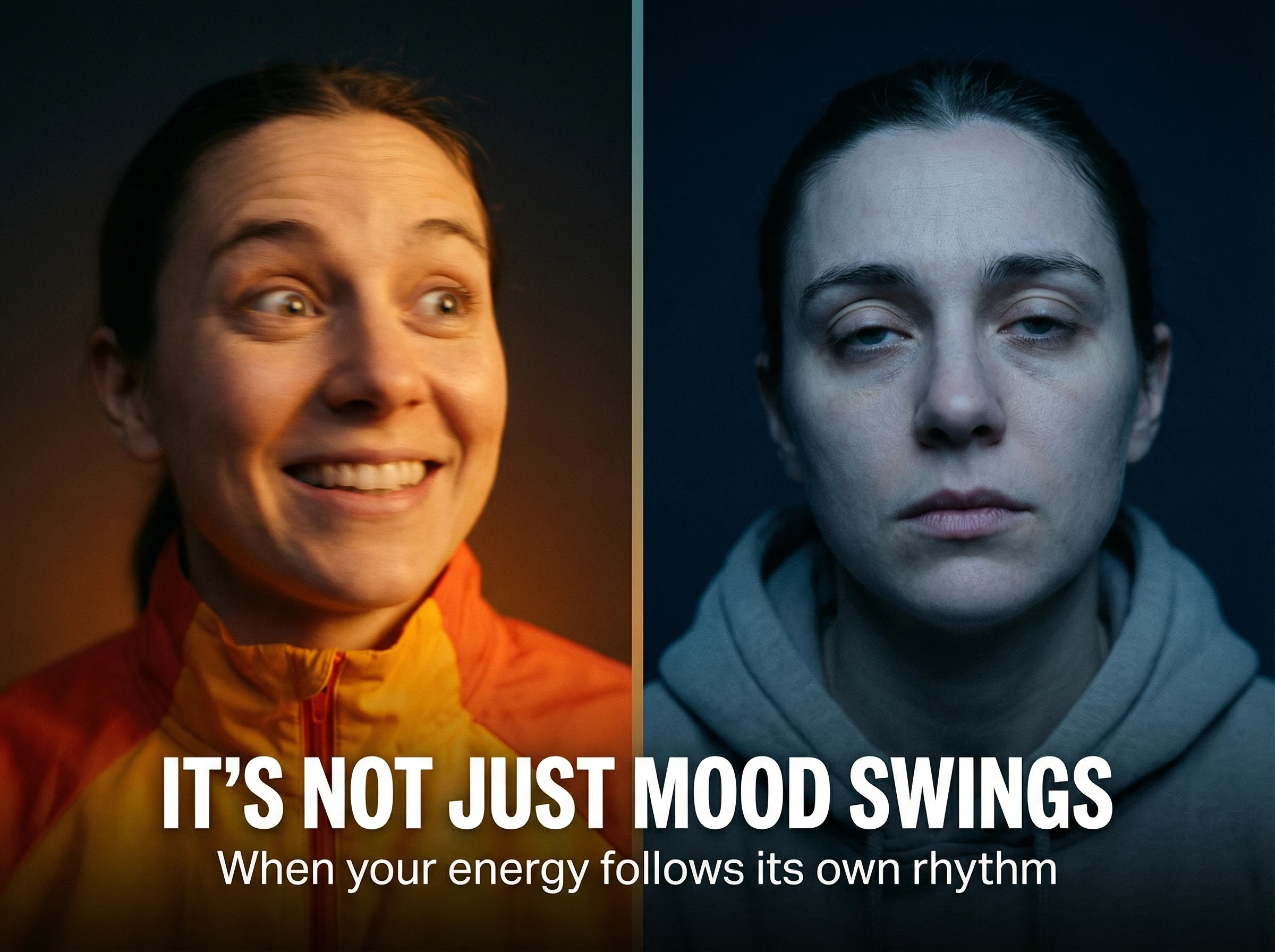
Some people describe periods where they feel unusually energetic or “wired“. They might talk faster than usual, jump between ideas rapidly, take on multiple projects at once, or feel unusually confident. Sleep becomes optional—not because of insomnia, but because they genuinely don’t feel tired on just a few hours of rest.
Then, seemingly without warning, everything shifts. The energy drains away, replaced by a heaviness that makes even simple tasks feel overwhelming. Concentration becomes difficult. The things that mattered intensely just days before now feel distant and unimportant.
Why These Patterns Get Overlooked
There are several reasons why people live with these cycles for years without understanding what’s happening:
The “productive” periods feel good. When you’re in a high-energy phase, you might accomplish incredible things. You feel creative, capable, and alive. Why would you question something that feels so positive?
The low periods get blamed on burnout. After pushing hard during energetic phases, it makes sense that you’d crash, right? Except the crash often feels deeper and lasts longer than typical exhaustion.
Everyone around you seems inconsistent too. In our fast-paced world, many people struggle with energy and mood. It’s easy to assume your experience is just part of modern life.
The fear of being labeled. There’s often an underlying worry: “What if this means something’s wrong with me?” That fear can keep people from exploring their patterns more deeply.

What These Patterns Might Actually Mean
These cyclical shifts in energy, mood, and behavior can be characteristic of mood cycle conditions that exist on a spectrum.
Some people experience dramatic swings between extreme highs and significant lows. Others notice subtler patterns—periods of elevated energy and productivity followed by stretches of low motivation and emotional heaviness.
The key indicators that suggest something beyond typical mood changes include:
- Duration: Episodes lasting days or weeks, not just hours
- Intensity: Changes that noticeably affect your functioning, relationships, or decision-making
- Independence: Shifts that happen regardless of external circumstances
- Pattern recognition: A cyclical quality where you can almost predict the ups and downs
- Impact: Consequences like impulsive spending during high periods, relationship strain, or work disruptions
These experiences can overlap with other conditions too—anxiety, ADHD, sleep disorders, or stress responses. That’s why professional evaluation is so important. Only a trained clinician can help you understand what’s truly contributing to these patterns.
The Path Forward: From Confusion to Clarity
If you’re recognizing yourself in these descriptions, know this: you’re not alone, and your experiences deserve care and understanding.
The first step is simply acknowledging that what you’re experiencing might be more complex than “just being moody.” That awareness itself is powerful—it opens the door to getting real answers.

A comprehensive psychiatric evaluation can help you:
- Understand the patterns behind your energy and mood shifts
- Identify any contributing factors or overlapping conditions
- Explore what stability could look like for you specifically
- Develop a personalized plan that supports your unique needs
At Focused Connections Psychiatry, we approach mood cycles with compassion and precision. We know that behind every pattern is a person who deserves clarity—someone who’s been trying to make sense of their internal experience, often for years.
You Deserve to Understand Your Own Mind
Those “mood swings” you’ve been living with? They’re telling you something. They’re not a character flaw, a sign of weakness, or something you just need to push through. They’re patterns that deserve professional attention and understanding.
Stability is possible. Clarity is within reach. And the journey toward both begins with a single, courageous step: deciding that your experiences matter enough to explore them with someone who truly understands.
You don’t have to keep guessing what’s happening inside your own mind. Let’s find out together.
If you’re noticing mood and energy patterns that feel beyond your control, Focused Connections Psychiatry is here to help. Our compassionate team specializes in understanding complex mood cycles and creating personalized care plans. Contact us at (562) 312-1777 today or click here to schedule your free symptom assessment.