Understanding the Hidden Signals Your Body Is Sending
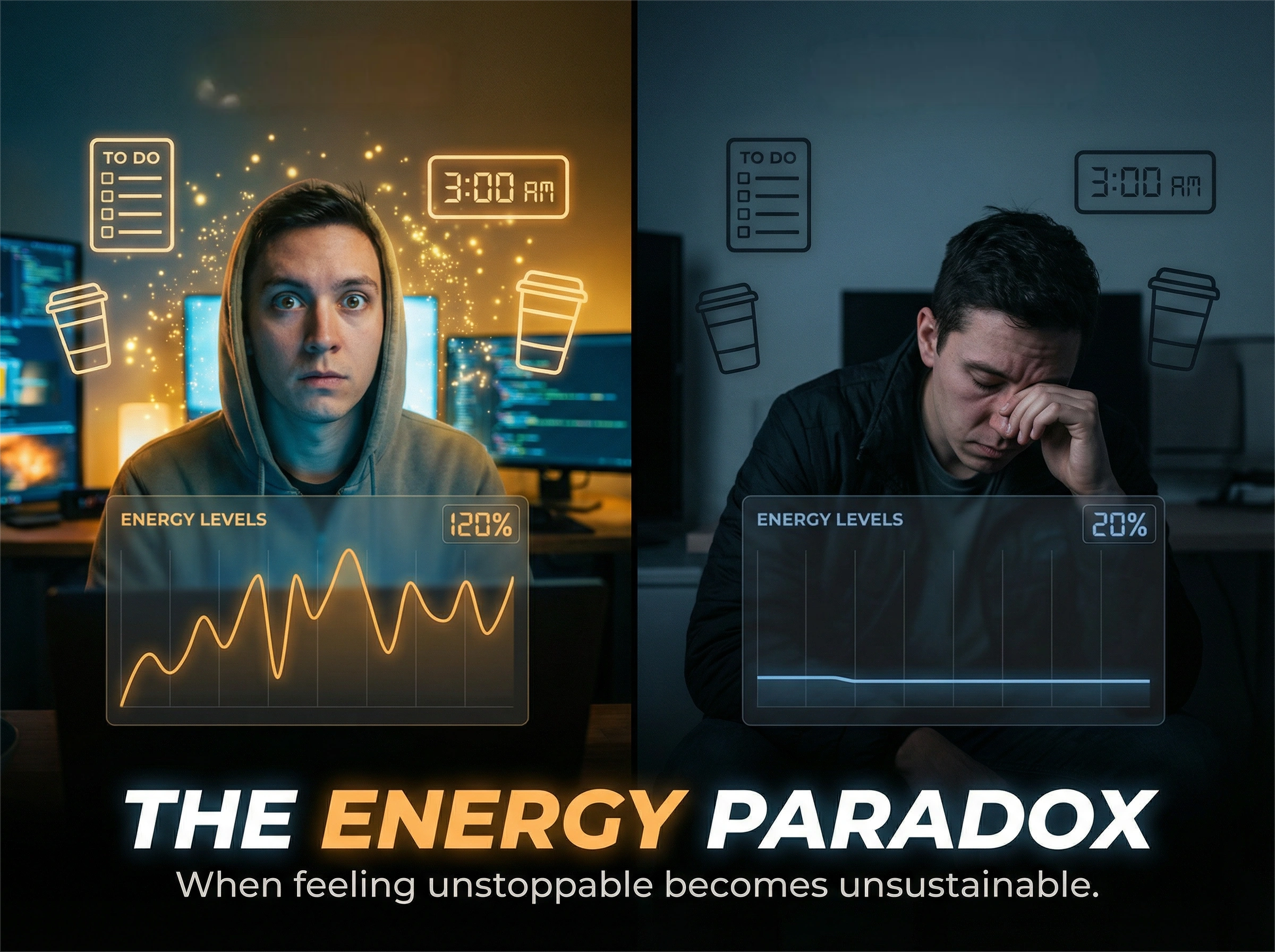
We live in a culture that celebrates hustle, productivity, and boundless energy. The person who thrives on three hours of sleep, juggles multiple projects effortlessly, and radiates confidence is often admired—even envied.
But what if that surge of energy isn’t the superpower it appears to be? What if it’s actually your mind and body sending you a warning signal?
At Focused Connections Psychiatry, we understand that the line between feeling genuinely energized and experiencing something more concerning can be surprisingly thin. Recognizing when high energy crosses into potentially problematic territory is crucial for your long-term mental health and wellbeing.
The Energy That Feels Too Good to Question
Imagine waking up after just a few hours of sleep, yet feeling more alive than you have in months. Your mind races with brilliant ideas. Conversations flow effortlessly—maybe even a bit too fast for others to keep up. You’re taking on new projects, making spontaneous purchases, and feeling an almost electric sense of possibility coursing through you.
This experience can feel incredible. You might think, “This is finally the real me—the version I’ve always wanted to be.” Friends and colleagues might comment on your enthusiasm, your creativity, your sudden burst of social engagement. In those moments, it’s nearly impossible to see anything wrong.
But here’s what many people don’t realize: sustained periods of unusually elevated energy, especially when accompanied by decreased need for sleep, can be a significant indicator of underlying mood patterns that deserve professional attention.
Recognizing the Pattern Beyond the Feeling
High energy becomes a warning sign when it represents a notable departure from your baseline. It’s not about having a great day or feeling motivated after good news. The concern arises when:
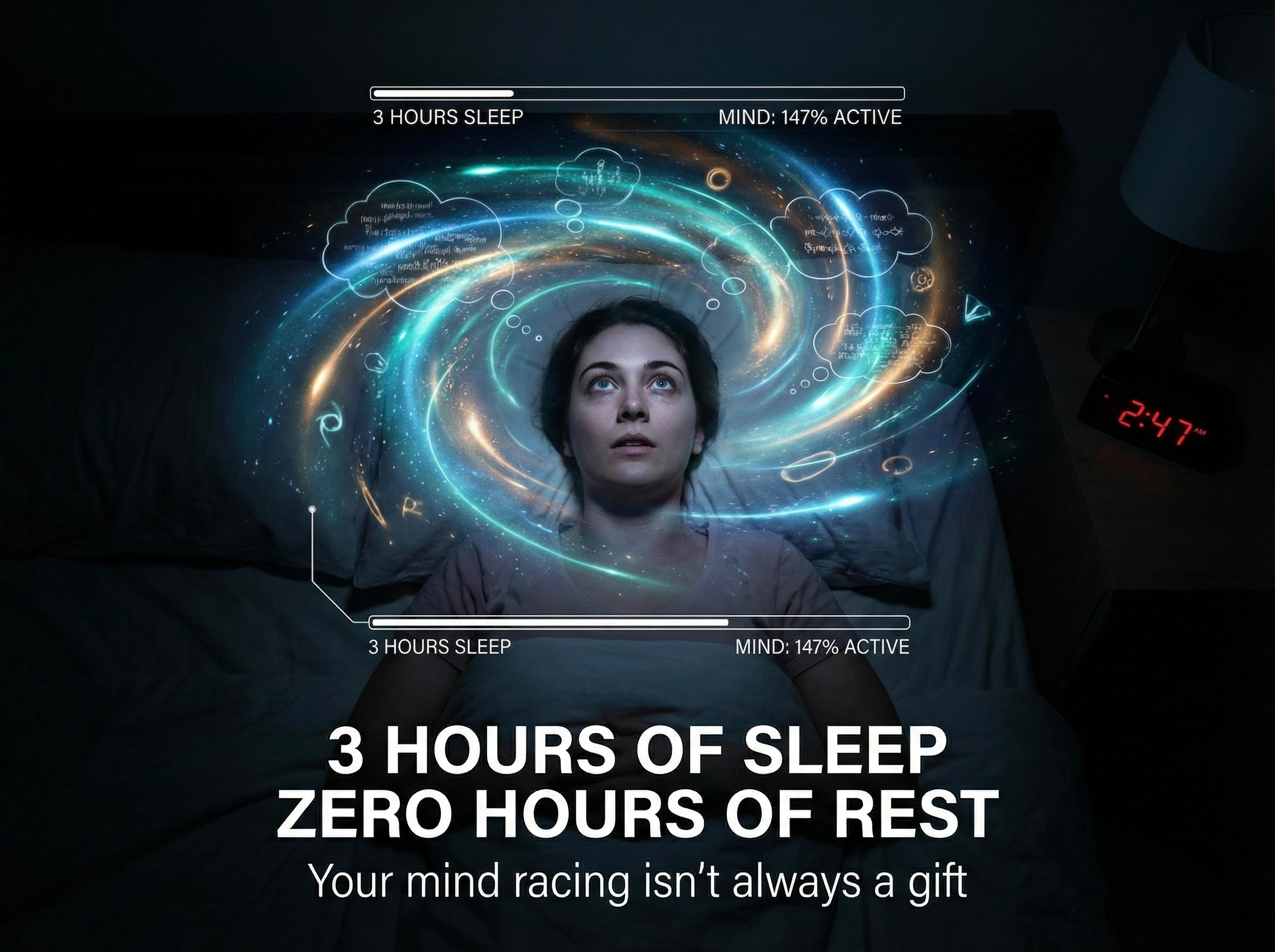
Your sleep needs dramatically decrease without feeling tired. We’re not talking about occasionally staying up late—this is consistently functioning on minimal sleep while feeling energized rather than exhausted.
Your thoughts race faster than you can capture them. Ideas flood in so quickly that finishing one thought before jumping to the next becomes challenging. You might start multiple projects simultaneously, convinced you can handle them all.
Your confidence reaches unusual heights. While healthy self-esteem is wonderful, there’s a difference between feeling good about yourself and feeling invincible or believing you have special abilities or insights others don’t possess.
Impulsive decisions increase. Perhaps you’re making uncharacteristic purchases, taking financial risks, or making major life decisions without your usual careful consideration.
Others notice changes in your behavior. When people close to you express concern about your energy levels, speech patterns, or decision-making, it’s worth paying attention—even if you feel better than ever.

The Cycle Many Don’t See Coming
What makes these high-energy periods particularly complex is what often follows. Many individuals experience these elevated states only to crash into periods of deep exhaustion, low motivation, and emotional heaviness. The contrast can be jarring and confusing.
You might find yourself asking: “Why can’t I stay consistent? Why do I cycle between feeling unstoppable and barely able to function?” This pattern of ups and downs isn’t a personal failing or a lack of willpower—it’s your body communicating that something in your mood regulation system needs attention and support.
The Compassionate Path Forward
If you’re reading this and recognizing patterns in yourself or someone you love, the most important thing to know is this: you’re not alone, and these experiences are more common than you might think. Mood cycles exist on a spectrum, and understanding where you fall on that spectrum is the first step toward lasting stability.
At Focused Connections Psychiatry, we approach these concerns with compassion and without judgment. We understand that elevated energy states can feel positive—even desirable—which makes it challenging to seek help. Our goal isn’t to diminish your vitality or creativity; it’s to help you achieve sustainable stability that supports your best self long-term.
What Evaluation Can Offer
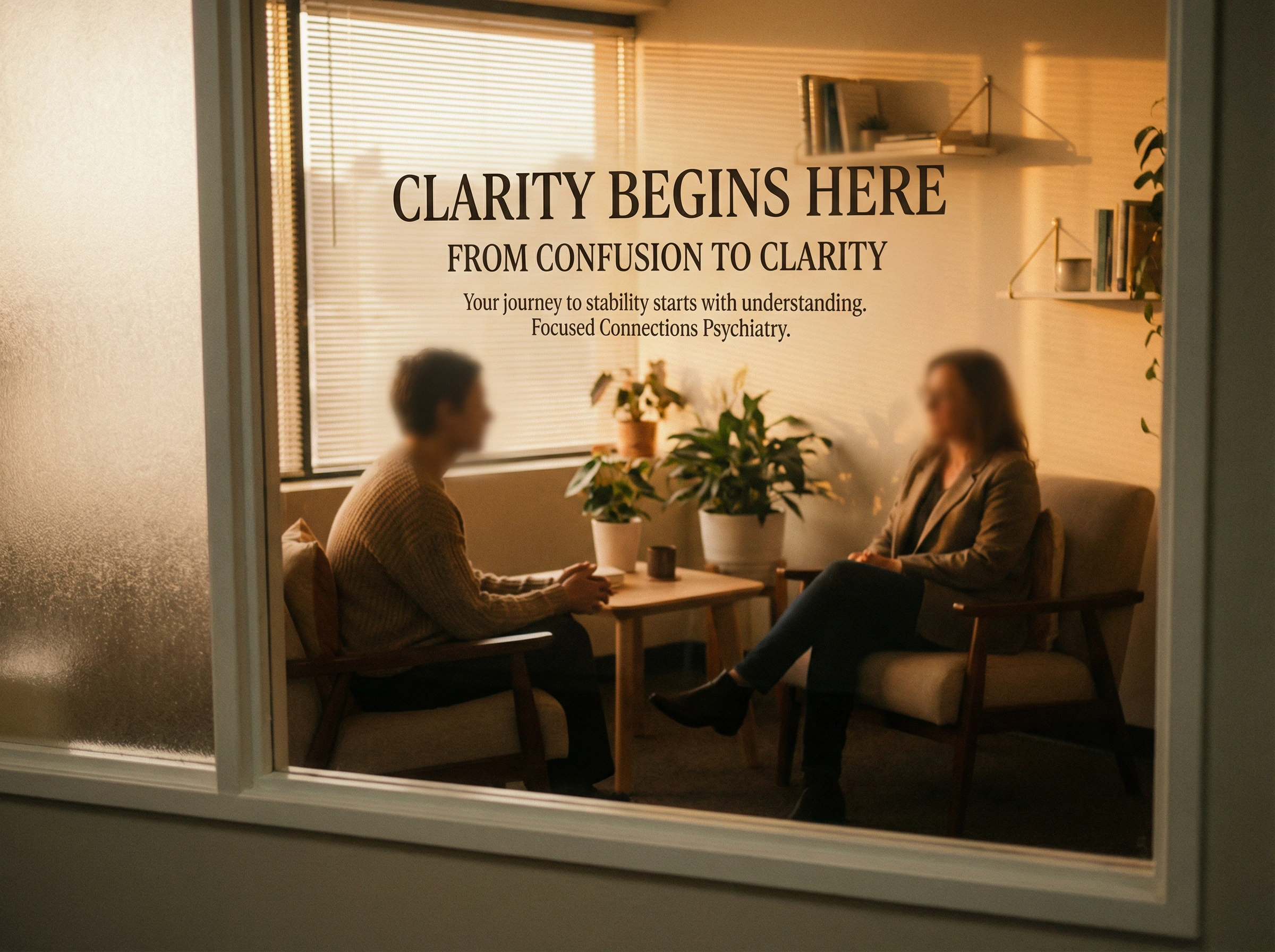
A comprehensive psychiatric evaluation can help clarify what’s happening beneath the surface. Through collaborative conversation, mood history review, and careful assessment, we can determine whether your energy patterns reflect:
- Natural personality variations
- Stress responses
- Sleep disorders
- Mood cycle patterns that would benefit from treatment
- Other factors affecting your energy and mood
Your Next Step
If you’ve noticed patterns of unusually high energy followed by crashes, if loved ones have expressed concern, or if you’re simply wondering whether your experiences fall within typical ranges, we invite you to reach out. The care you deserve starts with clarity—and clarity begins with a conversation.
At Focused Connections Psychiatry, we combine evidence-based assessment with genuine understanding. Your journey toward sustainable wellbeing and emotional balance is possible, and we’re here to walk alongside you every step of the way.
Ready to explore what your energy patterns mean? Contact us at (562) 312-1777 today or click here to schedule your free symptom assessment. Because you deserve care that truly understands you.