Understanding Extreme Emotional Shifts
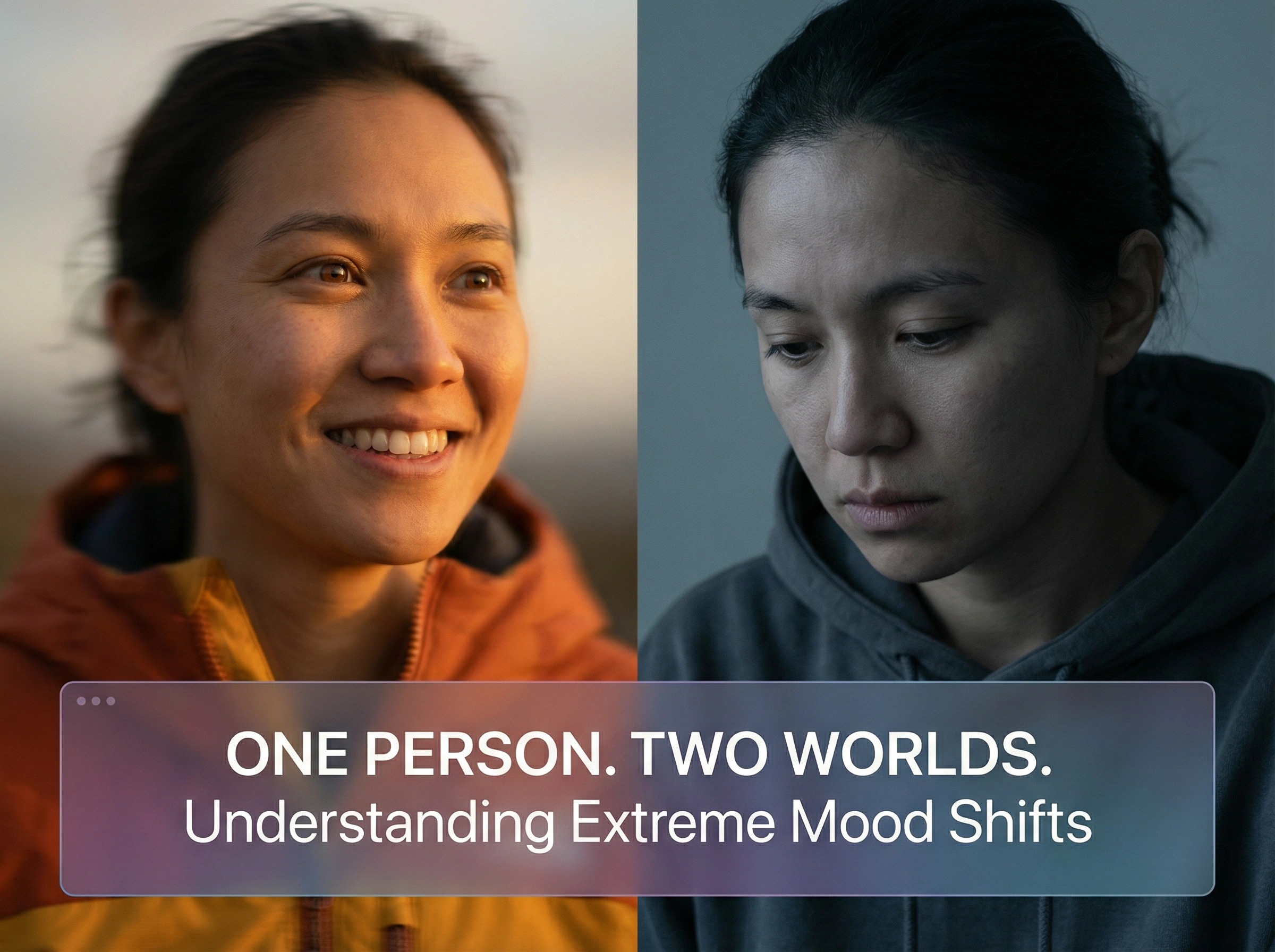
You wake up feeling unstoppable. Ideas flood your mind faster than you can capture them. You’re texting friends at 2 AM with plans for a new business venture, convinced this is finally the one. Sleep feels optional—unnecessary, even. You’re riding a wave of pure energy and confidence.
Then, seemingly without warning, the wave crashes.
A week later, you can barely get out of bed. The same projects that felt thrilling now seem pointless. Your mind feels heavy, foggy, disconnected. The contrast is jarring, confusing, and exhausting. You wonder: Is this just stress? Am I overreacting? Why can’t I stay consistent?
If this pattern sounds familiar, you’re not alone—and what you’re experiencing deserves understanding and care.
What Makes Mood Shifts Feel “Too Extreme”?
Everyone experiences ups and downs. A bad day at work, an exciting opportunity, relationship stress—these naturally affect our emotional state. But when mood shifts feel extreme, they often share certain characteristics that set them apart from typical emotional responses:
They’re disproportionate to circumstances. You might feel euphoric without any particular reason, or devastatingly low despite things going relatively well in your life.
They last for days or weeks. These aren’t fleeting emotions that pass within hours. Elevated periods might persist for several days, while low periods can stretch into weeks or longer.
They disrupt your functioning. During high periods, you might make impulsive decisions you later regret—overspending, taking on too many commitments, or engaging in risky behaviors. During low periods, basic tasks feel insurmountable.
They confuse the people around you. Friends and family notice the shifts. They might describe you as unpredictable or wonder why you seem like “a different person” at different times.
They feel out of your control. Unlike choosing to stay up late for a project or feeling sad after disappointing news, these shifts seem to have a life of their own.
The Hidden Patterns Behind Extreme Mood Shifts
Many people experiencing extreme mood fluctuations spend years trying to understand what’s happening. You might have been told you’re “just moody” or that you need to “manage stress better.” But when mood cycles follow distinct patterns—periods of unusually high energy followed by crashes into depression—there’s often something more complex at play.
During elevated states, you might experience:
- Racing thoughts that jump from topic to topic
- Feeling like you need far less sleep than usual
- Talking faster or more than typical for you
- Unusual confidence or feeling invincible
- Taking on multiple projects simultaneously
- Increased spending or other impulsive decisions
During low states, you might notice:
- Profound fatigue that sleep doesn’t fix
- Loss of interest in activities you normally enjoy
- Difficulty concentrating or making decisions
- Feelings of emptiness or hopelessness
- Withdrawing from friends and social activities
- Changes in appetite or sleep patterns
Some people experience what’s called “mixed states“—where high energy and low mood occur simultaneously. This can feel particularly distressing: your mind races while your emotions feel heavy, or you’re physically restless but emotionally exhausted.

Why Understanding These Patterns Matters
Recognizing that your mood shifts follow patterns—rather than being random or a personal failing—is the first step toward getting appropriate support. These experiences can overlap with various conditions, and only a trained clinician can determine what’s contributing to your specific patterns.
What’s important to know is that mood cycles are treatable. Understanding your unique triggers, patterns, and early warning signs empowers you to work collaboratively with a mental health professional toward greater stability.
The Cost of Waiting
Many people wait years before seeking evaluation, often because they fear being labeled or worry about what treatment might mean. During elevated periods, you might feel like you’re finally operating at your full potential—why would you want to change that? During low periods, you might lack the energy to reach out for help.
But consider what ongoing, unmanaged mood cycles cost over time:
- Strained relationships with people you care about
- Career disruptions or missed opportunities
- Financial consequences from impulsive decisions
- Physical health impacts from irregular sleep and stress
- The emotional toll of feeling like you can’t trust your own mind

Moving Toward Clarity and Stability
If you’re noticing extreme mood shifts that disrupt your life, exploring professional evaluation is a courageous and practical step. At Focused Connections Psychiatry, we understand that mood cycles can be complex and multi-layered. Our approach focuses on:
Understanding your unique patterns. Through careful conversation and mood history, we help identify what’s happening and why.
Collaborative partnership. You’re not just receiving instructions—you’re an active participant in your care journey.
Comprehensive evaluation. We look at the full picture, including any overlapping conditions like anxiety, sleep issues, or life stressors.
Personalized support. Treatment isn’t one-size-fits-all. We work with you to find approaches that support your goals and lifestyle.
You deserve to feel like your steady self—not constantly bracing for the next swing. Your experiences aren’t a character flaw or something you need to “just deal with.“
They’re patterns that can be understood, managed, and stabilized with the right support. If your mood shifts feel too extreme, too unpredictable, or too disruptive, you don’t have to navigate this alone.
Reach out to Focused Connections Psychiatry at (562) 312-1777 today or click here to schedule your free symptom assessment. Your journey toward clarity and stability starts with a single conversation.