How to Tell the Difference (Why Knowing Could Save Your Life)
Your chest tightens. Your heart races. You can’t catch your breath. A wave of terror washes over you as one thought screams through your mind: Am I having a heart attack?
This terrifying moment happens to thousands of people every day. And here’s what makes it even more complicated: panic attacks and heart attacks can feel remarkably similar. Both involve chest pain, shortness of breath, and an overwhelming sense that something is seriously wrong.
Yet they require completely different responses—one needs emergency medical care, while the other, though deeply frightening, is not life-threatening.
At Focused Connections Psychiatry, we’ve worked with countless patients who’ve experienced this exact confusion. Many have rushed to the emergency room convinced they were dying, only to be told it was “just anxiety.“
That word—”just“—can feel dismissive when the experience was absolutely real and terrifying. But understanding the difference between these two conditions isn’t just about avoiding unnecessary ER visits. It’s about getting the right help at the right time, whether that’s cardiac care or mental health support.
The Overlap: Why They Feel So Similar
Both panic attacks and heart attacks activate your body’s alarm system. Your sympathetic nervous system kicks into high gear, flooding your body with adrenaline. This creates many of the same physical sensations: rapid heartbeat, chest pressure, sweating, dizziness, and a sense of impending doom.
This overlap isn’t coincidental—it’s biological. Your brain can’t always distinguish between a physical threat and a perceived psychological one. When anxiety triggers your fight-or-flight response, your body reacts as if you’re facing genuine danger, creating symptoms that feel identical to a cardiac event.
Key Differences to Watch For
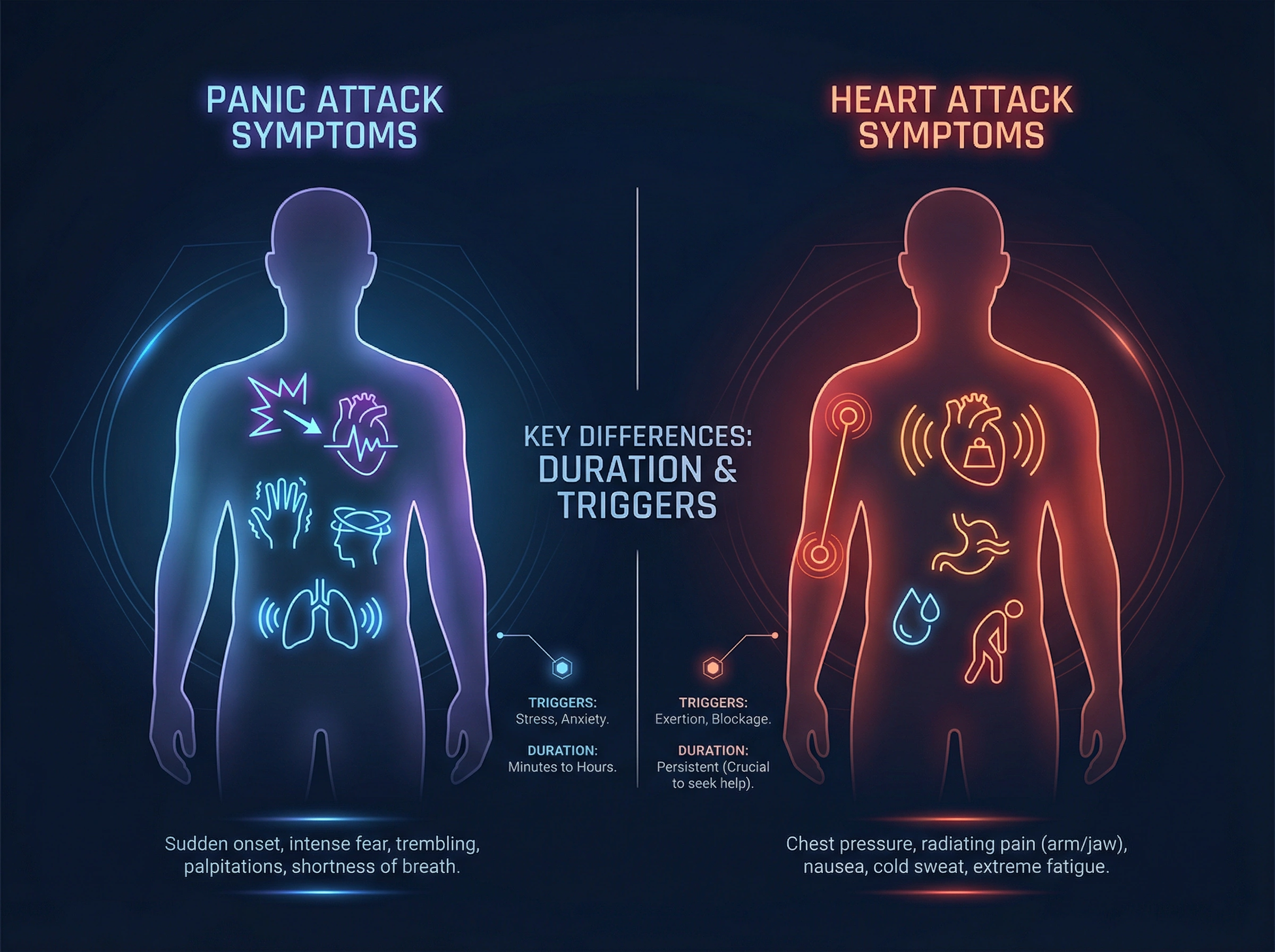
While the symptoms overlap, there are important distinctions that can help you tell them apart:
Location and Type of Pain
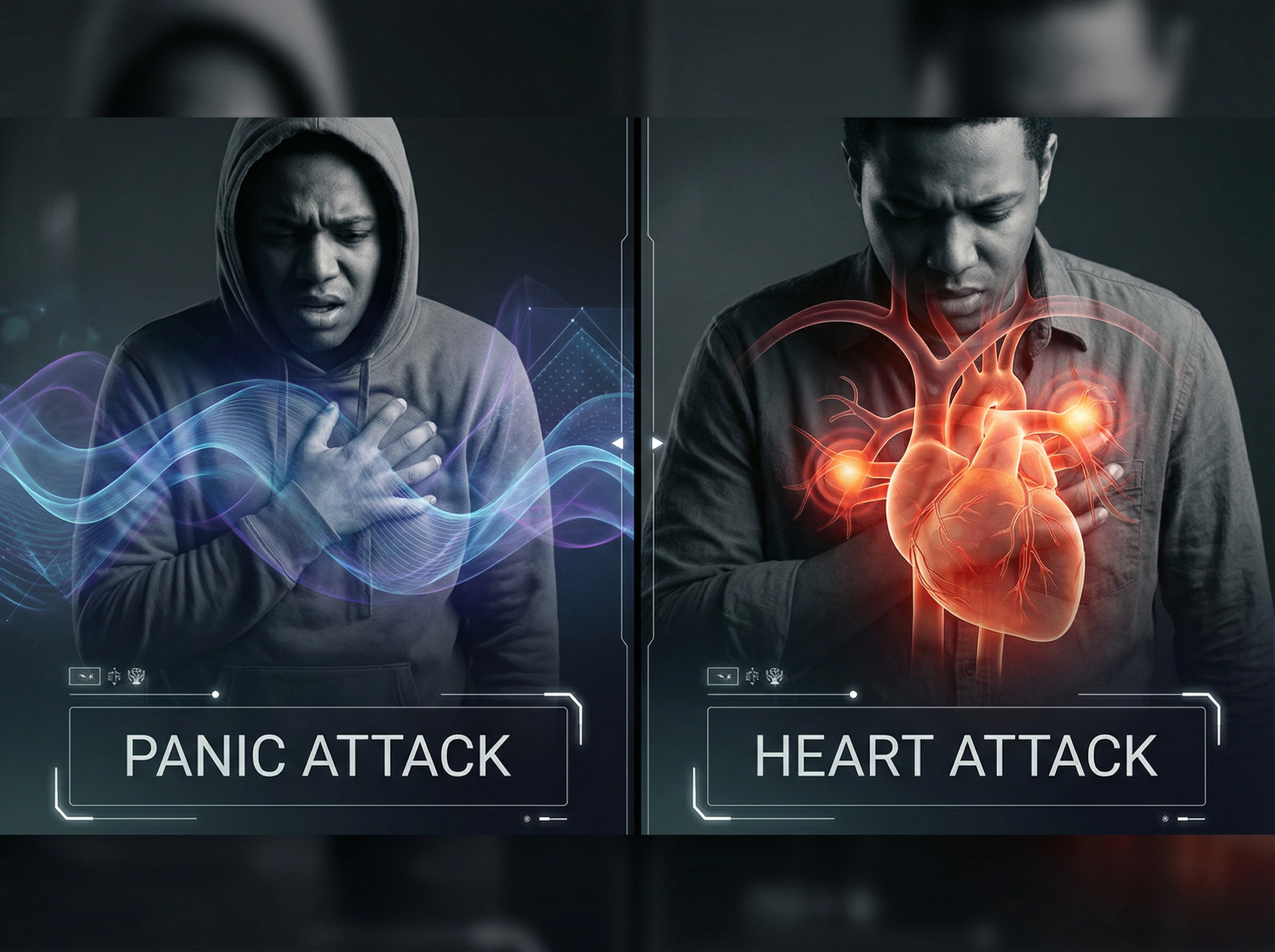
Heart attack pain typically centers in the chest and often radiates outward—to the left arm, jaw, neck, or back. It’s frequently described as pressure, squeezing, or heaviness, like an elephant sitting on your chest.
Panic attack chest pain tends to be sharper and more localized. It often stays in one spot and may feel like a stabbing sensation. Many people describe it as pain that moves around or changes intensity quickly.
Onset and Duration
Heart attacks usually build gradually. The discomfort may start mild and intensify over minutes or even hours. It persists and doesn’t improve with rest.
Panic attacks typically peak within 10 minutes and rarely last longer than 20-30 minutes. The intensity comes on suddenly—you might feel fine one moment and overwhelmed the next. Symptoms usually begin to subside relatively quickly, even without intervention.
Triggers and Context
Heart attacks can occur during physical exertion but also frequently happen at rest or even during sleep. They’re more common in people with risk factors like high blood pressure, high cholesterol, diabetes, smoking, or family history.
Panic attacks often have psychological triggers—stressful situations, crowded spaces, or even the fear of having another panic attack. However, they can also seem to come “out of nowhere,” which adds to the confusion and fear.
Response to Movement
With a heart attack, physical activity typically makes symptoms worse. Rest doesn’t provide relief.
With panic attacks, gentle movement or changing positions may actually help. Deep breathing exercises, grounding techniques, or distraction can reduce symptoms—something that wouldn’t help a cardiac event.
Age and Risk Factors
While heart attacks can happen at any age, they’re more common in older adults, particularly those with cardiovascular risk factors. If you’re younger, have no heart disease history, and have experienced anxiety before, a panic attack is more likely—though not certain.
When to Seek Emergency Care
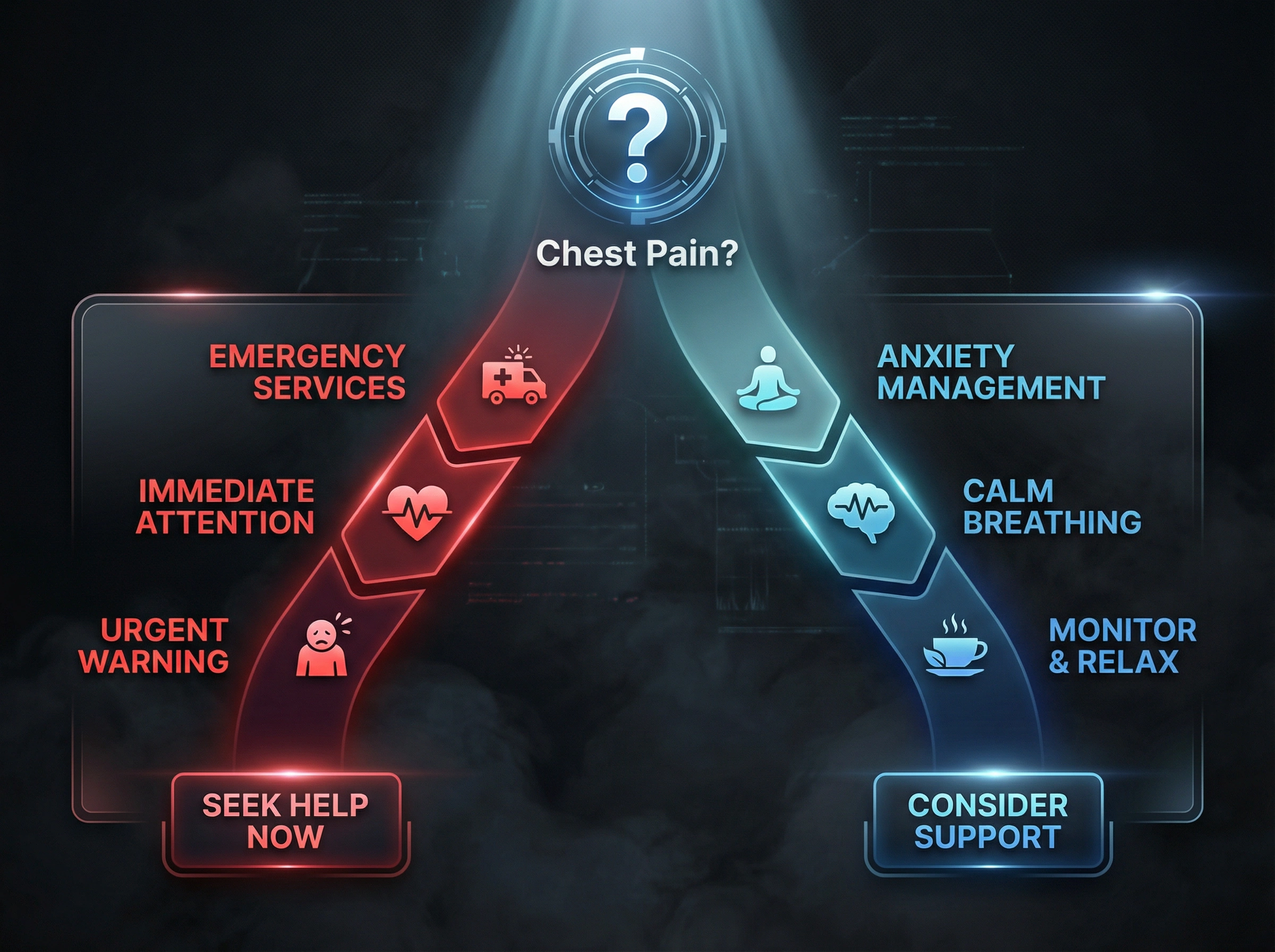
Here’s the critical rule: When in doubt, call 911 or go to the emergency room. It’s always better to be evaluated and told it’s anxiety than to ignore a genuine heart attack.
Seek immediate emergency care if you experience:
- Chest pain that radiates to your arm, jaw, or back
- Symptoms that persist beyond 20-30 minutes
- Severe shortness of breath that doesn’t improve
- Loss of consciousness or near-fainting
- Pain accompanied by nausea, cold sweats, or extreme fatigue
- Any chest pain if you have heart disease risk factors
The Aftermath: Getting the Right Support
If you’ve been to the ER and been told your heart is fine, that’s genuinely good news. But it doesn’t mean your experience wasn’t real or that you don’t need help. Panic attacks are a sign that your nervous system needs support.
At Focused Connections Psychiatry, we understand that panic attacks aren’t “just anxiety“—they’re a legitimate medical condition that responds well to treatment. Through comprehensive psychiatric evaluation, we can help you understand what’s triggering your panic, develop coping strategies, and explore treatment options, including therapy, medication, or both.
Many of our patients describe finally feeling heard after being dismissed elsewhere. We take the time to understand your unique experience and create a personalized treatment plan that helps you regain control and confidence.
Moving Forward with Clarity
Living in fear of the next episode is exhausting. Whether you’re worried about your heart or struggling with panic, you deserve clarity and compassionate care. Understanding the difference between panic attacks and heart attacks is the first step toward getting the support you need.
If panic attacks are disrupting your life, contact us at (562) 312-1777 today or click here to schedule your free symptom assessment. Because you deserve care that truly understands you—and helps you feel like yourself again.