The Hidden Anxiety Behind Everyday Choices
You’re standing in the cereal aisle, staring at rows of boxes, and suddenly you can’t decide. Your mind races through options—nutrition facts, prices, flavors—and what should take seconds stretches into minutes.
Or maybe you’ve spent an hour crafting the “perfect” text message response, rewriting it over and over. Perhaps you’ve been putting off scheduling that dentist appointment for weeks, even though you know it takes just five minutes.
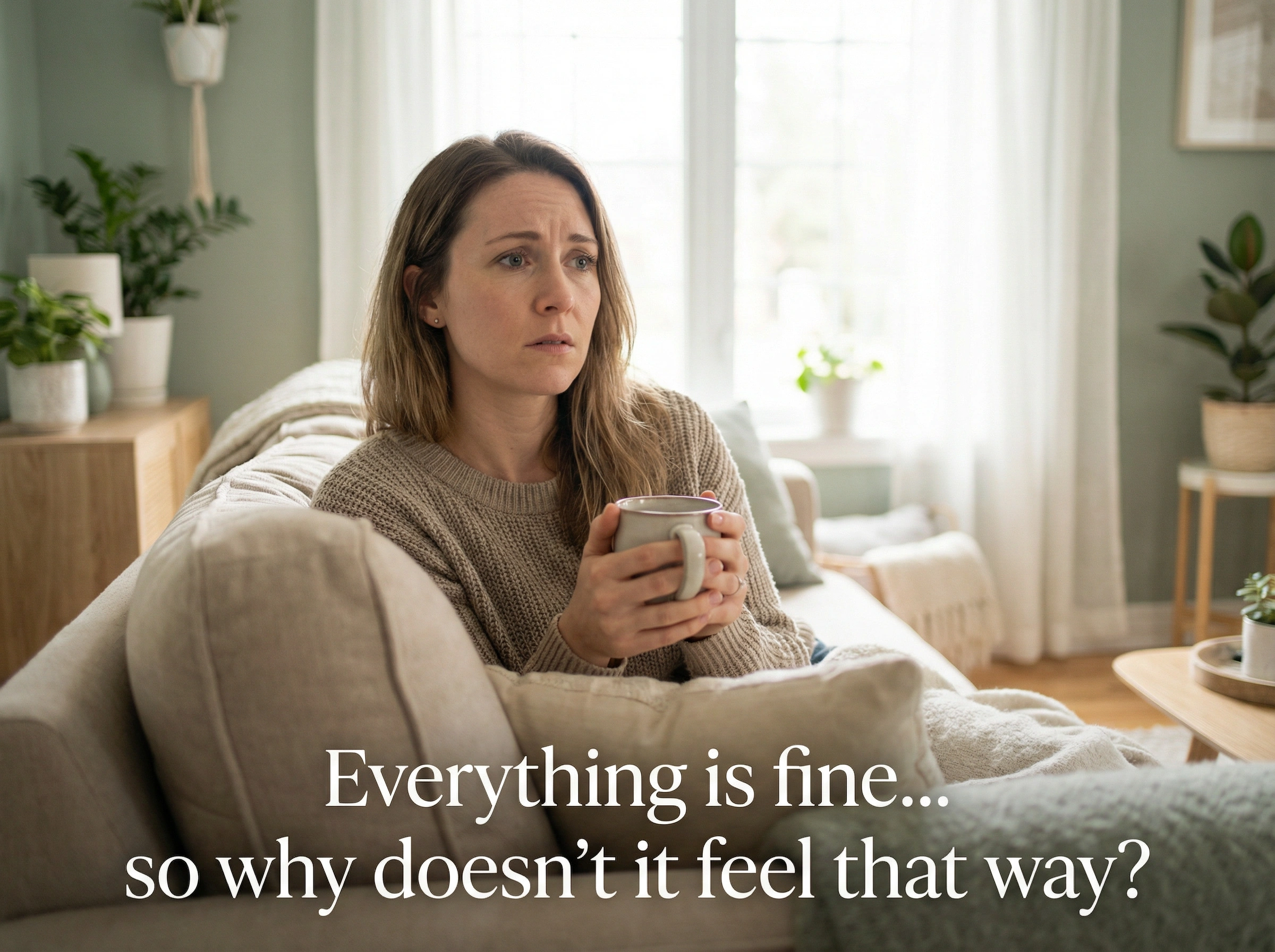
If simple decisions feel impossibly heavy, you’re not alone—and you’re not overthinking for no reason.
When Your Brain Gets Stuck in Decision Paralysis
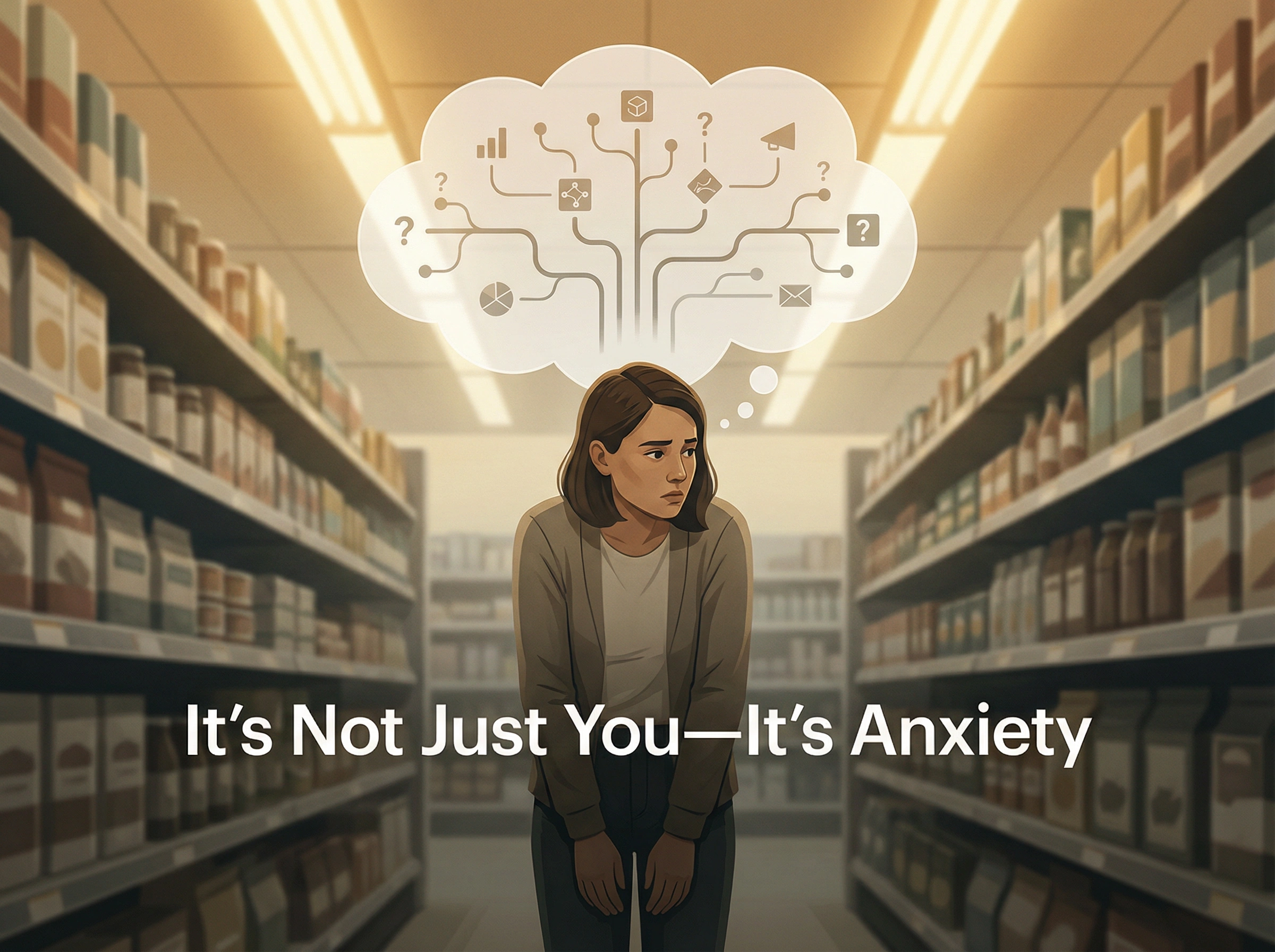
Decision fatigue isn’t just about big life choices. For many people struggling with anxiety, the smallest decisions can trigger an exhausting mental spiral. What seems like a simple task to others becomes a complex web of “what ifs,” potential consequences, and fear of making the “wrong” choice.
This isn’t laziness. It isn’t weakness. It’s often your brain’s anxiety response working overtime.
When anxiety is present, your mind treats every decision—no matter how small—as though it carries enormous weight. Choosing what to eat for lunch becomes a calculation involving health consequences, budget concerns, time management, and even how others might perceive your choice.
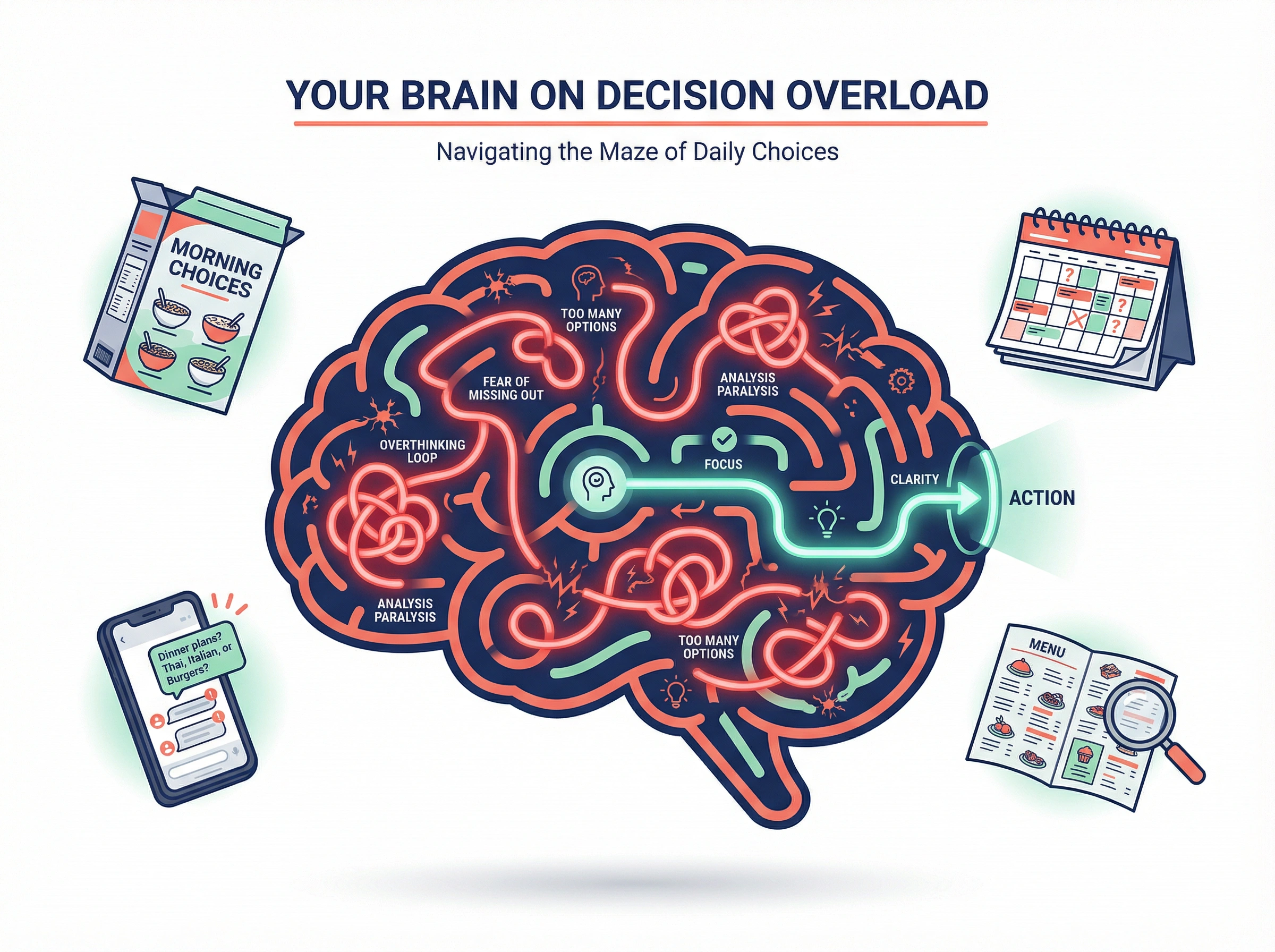
Your brain, trying to protect you from perceived threats, analyzes every possible outcome until you’re mentally exhausted before you’ve even made a choice.
The Perfectionism Trap
Many people experiencing decision paralysis are also caught in perfectionism’s grip. If you find yourself thinking, “I need to make the right choice,” you’ve likely fallen into this trap.
Perfectionism tells us that:
- There’s always one correct answer
- Making the wrong choice will have serious consequences
- We should be able to predict all outcomes before deciding
- Any mistake reflects poorly on who we are as people
This mindset transforms picking a restaurant into a high-stakes scenario. What if everyone hates the food? What if it’s too expensive? What if the service is slow and people blame you for suggesting it? Suddenly, you’re not just choosing dinner—you’re trying to control an uncontrollable future.
The exhausting truth? Your brain is working incredibly hard to keep you safe from threats that likely don’t exist.
The Physical Toll of Mental Overload
Decision paralysis doesn’t just live in your head. When small tasks feel overwhelming, your body responds with real physical symptoms:
- Mental fog that makes it hard to think clearly
- Fatigue even when you haven’t physically done much
- Muscle tension from the constant state of stress
- Restlessness or feeling “stuck” in your body
- Avoidance behaviors like procrastination or canceling plans
You might notice yourself putting off tasks that require decisions—leaving emails unread, avoiding phone calls, or letting bills pile up. Each avoided decision adds to your mental load, creating a cycle where the anxiety about the undone task becomes worse than the task itself.
Why This Happens: The Anxiety Connection
Several factors contribute to decision paralysis, particularly when anxiety is involved:
Overthinking loops: Your mind gets caught replaying scenarios, analyzing options from every angle, never reaching a conclusion that feels “certain enough.”
Fear of judgment: Worry about how others will perceive your choices adds pressure to even private decisions.
Past experiences: If you’ve been criticized for decisions in the past, your brain may be hypervigilant about avoiding similar situations.
Executive function challenges: Anxiety can interfere with the brain’s ability to prioritize, organize, and execute tasks—skills essential for decision-making.
Emotional overwhelm: When you’re already managing high levels of stress or anxiety, your decision-making capacity becomes depleted faster.
Breaking Free: Small Steps Toward Clarity
If this resonates with you, know that decision paralysis is a common symptom of anxiety—and it’s highly treatable. Here are some gentle strategies that can help:
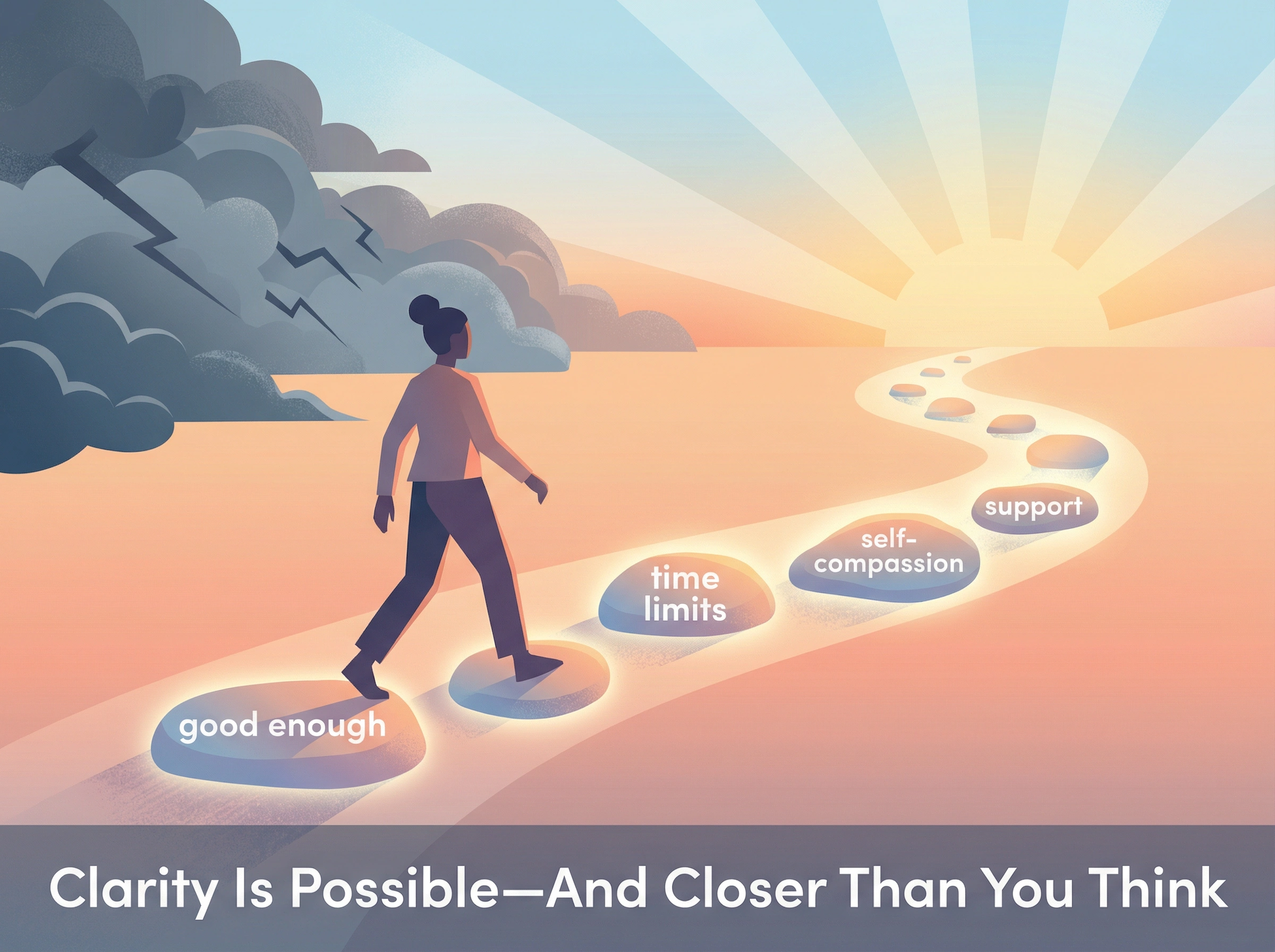
Set time limits: Give yourself a specific timeframe for minor decisions. “I’ll choose in the next two minutes” can prevent endless deliberation.
Practice the “good enough” principle: Most small decisions don’t require perfect outcomes. Good enough is often genuinely good enough.
Reduce your options: Too many choices increase anxiety. Limit yourself to two or three options when possible.
Notice the pattern: Simply recognizing when you’re in a decision spiral can help you step back and approach the situation differently.
Be compassionate with yourself: Decision paralysis is a symptom, not a character flaw.
When to Seek Professional Support
If decision paralysis is affecting your daily life—causing you to miss opportunities, avoid responsibilities, or feel constantly overwhelmed—it may be time to talk with a mental health professional.
At Focused Connections Psychiatry, we understand that anxiety doesn’t always look like panic attacks or constant worry. Sometimes it shows up as an inability to choose what to have for breakfast or which route to take to work. These seemingly small struggles can significantly impact your quality of life, relationships, and sense of self.
Through compassionate evaluation and personalized treatment, we help you understand the root causes of your decision paralysis and develop strategies that work for your unique situation. Whether through therapy, medication management, or a combination of approaches, relief is possible.
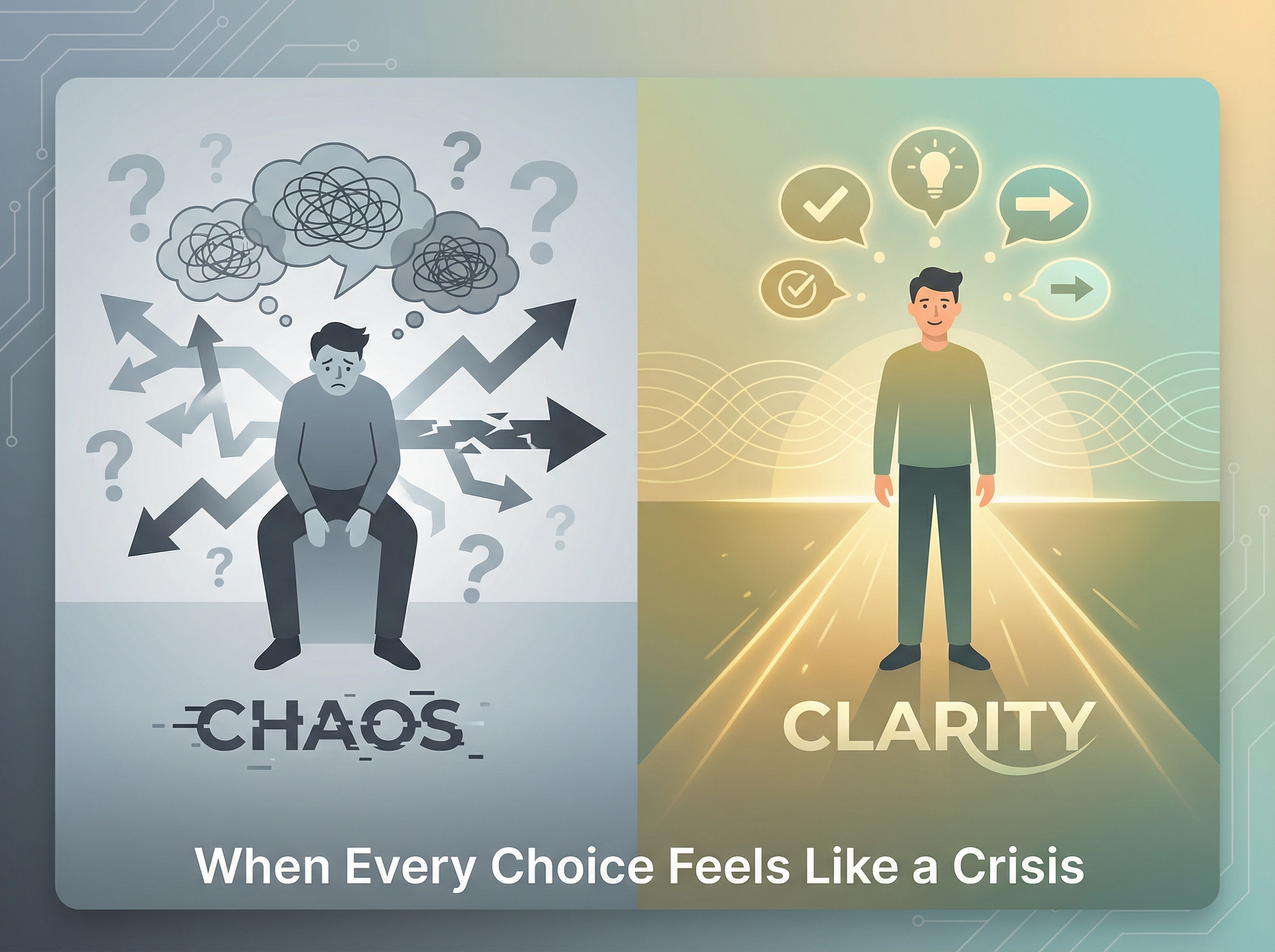
You deserve to move through your day with clarity and confidence, making choices without the weight of overwhelming anxiety. If simple decisions feel impossible, that’s a sign your brain needs support—and seeking that support is the most important decision you can make.
Ready to find clarity? Contact us at (562) 312-1777 today or click here to schedule your free symptom assessment. Your journey toward easier, lighter decision-making starts here.