The Hidden Connection Between Anxiety and Sleep
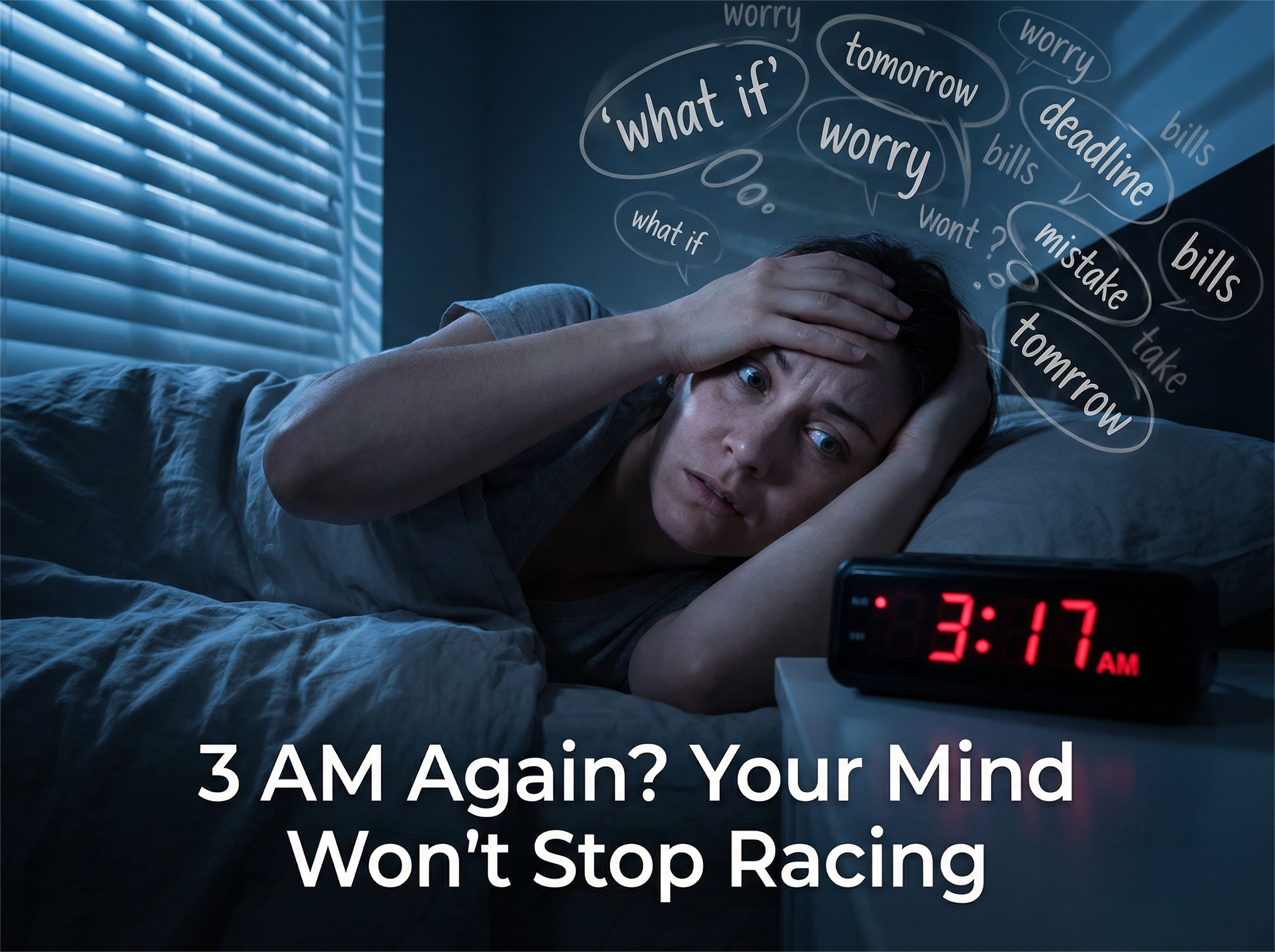
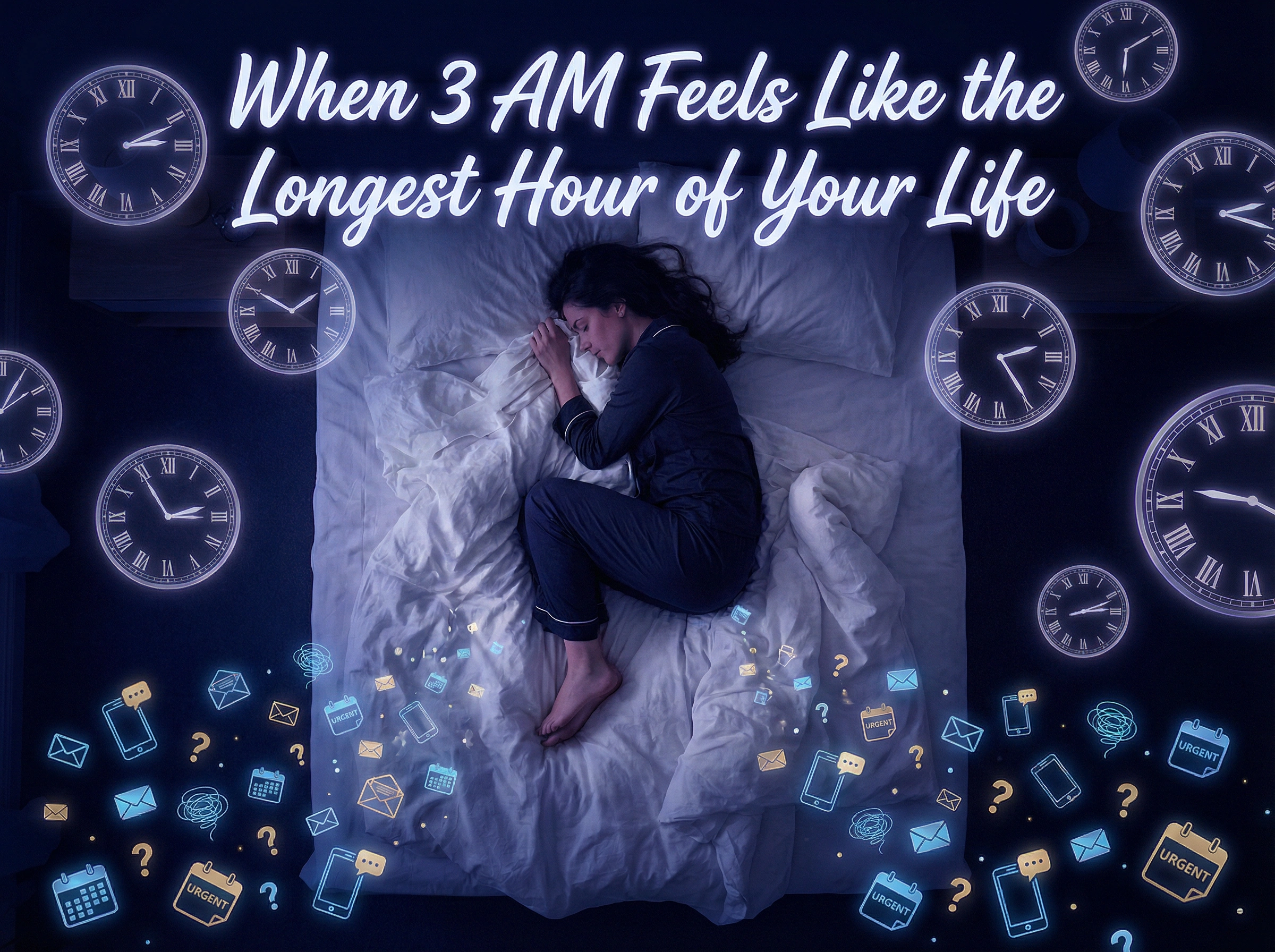
You’re exhausted. You finally fell asleep around 11 PM, grateful for the rest. Then suddenly—your eyes snap open. The clock reads 3:17 AM. Your heart is beating a little faster than it should.
Then, before you can even process what woke you, your mind is already three steps ahead, racing through tomorrow’s to-do list, replaying yesterday’s conversation, or spiraling into “what if” scenarios that feel urgent and overwhelming in the darkness.
You lie there, frustrated, knowing you need sleep but unable to quiet the noise in your head. The harder you try to fall back asleep, the more awake you become. Sound familiar?
If you’re waking up in the middle of the night with your mind racing, you’re not alone—and it’s not just “bad sleep habits.” For many people, these early morning wake-ups are a telltale sign of anxiety working beneath the surface.
The 3 AM Wake-Up: What’s Really Happening
Middle-of-the-night awakenings, especially between 2 AM and 4 AM, are incredibly common among people experiencing anxiety. But why does it happen at that specific time?
During the early morning hours, your body naturally experiences a shift in sleep cycles. You move from deep sleep into lighter REM sleep, which is when you’re more likely to wake briefly. For most people, these micro-awakenings go unnoticed—you roll over and drift back to sleep.
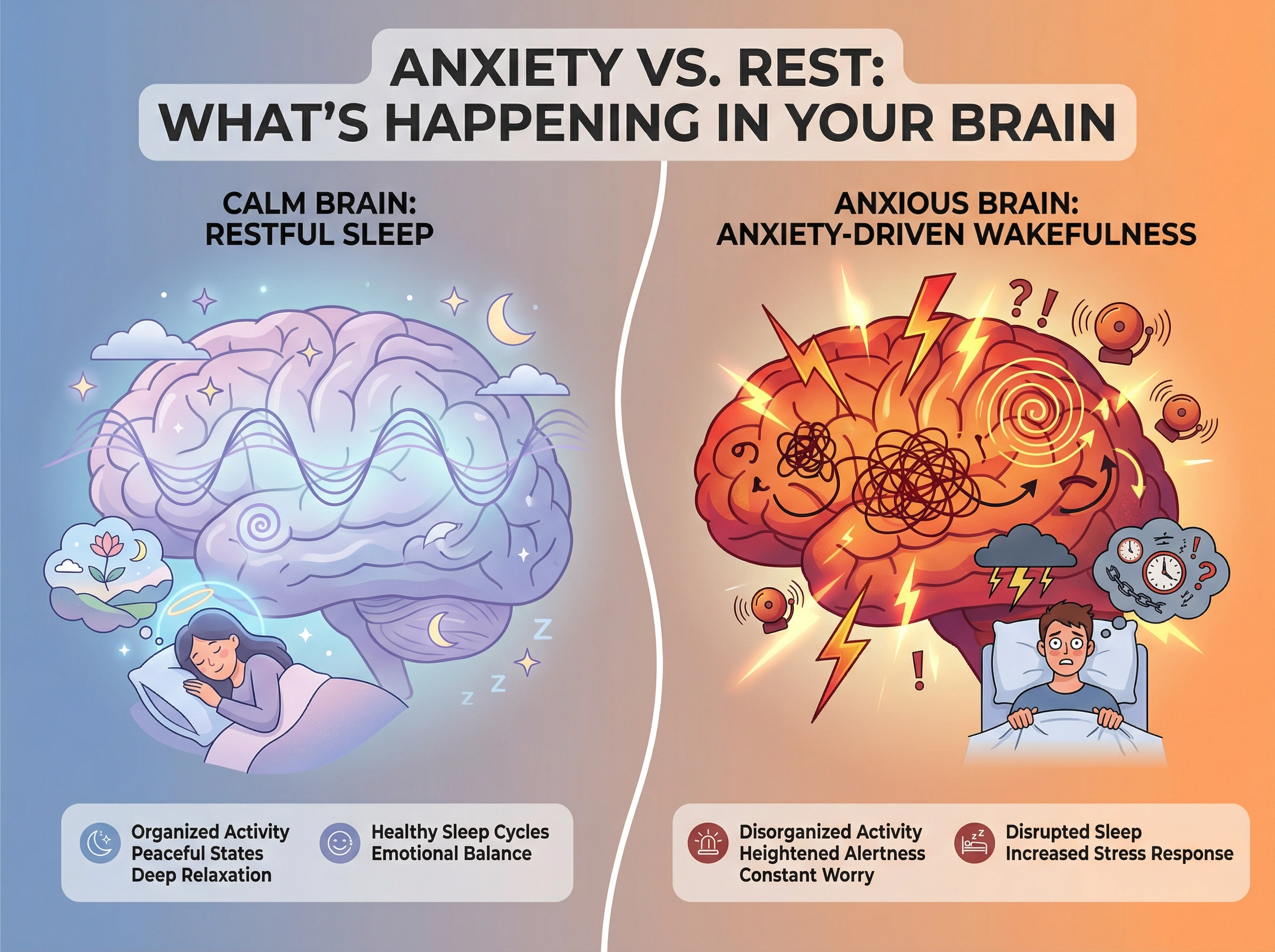
But when anxiety is present, your nervous system is already on high alert. Even in sleep, your body may be holding tension. When you enter that lighter sleep phase, your brain—primed for worry—kicks into overdrive. Suddenly, you’re wide awake, and the floodgates open: work stress, relationship concerns, health worries, financial fears, or even vague feelings of dread with no clear source.
Your body interprets this mental activity as a signal that something is wrong, triggering a stress response. Your heart rate increases slightly, cortisol levels rise, and now you’re caught in a cycle: the more you worry about not sleeping, the more anxious you become, and the harder it is to fall back asleep.
Why Anxiety Loves the Middle of the Night
There’s something about the quiet, dark hours that makes anxiety feel louder. During the day, you’re distracted—working, talking, moving. But at 3 AM, there’s nothing to buffer the noise in your mind.
Anxiety thrives in stillness. Without external distractions, your brain has free rein to fixate on fears, replay scenarios, and catastrophize. Thoughts that might seem manageable during the day can feel overwhelming and urgent in the middle of the night.
Additionally, when you’re sleep-deprived, your brain’s ability to regulate emotions weakens. The prefrontal cortex—the part of your brain responsible for rational thinking and perspective—doesn’t function as well when you’re tired. This makes it even harder to challenge anxious thoughts or calm yourself down.
The Physical Symptoms You Might Not Connect to Anxiety
Many people who wake up with racing thoughts also notice physical sensations:
- Chest tightness or a racing heart
- Restlessness or an inability to get comfortable
- Muscle tension, especially in the neck, shoulders, or jaw
- Stomach discomfort or nausea
- Feeling hot, sweaty, or suddenly alert
These aren’t random. They are signs that your body is in a state of heightened arousal—your nervous system is activated, even though there’s no real threat. Your brain is interpreting your anxious thoughts as danger, and your body is responding accordingly.
The Vicious Cycle: Anxiety Disrupts Sleep, Poor Sleep Fuels Anxiety
Here’s where it gets tricky: anxiety makes it hard to sleep, and lack of sleep makes anxiety worse.
When you don’t get enough rest, your brain becomes more reactive. You’re more irritable, more prone to worry, and less able to cope with stress. This creates a feedback loop that can feel impossible to break on your own.
You might start dreading bedtime, worried that you’ll wake up again. You might feel exhausted all day but wired at night. You might find yourself Googling symptoms at 3 AM, which only fuels more worry.
It makes sense that this feels overwhelming. But here’s the important part: this pattern is treatable.
When to Seek Help
If you’re waking up in the middle of the night with racing thoughts more than a few times a week, or if it’s affecting your ability to function during the day, it’s worth talking to a professional.
Many people dismiss their symptoms, thinking, “It’s just stress,” or “Everyone has trouble sleeping sometimes.” But if your sleep disruption is persistent, if you’re feeling on edge during the day, or if you’re noticing other signs of anxiety—constant worry, difficulty concentrating, physical tension, avoidance of certain situations—these are signals that your nervous system needs support.
At Focused Connections Psychiatry, we understand how exhausting and isolating this cycle can feel. We work with patients to understand what’s driving their anxiety, explore treatment options that fit their needs, and develop personalized strategies to help restore both emotional balance and restful sleep.
You Don’t Have to White-Knuckle Through This
Waking up at 3 AM with your mind racing isn’t a character flaw. It’s not a sign that you’re weak or broken. It’s a sign that your nervous system is working overtime—and with the right support, you can find relief.
If this sounds like your experience, know that you’re not alone, and you don’t have to figure it out by yourself. Reaching out for help is a sign of strength, not weakness.
If you’re ready to break the cycle and reclaim your sleep, we’re here to help. Contact us at (562) 312-1777 today or click here to schedule a compassionate, free symptom assessment. You deserve rest—and clarity.