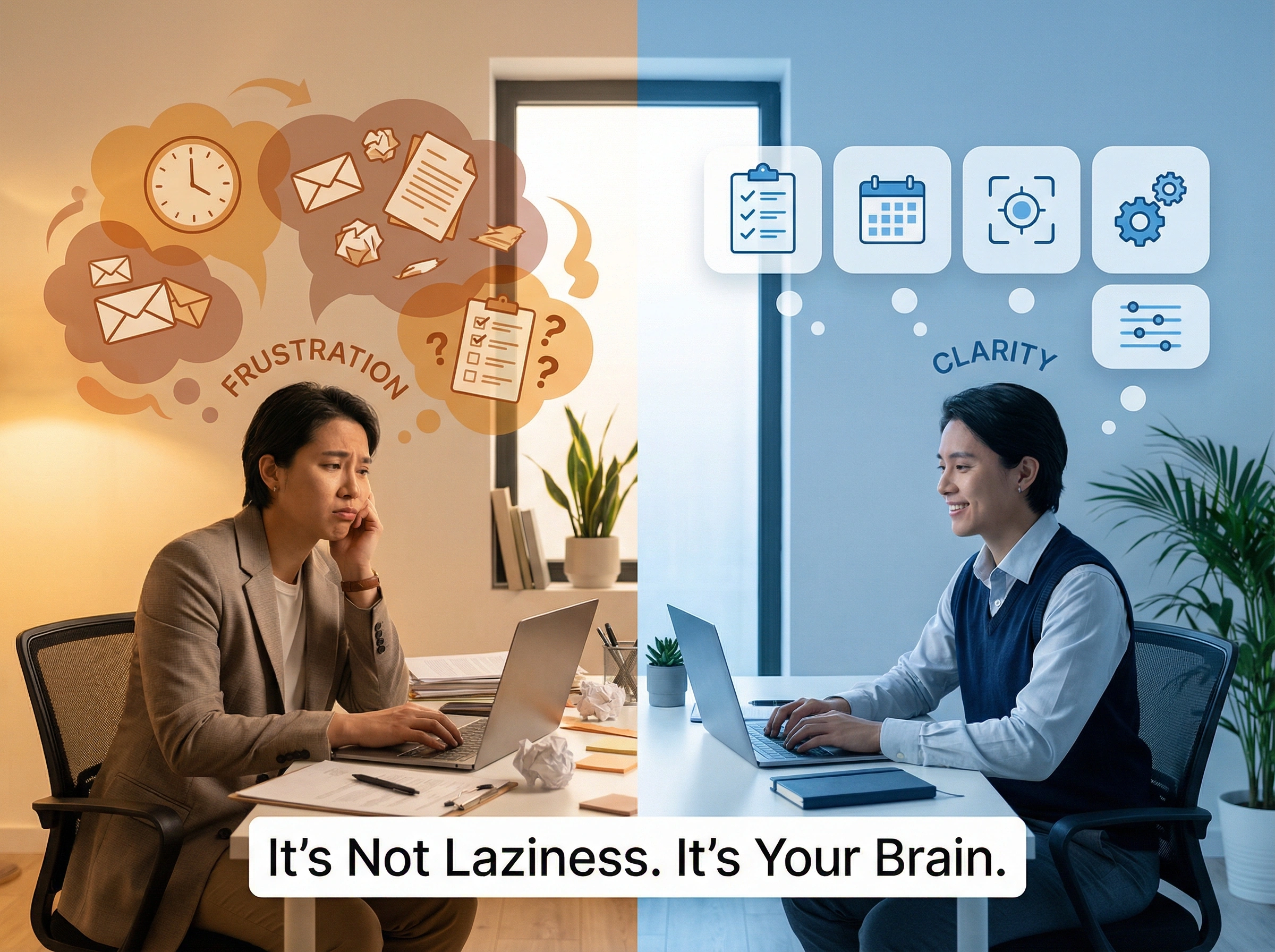
You’ve heard “you just need to try harder” more times than you can count.
You watch your colleagues breeze through tasks that leave you paralyzed with overwhelm, and you wonder: What is wrong with me?
Here’s the truth: Nothing is wrong with you. But there might be something happening in your brain that explains why everyday tasks feel like climbing a mountain in quicksand.
Adult ADHD doesn’t always look like the hyperactive kid bouncing off classroom walls. In fact, many adults with ADHD have spent years—sometimes decades—struggling in silence, never realizing there’s a name for what they’re experiencing.
At Focused Connections Psychiatry, we see this pattern constantly: intelligent, capable adults who’ve been fighting an invisible battle, unaware that ADHD has been the hidden opponent all along.
Let’s talk about the early signs most people miss—the ones that fly under the radar but significantly impact your daily life.
1. You Can’t “Just Start” Simple Tasks
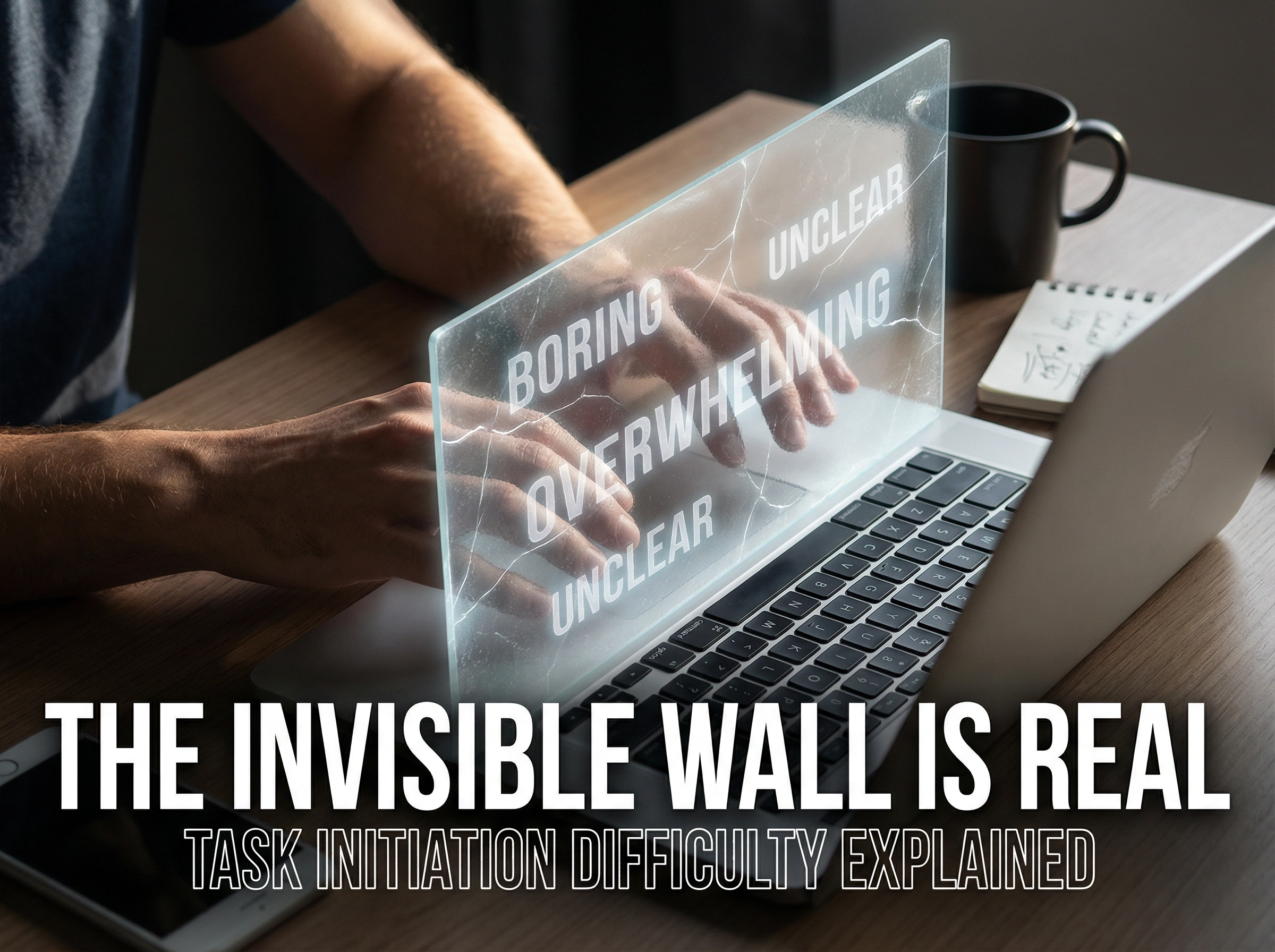
It’s not procrastination in the traditional sense. You want to do the thing. You know you need to do it. But there’s an invisible wall between you and starting. Whether it’s responding to an important email, filling out a form, or tackling a project you’ve been putting off for weeks, you find yourself staring at the task, unable to begin.
This is called “task initiation difficulty,” and it’s one of the hallmark signs of ADHD that people mistake for laziness. Your brain struggles to generate the activation energy needed to start tasks, especially ones that feel boring, unclear, or overwhelming. If you’ve ever thought, “Why can’t I just do it like everyone else?” you’re not alone—and you’re not broken.
2. Time Feels Like a Mystery
You thought you had plenty of time to get ready, but suddenly you’re 20 minutes late. You estimated a project would take an hour; it took five. Or the opposite happens: you get so absorbed in something interesting that four hours vanish without you noticing.
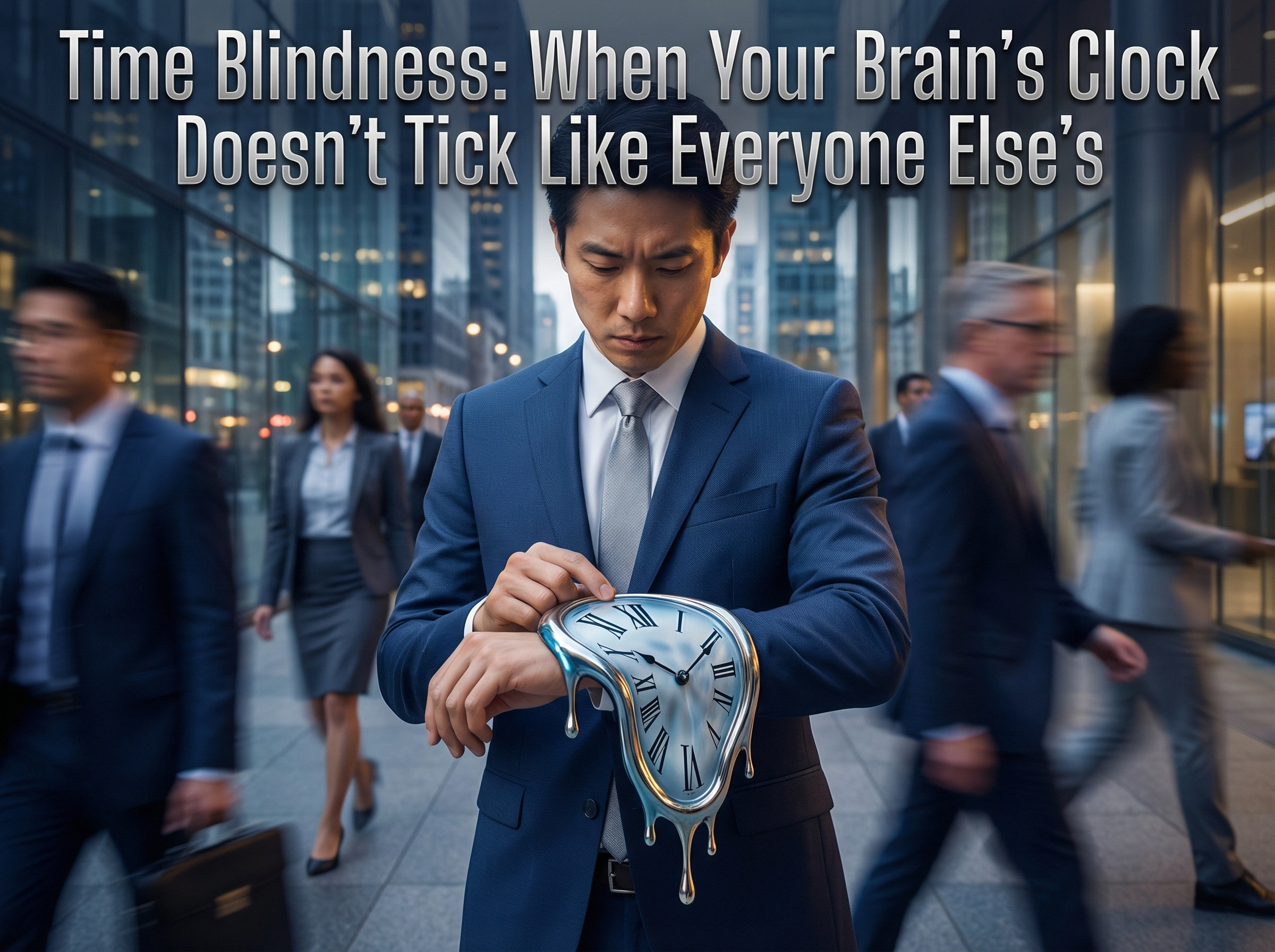
This is called “time blindness,” and it’s incredibly common in adults with ADHD. Your brain doesn’t naturally track time the way neurotypical brains do. You’re not irresponsible or disrespectful when you show up late—your internal clock simply doesn’t work the same way. Many people with ADHD describe time as either “now” or “not now,” with very little nuance in between.
3. Your Brain Never Shuts Off
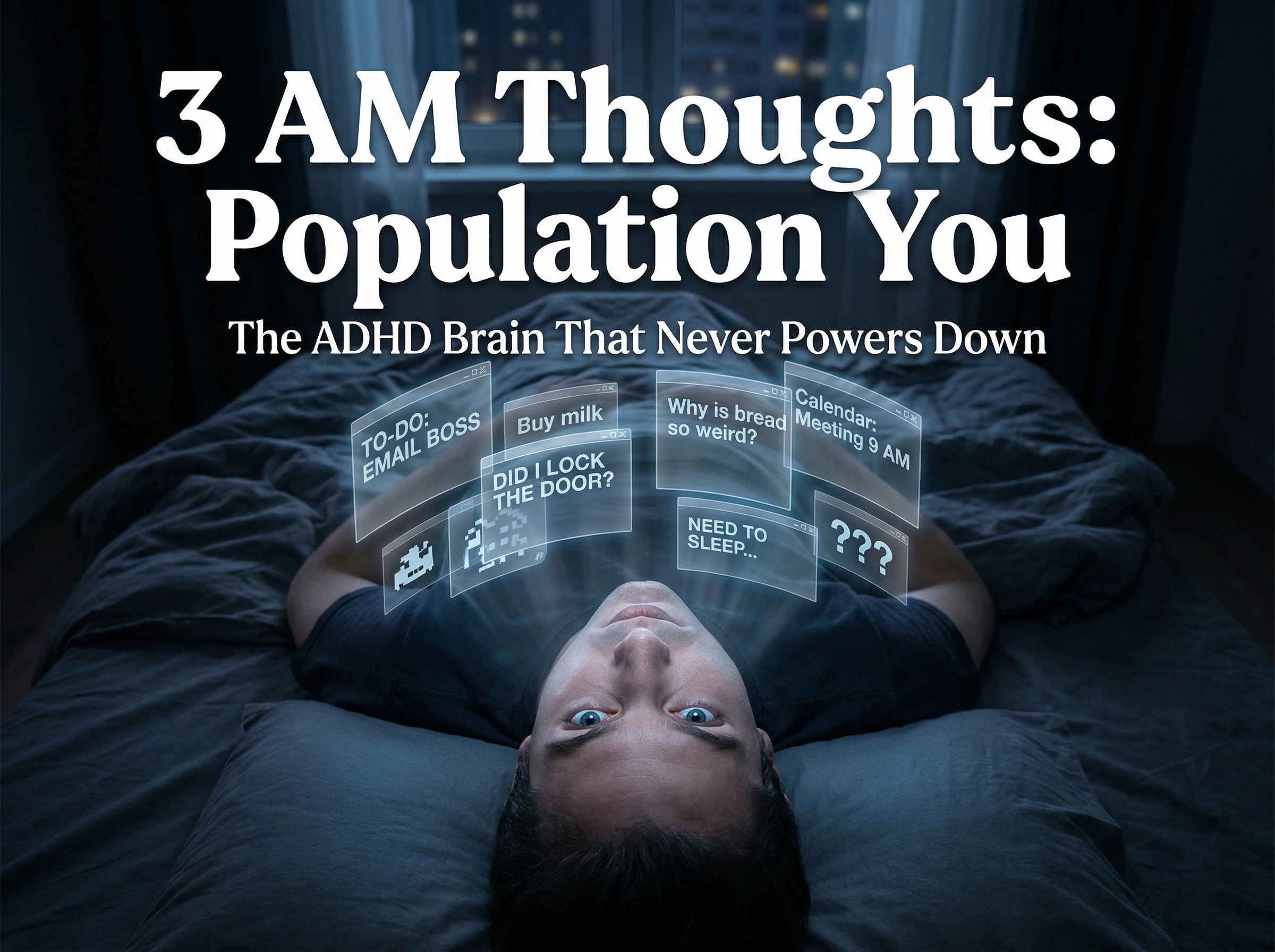
While others seem to relax and unwind, your mind races with thoughts, ideas, worries, and mental to-do lists. Even during downtime, you can’t seem to “turn off” your brain. You lie in bed at night replaying conversations, planning tomorrow, or spiraling through random thoughts.
This mental restlessness is often mistaken for anxiety—and while ADHD and anxiety frequently overlap, the constant mental activity in ADHD stems from difficulty regulating attention and thought patterns. Your brain isn’t necessarily anxious; it’s just on all the time, switching between channels like a TV with a broken remote.
4. You Lose Things Constantly
Keys, wallet, phone, important documents—if it can be misplaced, you’ve misplaced it. You’ve retraced your steps more times than you can count. You’ve been late to appointments because you couldn’t find your keys. You’ve paid late fees because you lost the bill.
This isn’t carelessness. ADHD affects working memory and attention to detail, making it genuinely difficult to keep track of objects and information. When your brain is constantly shifting focus, it’s hard to encode where you put something in the first place.
5. Conversations Feel Like a Struggle
You interrupt people without meaning to. You lose track of what someone is saying mid-conversation. You ask people to repeat themselves because even though you were looking right at them, the words didn’t register. Or you overshare, talking too much because you can’t quite gauge when to stop.
These social challenges aren’t rudeness—they’re symptoms of impulsivity and attention regulation difficulties. Many adults with ADHD describe feeling like they’re “listening but not absorbing,” or like their mouth moves faster than their brain can filter.
6. You Have “All or Nothing” Work Patterns
You either hyperfocus for hours, forgetting to eat or use the bathroom, or you can’t focus at all. There’s no middle ground. You might pull off incredible work under deadline pressure but struggle to maintain consistent, steady progress. This feast-or-famine pattern leaves you exhausted and feeling like you’re constantly behind.
This isn’t a character flaw—it’s how ADHD affects motivation and attention regulation. Your brain responds strongly to urgency and interest but struggles with tasks that lack immediate consequences or novelty.
7. You Feel Like You’re Constantly Disappointing People
Despite your best intentions, you forget commitments, miss deadlines, or don’t follow through. The guilt and shame pile up. You feel like you’re letting everyone down—your boss, your partner, your friends, yourself. You work twice as hard as everyone else just to keep up, and you’re exhausted from the effort.
This emotional weight is perhaps the most painful sign of undiagnosed ADHD. You’re not failing because you don’t care—you’re struggling because your brain works differently, and you haven’t had the right support or strategies.
What Now?
If you’re reading this and thinking, “This is me,” you’re not imagining things. These patterns can be consistent with ADHD, and recognizing them is the first step toward clarity and support.
At Focused Connections Psychiatry, we provide comprehensive ADHD evaluations that look at the whole picture—not just a checklist, but your lived experience. We use evidence-based tools like T.O.V.A. testing alongside thorough clinical interviews to understand exactly what’s happening and create a personalized treatment plan.
You don’t have to keep struggling alone. There is an explanation, and there is a path forward.
This information is educational and not a substitute for a professional evaluation or treatment. If these experiences sound familiar, reaching out for an evaluation is a strong and important step.
Ready for clarity? Contact Focused Connections Psychiatry at (562) 312-1777 or click here to schedule your free symptom assessment. Our office is located at 4132 Katella Avenue, Suite 200, Los Alamitos, CA 90720.